Before the 6:30 screening Whisby forgot which way he was supposed to rip the tickets. He had never experienced this. He hadn’t experienced it before the 5:45. Did you rip them in half horizontally, leaving the customer with the bottom as a stub or was it supposed to be a long but not severing rip from the top down? Whisby studied the tickets. They were bubblegum pink and said admit one. That was what he did. He admitted. He had been on tickets for nine years. He also logged overnights as security for a very small bible college close to the airport. He carried a heavy flashlight and a walkie-talkie with no one on the other end. All he had for tickets were his hands. He could not remember the process. He started the motions of both rips, hoping muscle memory might kick in and that one way would just feel right. But in either direction it felt wrong. The tiniest insult to the paper felt violent and made no sense. “Hey Frank,” he called to the concessions guy. “Do you know how to rip tickets?” “Never done tickets,” said Frank, “sorry.” Frank was a two-time felon and possibly simple. Whisby looked at the tickets and despaired. Were you even supposed to rip them? Why not just take them whole? Because then the moviegoer has no proof of admittance. He has a right to reentry if he goes to buy a KitKat or steps outside to take a phone call. A person without a stub is no better than a person wandering in off the street who says he was in the movie but had to go out to take a call. The surrounding neighborhood was in decline. Watching movies was probably third or fourth on the list of most popular activities in the theatre. But what stopped someone who really had a ripped ticket from going to take a call and then reselling the ticket at a very slight discount? Maybe the answer was to have people write their names on their tickets. But that just answered the proof of purchase question, not the question of the rip. Tearing them in half on the long edge was more definitive and left the theatre with something to balance against the cash register. The small nubs, though, seemed destined to be lost and then what was the point. The ticket half-ripped on the short edge was retained in its entirety by the moviegoer. Yet in every way – visually, aesthetically, kiniesiologically, actuarially – nothing about that made sense. He stared at the tickets again. He’d never noticed that the trademark belonged to something called Confederated Novelty and that admit one, for no discernable reason, was written in lower case. That did not diminish the importance of admittance or the necessity of his job. It only added mystery. “Christ almighty,” said Thetford, the manager, coming in from the office behind the ticket booth. “What is with this line?” Whisby explained his dilemma as calmly as he could. “Are you fucking addled?” said Thetford. Whisby was disappointed not to get a more sympathetic reaction from Thetford. Thetford had a wife going blind from diabetes and a daughter who stole aerosol products to sniff in the parking lot. It seemed like he was someone who should understand. “Go sweep up auditorium two,” Thetford said. Whisby handed Thetford the tickets. “Frank, come do tickets.” “Never done tickets before,” said Frank. He sounded apprehensive. He was right to. Whisby walked slowly to the supply room, still feeling rattled and unsure. When he got to the supply room he saw Thetford’s daughter on the floor with a can of dust spray. Her face twisted like it was being pulled in different directions by quite a few hands. “You’re doomed,” she said. “Don’t even bother repenting.” She was bright red. Her eyes were black suns that would swallow the earth.
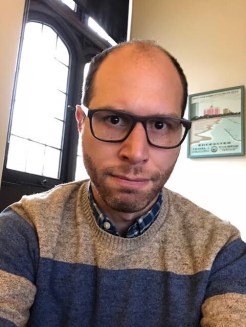
Pete Segall is a graduate of the Iowa Writers’ Workshop, where he was a Truman Capote fellow. His work has appeared in Conjunctions, Necessary Fiction, SmokeLong Quarterly, decomP, Forge Lit, and elsewhere, and is forthcoming in Timber. He has received fellowships from the Vermont Studio Center and Virginia Center for the Creative Arts.



 Melissa Fu grew up in Northern New Mexico and lives in Cambridgeshire UK. Her work has appeared in many publications including Bare Fiction, The Lonely Crowd, International Literature Showcase, Gnarled Oak, Loss Lit and The Nottingham Review. She was the regional winner of the Words and Women 2016 Prose Competition and was a 2017 Apprentice with the London-based WordFactory. Other honours include a Pushcart Prize nomination and shortlisting for the Wasafiri New Writing Prize 2017. Find her at

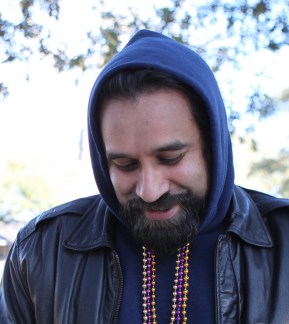 Shome Dasgupta is the author of i am here And You Are Gone (Winner Of The 2010 OW Press Fiction Chapbook Contest), and The Seagull And The Urn (HarperCollins India, 2013) which has been republished in the UK by Accent Press as The Sea Singer (2016). His first collection of short stories, Anklet And Other Stories was published by Golden Antelope Press in 2017. His novel, Pretend I Am Someone You Like, is forthcoming from the University of West Alabama’s Livingston Press. His stories and poems have appeared in Puerto Del Sol, New Orleans Review, NANO Fiction, Everyday Genius, Magma Poetry, and elsewhere. His fiction has been selected to appear in The &Now Awards 2: The Best Innovative Writing (&Now Books, 2013). Shome’s work has been featured as a storySouth Million Writers Award Notable Story, nominated for The Best Of The Net, and longlisted for the Wigleaf Top 50. He is a high school English teacher, living in Lafayette, LA, and his website can be found at

 Lost Balloon