Three Words by Claire Sicherman

1. Late Bloomers

They spend a few years in high school together before they notice each other. In their final year, she hears from gossip-Lucy that he likes her. “Do you like him?” Lucy asks, her voice, syrupy-smooth. She stands in the kitchen, staccato breath, the phone cord wrapped around her fingers, tips turning red.

He composes a piano piece and names if after her, performs it when they finish eating the chicken he roasts, Greek lemon potatoes, honey-sweet baclava for dessert. They lose their virginity in a suburb of Vancouver the night of the piano performance, after he woos her with his music and poetry. She doesn’t remember much about the act itself, only that they keep the lights off. They are still in bed when his parents show up early, high beams spilling through the slats in his basement room blinds. He rushes her out the front door, just as his parents enter through the back. A slight cramping in her low belly, she listens to the swooshing of her heartbeat meeting her eardrums, until she is home. Only then does she discover the small dot of blood in her underwear. Her body is hollow, as if she lost something.

After time spent apart traveling, writing fat tear-stained letters, they meet up in his grandfather’s village on Naxos. Slow days are spent swimming in the Aegean, sipping ouzo, snuggling on a moped through windy, sleepy streets. She leans against a short rock wall, the expanse of the blue-green sea behind her, posing in her white t-shirt and purple paisley shorts, her brown curls piled high in a messy bun. It’s here he tells her he loves her over and over again until her insides kink and coil and she asks him to stop. Years later, when she thinks back to the gradual demise of the relationship, she returns to this point, presses play and rewind like a mixtape.

2. Fake

I’m at my mother’s house sitting on the couch, book in hand, sipping strong coffee and breaking off squares of dark chocolate while my six-year-old watches Laurel and Hardy in the next room. I read parenting books, ones that tell me not to let the baby cry it out or punish with time outs. I’m guilty of doing both these things plus so many more procreator faux pas that I’ve lost count, and I wonder which of my wrongdoings my son will choose to talk about with his future therapist. “This book says you can’t show a child too much love,” I say. My mother glances up from her newspaper, reading glasses balanced on the tip of her nose. “What a load of shit,” she says, waving her hand across her face.

When I ask my mother about the three words, her face puckers, like she’s eaten something sour, and she tells me she doesn’t like the expression. “It’s so overused and sounds fake. If you say it too much, it loses its meaning. Besides my parents never told me. We didn’t say that in Czech. I just knew.”

The next day I speak to my mother on the phone. “I love you,” she says as we say goodbye. I wait a beat, maybe two. Then we both erupt into laughter. “I thought I’d try it out,” she says, catching her breath.

3. Hard to Get

Six months into the relationship with your future husband you accidentally blurt it out during sex. A long pause fills the room before he says it back. Instead of believing his words you feel anxious that you have become one of those women who traps men into saying things they don’t mean. And you flash back to your childhood room lying on your bed with your piano phone, about to dial a number, when your mother barges in and tells you not to chase boys. “Let them come to you,” she says. “Don’t be so easy. Guys like it better when you play hard to get.”

You don’t talk about it for a couple of days but when you can’t stand it anymore, you ask him if he really loves you and he grins, teases you about the way it slipped out, and all you can feel is relief.

4. Foghorn

You play a game with your son where you hold him on your lap and press your mouth to his ear and say I love you and hold the ou sound like a song or a foghorn and he laughs and squirms and pushes your face away, but really he wants you to say it again and again, so you do.


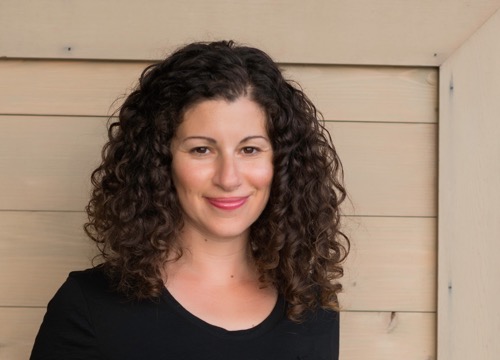
Claire+Sicherman3Claire Sicherman is the author of “Imprint: A Memoir of Trauma in the Third Generation” (Caitlin Press, 2017). Her work is featured in the anthology Don’t Ask: What Families Hide (Demeter Press, 2023), Grain Magazine, Isele Magazine, Hippocampus, The Rumpus, the anthology Sustenance: Writers from BC and Beyond on the Subject of Food (Anvil Press, 2017), and elsewhere. Claire is a teacher, speaker, and mentor, supporting writers in bringing the stories they hold in their bodies out onto the page. Find her at https://www.clairesicherman.com/

Breaker by Aaron Sandberg

The answer of course is to run fewer appliances at the same time, but she doesn’t discount a supernatural cause. She runs them all to hear the hum—the low background buzz that makes her feel much less alone. But now half the house is out, the half she finds herself in, and she thinks of what she needs to do next. Her own thoughts keep bad company now that he’s gone.

She thinks of all the different ways to be haunted while her sight adjusts, thinks of the believer’s argument that the eye is too complex to not just be designed. But what a simple body needs is a single cell to sense the shadows—to know what to move toward or from. That’s all the edge it needs.

She moves to the basement, hand tracing the wall, phone-glow guiding her steps down the stairs. She kneels in front of the panel like some sort of shrine, the switch box labeled with faded pencil from former inhabitants. And that’s as ghostly as it truly gets. The reset waits. She thinks it’s a form of prayer to type into the phone how to stop a circuit breaker from breaking. And maybe she’s right. What else is prayer but bringing back the light or asking not to let it fade in the first place?

Some hours she believes he’ll just come back. Some hours she thinks to just let go. She waits for the answers though there’s no signal down here. It’s a form of prayer to just be still. It’s a form of prayer to be silent, asking not to be broken but whole in the dark.


Processed with VSCO with b3 preset Processed with VSCO with e5 preset

Aaron Sandberg has appeared or is forthcoming in Flash FrogPhantom Kangaroo, QuAsimov’s, No ContactAlien Magazine, The ShoreThe OffingSporkletCrow & Cross KeysWhale Road Review, and elsewhere. A multiple Pushcart and Best of the Net nominee, you can see him—and his writing—on Instagram @aarondsandberg.

Roadkill by Marty Keller

The highway was slick and iridescent, bleeding red from brake lights scattered on either side of our car. Mac had hit something small, a raccoon or maybe a possum. I squeezed my eyes shut and turned my head. But when a voice shot out of our radio—a voice that sounded like a jumble of sentient vibrations—I winked one eye open in case a claw pushed through our janky AM radio and grabbed Mac by the throat.

“Hello? Anybody there?” Mac asked.

A muffled echo on the other side of the air waves mumbled a reply, which Mac treated like a friendly greeting.

“Could be some trucker on a CB radio,” I suggested.

“Going north?” Mac asked.

The response was a staccato of static and dead space before one of our fan belts drowned out all other sound with whirs and thudding.

Mac balled up his right fist and pounded the dashboard.

“Goddamn’t I told you to get that fixed, didn’t I?”

I stared out the window and drew imaginary lines between droplets and runnels. Mac’s question was for me.

The last twenty miles had felt like a painful endurance test: the murderous thump, the squeak of the wipers, scattered riffs of dance music by artists we were too old to recognize. Flood season had come early. Rain beat against the windshield, leaving a wet curtain the wipers try in vain to beat away.

By the time Mac killed something small and nocturnal, we were two hours away from his parents’ house and his brother’s house and a river that left most of the backyards and driveways ankle-deep in water. Mac wanted to move back home.  He spent our first hour on the road telling me why we needed to live near family—which meant his family. I spent the last forty minutes telling him why I didn’t want to buy a two-flat with his fifty-something uncle who smelled like weed but knew how to “fix things.” After our last stop for gas about twenty miles ago, we’d settled into stubborn silence. Then a stranger crackled through the air waves.

Hello? Hello?”  The voice on the other side of the radio was clear, curious, feminine.

“Holy crap!  You can hear me?” Mac slapped the steering wheel and scooted higher in his seat the way he did whenever he got to the good part in a story.

Yes,” she answered. She sounded impatient.

Mac wiggled his eyebrows and grinned at me like we were in cahoots, like hearing some stranger acknowledge us over a car radio on a rainy stretch of highway was some big victory. I uncrossed my arms.

“What’s your name?” he asked.

The reply was a distorted collection of syllables.

Mac shouted the question a second time. I fiddled with the radio, but he pushed my hand away and adjusted the knobs himself.

Help…Help.”

“Help? Do you need help?” Mac shouted.

“Maybe she thinks we need help,” I offered. Mac shushed me and fiddled with the knobs again.

“How can we help?” By then Mac had resorted to a kind of slow yelling like he was translating his thoughts for someone who was hard of hearing.

The response was a crackle that could’ve been sailboat or salesman. Mac persisted, determined to let this faceless, disembodied stranger know we were there to provide whatever assistance she required. I pressed my eyes closed. The darkness only magnified the hiss of the radio static and the sound of the rain pounding the windshield and the roof.

My eyes opened in time to see a vanload of college kids speed past us fast enough to hydroplane. Their tires spit an angry torrent of water across the driver’s side of the Camry. Mac swore at them before apologizing to the voice from the radio. She repeated a word that sounded like a question—who? through?—while I watched the van fishtail across the road, narrowly missing a Cadillac and a truck hauling gasoline. I mourned all the creatures they must’ve crushed beneath their wheels that night. Mac wouldn’t stop talking. He clutched the steering wheel with both hands and went on about the rain and the flood and the long drive home from St. Charles. His cheeks were frozen in the perma-grin he plastered across his face for family get-togethers and work events. He complained about gas prices and loneliness and settling.

“I think we missed our last turn,” he said.

Yes,” she answered.

Mac told her about the car he wanted and the house he planned to buy two hundred miles away from the house we already owned. I wanted to talk to the voice too, but there was no room. I wanted to tell her that Mac is the kind of man who eats out of boxes and cans instead of dinner plates and serving bowls. That Mac sits in the same chair every Sunday; that he doesn’t look at me when I walk in a room. That he only says my name when he needs something, and he drags out the second syllable for too long. 

Help is on the way,” the voice said, only this time she spoke with robotic clarity.

The steering locked. Mac was hairy elbows, clawing fingers, a string of strangled profanities. Our car skidded off the road, and we flipped over into a sloppy ravine. The chassis cracked with painful violence.

“Hello?” I ask. Between the angry hum of the busted windshield wipers, the car draws in tiny, ragged breaths. A fresh pressure throbs through the narrow folds in my brain. I want to reach over and feel his face with my fingers, but I can’t move. My chest and neck are a shimmering mosaic of shattered glass.

“Mac?” I whisper. His reply is a garbled groan, and I know it’s too late. I know that whichever way we turn, we won’t see what’s headed our direction until it runs us over and leaves us both broken and grieving.


IMG_20200102_090441

Martha (Marty) Keller’s short stories have appeared in Cagibi, Midway Journal, Roanoke Review, Bridge Eight Literary Magazine, Brilliant Flash Fiction, and elsewhere. She is also a reader for Flash Fiction Magazine. Her work has been nominated for the Pushcart and Best Short Fiction anthologies. Over the years, she’s worked in strip malls, skyscrapers, and high school classrooms. She lives with her family at the end of a long trail somewhere outside of Chicago.


Buoyant by Avra Margariti

I was our city-island’s 303rd Atlas, I tell my Tinder date on our first outing at a seaside tavern. I expect him to look suitably impressed at me for holding up our whole town, our whole world for a full year. Never once faltering, nor dropping all its citizens to their watery waste.

Do you have a shellfish allergy? he asks as he peruses the salt-laminated menu.

No, I reply. When I held our city up on my shoulders, the seagulls would often deposit little morsels of mussels in my waiting mouth. The guards administered a new saline injection into my veins every night but the birds, oh the birds wanted me to have the first catch of the day, to not subsist on bare sustenance, but savor the salt of the living.

What was your first kiss like? he asks once our food arrives, and I tell him how my former classmates—they in high school, me randomly chosen to hold the groaning city on my growing shoulders—would slip past the guards after class. They would take turns kissing me—free practice for their older crushes—and I could not let go of the world long enough to push them away. Only once did I resist: my bite led to a slap, which caused a minor earthquake across the city’s lower tiers.

Did you ever want to let the city go? he asks next, sky-eyes clouded as they look out to sea. Did you wish to let us fall and sink in the water forever? His mouth twists, an unspoken “after everything, I would” in the furrow of his brow. I don’t reply, instead asking a question of my own.

Did you know I carried you too?

He makes a sound, questioning, like the boy he once was. I tell him I remember the exact frequency of his pulse, and all the times he almost succeeded in snuffing it out. His heart used to be the heaviest of them all.

In the intruding years, I have ceased to intuit the intricate mechanics of my city. I don’t know who the 313th Atlas is, what they look like, if the seagulls favor them with treats and secrets the way they once favored me. I have long since fulfilled my duty to my cursed city-island. But my arms are still corded with muscles like twisted tree limbs. When I sleep, I don’t dream in words, but in heartbeats.

I reach across the white-clad table and put his scarred hands on my shoulders. Let him feel along adamantine muscles, under a button-down shirt that can never close all the way. His touch slides down until he takes my hand and I let him lead me down to the waterfront, shellfish lunch a long-overdue offering to the seagulls flying watch overhead.

We enter the sea in our first-date clothes, and he lays me out in the cool water. Warm palms under my muscle-roped back, holding me up, up, up until I am one with sea and sky, buoyed by saltwater.


20230410_012704

Avra Margariti is a queer author and poet from Greece. Avra’s work haunts publications such as SmokeLong Quarterly, Wigleaf, Best Microfiction, and Best Small Fictions. You can find Avra on twitter (@avramargariti).

On Retraction by Colette Parris

In a parallel life, I take them back with boundless ingenuity. I use butterfly nets to
capture those drifting balloon-like towards the sun, garage sale vases to scoop up the ones
heading south in the chlorinated pool, a rake to corral the fugitives hiding behind blades of
unmown grass. I fling them all into a lidded box, which I promptly lock with my fingerprint. I
remove the top third of the relevant digit and feed it to the impatient bonfire. The flesh crisps and
blackens in tangerine flames born for this moment. Having Pandora-proofed my receptacle, I
congratulate myself on averting catastrophe. In this life, I have no recourse. The spoken words
imprint with finality, each syllable the weight of a snow-glazed mountain. You walk away. Only
an echo returns.

professional_photo_-_Lost_Balloon (1)
Colette Parris is a Caribbean-American attorney whose poetry and prose can be found in Michigan Quarterly Review, The Offing, Scoundrel Time, MoonPark Review, Cleaver, Lunch Ticket, and elsewhere. Three of her stories have been nominated for a Pushcart Prize. She lives in New York. Read more at coletteparris.com.

Now We Sit On Rooftops by Eric Scot Tryon

It was the most ordinary Tuesday in September when the fire hydrant on our street burst open. Some nozzle or cap had simply had enough of doing its job – we could all relate – and water came gushing out. No one had ever paid any mind to the yellow fire hydrant before, and a little water wasn’t going to change that on this particular Tuesday.

By Wednesday however, there was a small current flowing down our gutters. It clearly ran east towards Kensington Court despite previous claims that ours was the flattest street in town, unbiased toward any one direction. We soon began building popsicle stick boats and raced them feverishly. It started innocent enough with little Jimmy Bigelow dropping a twig into the water and racing it on foot. But soon wagers were made, and then came boat spec regulations, qualifying heats, and a Competition Committee was formed.

By Friday, the water filled the entire street as the fire hydrant continued to shoot out a steady stream like projectile vomit. So we threw on our swimsuits and waded waist deep to bring casseroles to the Widow Johnson, or we floated on our backs to go attend Carol’s surprise 40th birthday party. It was also on this afternoon that the Fire Department arrived. They spent an hour trying to cap the hydrant but were unsuccessful and left, citing something about tax money allocation and limited resources. They were good looking, though, as firemen tend to be, and offered their condolences. “Good luck,” they said with pearly white smiles. “We wish you nothing but the best in this situation.”

By the following Tuesday, the water had reached the top of our front doors. We could no longer tell whose doors were bright red with brass knockers and whose were just tired brown wood. We thought we had them memorized, but turns out it wasn’t as easy as you might think. We exited second story windows and dog paddled to each other’s houses. Borrowed olive oil. Traded for toilet paper. Mr. Callahan showed off his mastery of the breast stroke. Kicking like a frog and gulping air like a fish, but none of us liked him very much, and so we gave him the one-ply.

When the news helicopters arrived and hovered overhead like curious looky-loos, Mr. Jones fired up his 24’ MasterCraft and taught the kids how to waterski. And when Declan Santori brought out his wakeboard and started showing off for the girls – just as he did every football season, three-time state champ – we all hung out of our bedroom windows and chanted, “Jump! the! wake! Jump! the! wake!” We hadn’t felt such community since the last 4th of July block party when Mrs. McMillan made her famous potato salad and we all chipped in to get the good fireworks. But soon the helicopters scattered like pigeons as there was a school shooting at Crossroads Middle School. Plus it turns out that looking at a street under water isn’t as good for ratings as one might hope. So without the allure of the news copters, the boat was anchored, and we all retreated into our houses and closed the windows as water slowly filled our rooms like in the second hour of Titanic.

Now we sit on rooftops. We dangle our toes in the water and reminisce about backyard barbeques, evening bike rides, and the smell of a freshly mowed yard. Food is getting a little scarce, but we aren’t worried. We used to finger-scroll past headlines about floods in places like Sudan and Indonesia, but our street is nothing like those places. We have smart homes, Ninja blenders, and HBO Max.

Mr. Jones spends most of his time fishing even though we tell him there are no fish on Montgomery Lane, silly. So far he has only snagged a Bon Appetit magazine and the Willoughbys’ cat. We used to still talk to one another, yelling from rooftop to rooftop, but our throats have gone dry and the gossip has run thin. Declan and his buddy Mark Lydell spend their days throwing the football back and forth. They live five houses apart, but man does Declan have a rocket for an arm. The rest of us barely notice the ball whizzing overhead anymore. We haven’t seen Widow Johnson yet. We all knew climbing onto her roof was too much for those old bones, but no one knew who was responsible for her. So no one went. It’s getting harder to keep track of the days, of how many America’s Got Talent episodes we have missed or if Mr. McMillian had his teeth cleaning scheduled for today or tomorrow.

Now we sit on rooftops. We dangle our toes in the water and we wait. Though we’re not sure what for. For someone to come get us? Or for us to go get someone? Or maybe for the water to just go away, go away as quickly as it came. Sometimes we wonder about the nozzle that just stopped working, and whether the fire hydrant was red or yellow, we can’t remember anymore, but then our feet grow numb as the water continues to rise.


AuthorPic

Eric Scot Tryon is a writer from San Francisco. His work was recently selected for the Best Microfiction 2023 anthology and has appeared in Glimmer Train, Ninth Letter, Willow Springs, Los Angeles Review, Sonora Review, and elsewhere. Eric is also the Founding Editor of Flash Frog. Find more information at http://www.ericscottryon.com or on Twitter @EricScotTryon.

July 7 by Tina S. Zhu

i.

They meet in the summer camp where they are told there’s still time to return to the path to righteousness again, the girl with the knitting needles and the farm girl with the green rain boots. They giggle and listen to each other instead of to the Bible verses about becoming good wives someday to faceless men neither of them want. The instructor tells the girls to be quiet. They ignore her—always a her—because they see the other girls just like them sent here as punishment, and they understand they are not alone. After prayers, the farm girl asks the girl who smuggled in red yarn and knitting needles whether she can make socks for her. Needle girl says she will make the finest socks and finds a tape measure. At her light touch, the farm girl forgets every verse.

ii.

The morning their parents return to drive them back on cornfield-lined roads to homes that are not their homes, the farm girl pulls her boots back on for the mud-slick gravel paths to the parking lot. Before her parents’ truck pulls in and they ask if she’s ready to be a good girl again, needle girl gives her a hat of red yarn, a perfect fit on her head and soft like her cheek against farm girl’s calluses. The two of them promise to stay in contact. But this is how it goes: one email a week becomes one email a month, then two months, then half a year. Needle girl’s family moves to somewhere called the mainland, a land where every word has one of four tones and good girls are called guai yet the word for the strange or the off-kilter is guai with a different tone. Needle girl promises she will return for college, a fancy school with ivy crawling up red bricks that is as far away for the farm girl as the moon.

iii.

Once a year, the woman who was once a girl from a farm flies. She packs a red hat in her fraying suitcase and flies to a town by the sea, Boeing 737 soaring like a metal albatross. Always on July 7th, because she only has enough paid time off to extend her July 4 holiday each year and still have enough days left to visit her parents over the holidays. Every year is the same: farm girl hopes and hopes—they talk and talk over coffee and dinner, shoulders close enough to brush—then needle girl never makes a move. This year needle girl vents about a breakup, a failed relationship with a woman farm girl knows only as a pretty face in the magazines. Needle girl is a somebody, someone who clothes the powerful. Farm girl is a nobody, a nameless paralegal in a nameless law firm in a nameless small town surrounded by cornfields who sends most of her paycheck to keep her parents’ farm afloat amidst crashing crop prices and drought.

Farm girl promises herself this will be the last time. Yet she cannot bring herself to say so, and after needle girl kisses her goodbye and the scent of fake roses lingers on her cheek, she clutches the red hat to her chest at the airport gate, calculating how much to budget for next year’s trip.


IMG_1193

Tina S. Zhu is a Chinese American writer who lives in California. When she’s not writing prose, she sometimes also writes code. Her words have appeared in Pidgeonholes, X-R-A-Y, and Tor.com, among others. Find her on Twitter @tinaszhu or at tinaszhu.com.

The Collision by Ezra Solway

The car crash happened in a nano second, in a stab of light. For years the boy would describe what had happened as a near-death experience to strangers in run-down piano bars, but the boy knew words wouldn’t do it justice; how they were empty vessels compared to what had happened on that frenzied Philadelphia thoroughfare.

It wasn’t just that the crash had felled acres of neuron-branches across the forest of the boy’s brain, having rattled his skull with vertiginous migraines and permanent memory loss. It wasn’t the uncontrollable rage the boy couldn’t keep a lid on in every serious relationship thereafter. The two divorces, the revolving door of therapists, the weight gain by virtue of his primordial hankering for chocolate milkshakes.

It wasn’t the fact that Ruthie Halpern, the boy’s best friend’s mother and semi-famous jazz pianist, who’d graciously agreed to schlep the boy to his travel soccer practice that morning while his own parents were off hiking Machu Picchu, had momentarily taken her eyes off the road, suffering fractured ribs and broken fingers, thereby shattering Halpern’s career and forcing her to hang up the ivory keys for good.

It wasn’t the fact that the clichéd expression life will flash before your eyes suddenly earned a fresh pelt of meaning as they tooled toward collision, each small triumph and remorse populating out of thin air like a kind of pretzeled mobius strip.

This story really starts now, a generation after the crash. After preschool teacher Madison Dust drummed at her wheel with restless glee, zig zagging lanes to catch her impending flight to Portland. The pregnant daughter in Portland whose water had just burst, and who’d be in labor bearing Madison Dust’s first grandchild. The baby girl who’d soon become her grandmother’s namesake. And later, decades later, the beloved girl who’d grow up wondering about her provenance, snooping through old boxes in the basement to discover the newspaper article with a browning photo of her late grandmother’s fatal crash.

The plume of smoke mushrooming over her grandmother’s totaled carmine-red Toyota Avalon; her flaccid body being lifted onto a stretcher by three first responders; an unidentified boy squeezing her swollen hands, a willowy boy whose mouth was ajar, as though adrenaline had flung him into an exclamation point, as though he’d tried his best to tell the soon-to-be grandmother both hello and goodbye.


Ezra_Solway_Author_photo

Ezra is a poet and journalist who writes in Philadelphia. A Pushcart Prize and Best of the Net nominee, his work has appeared in Philadelphia Stories, Identity Theory, and Bending Genres, among others. You can follow his writings on Twitter @SolwayEzra

Not So Easy Anymore by Tisha Marie Reichle-Aguilera

for Sister and 2020

You’ve been making this trip more than 25 years. Christmas before last, though, it wasn’t like always. You drove out alone despite protests from your kids. Had to reduce risk for aging parents. You didn’t pack a suitcase.

You slowed down at Broadway so you can make the turn onto Easy Street. It’s a gravel road not a real street. The post at the corner says, “not as easy as it used to be.” Now you know this to be true.

As you slowed, the mules trotted over to the fence and stretched their necks to check if you belong. When someone didn’t, the peacocks screeched like a child being tortured with bedtime or bath.

You drove slower. Didn’t wanna dust-out Neighbor’s trailer. He kept the windows open for fresh air even on cold winter nights and sometimes pesticide fumes wafted over on a hot desert breeze, mixed with his breakfast, choked his breath.

After the heavy rains, you knew not to park in the empty lot because the mud would suck the tires off your little city car. You got in trouble when that one boyfriend drove his four-wheel-drive truck across the muddy lot. He left deep tracks and when the sun dried the earth, Daddy had to borrow Mr. Brown’s laser machine to level out that mess. He’d cussed and hollered and that boy wasn’t welcome on Easy Street anymore.

So you parked inside the gate. When strangers did, Freckles would growl a soft warning, her blue-black hackles on end, before she leaped into the air and tried to chew their faces off. She only allowed family and kids with sticky hands. Since she died, Mamá had to lock the doors whenever they went out of town.

You couldn’t stay long. Just a quick gift exchange on the front porch. A bag for Daddy, a box for Mamá, and your handmade ornaments to put on their tree. You saw it through the living room window as you cruised down the road. Framed by poinsettia curtains Mamá had made that matched the ones she’d sent you last year. All the twinkly lights on in the middle of the day. Knew Daddy did that just for you.

No sleeping in the sewing room, giant television watching you, reflecting your tosses and turns. No squishing on the bottom bunk with your husband and youngest who is too tall now. No hip bone wedged in the crack between mattress and wall, face smashed into the wood paneling. No bougainvillea vines scratching the window in a haphazard rhythm. No rooster crowing as you’re about to doze off—it doesn’t know how to tell time. No heavy metal lyrics blasting when Neighbor’s son cruised home after the Horny Toad had kicked him out.

You couldn’t be on Easy Street when the sun came up Christmas Day 2020. Couldn’t turn the couch around to face the tree, open one gift at a time and pose for pictures. Instead, you blew Daddy and Mamá goodbye kisses through your mask and took the kids’ empty Christmas stockings home to fill yourself for the first time ever. You wanted to stay on Easy Street, but you had to go back to your kids and your job, back to undusty roads and different night sounds.


Tisha_Smiling_Golden_WallChicana Feminist and former Rodeo Queen, Tisha Marie Reichle-Aguilera (she/her) writes so the desert landscape of her childhood can be heard as loudly as the urban chaos of her adulthood. She is obsessed with food. A former high school teacher, she earned an MFA at Antioch University Los Angeles and is a PhD candidate at the University of Southern California. Her play Blind Thrust Fault was featured in Center Theater Group Writers’ Workshop Festival. Her flash fiction has been included in Best Small Fictions 2022. Her debut young adult novel, Breaking Pattern, is forthcoming with Inlandia Books. She is a Macondista and works for literary equity through Women Who Submit. You can read her other stories and essays at http://tishareichle.com/

(Photo credit: Rachael Warecki @camerarawphotography)

Temporal Fixes by Mark Foss

Breathing through your nose is supposed to rejuvenate the body and maybe even straighten crooked teeth. I read this in a book, the kind my wife would have scoffed at. I see my dentist twice a year, not including return visits to fix cavities, which means I’ve gone for ten check-ups since my wife died. Every other visit, so about five times so far, the hygienist asks me how long it’s been since she passed. I don’t blame her for not remembering. She must see a thousand mouths between my visits. We don’t measure absence in the same way.

Who gets cavities in their fifties? It’s all the chocolate cookies. I eat two every evening with Greek vanilla yogurt and blackberries whose seeds get stuck in my teeth. The routine is comforting, but all the sweetness might be eating away at my fillings. I’ve read that soft food weakens the gums. I need my wife’s couscous, to bite into the spicy merguez that took my breath away.

When I broke a tooth just before Christmas, there was no pain but I could feel an empty space. My dentist had already left for Hannukah so I got another one from the same office. He spoke with a French accent more pronounced than my wife’s. She was nomadic, hard to pin down, her voice a shakshuka of Tunisia, France, Israel and Quebec.

Unlike my regular dentist, the temporary one played music over the PA. As he drilled into my tooth, he sang along to Cheek to Cheek through his mask. It was a temporary fix, he told me, until my regular dentist could see me. It might last or it might break. I wonder if he ever saw my wife. I hope not. Her illness made it difficult for her to brush and floss, and the meds gave her dry mouth. She needed permanent solutions.

The temporary dentist saw signs that I grind my teeth at night. Maybe my jaw has been rebelling against the tape on my lips. Perhaps I should breathe through my mouth after all, exhale the toxins, the scraps of half-remembered songs, the undigested emptiness.


Mark_Foss.Homage

Based in Montreal, Mark Foss is the author of two novels and a collection of short stories. His CNF has also appeared in Star 82 Review, Hobart, JMWW, and elsewhere. He is the co-editor of The Book of Judith (New Village Press, 2022), an homage to the life of poet, writer, and teaching artist Judith Tannenbaum and her impact on incarcerated and marginalized students. Visit him at http://www.markfoss.ca.