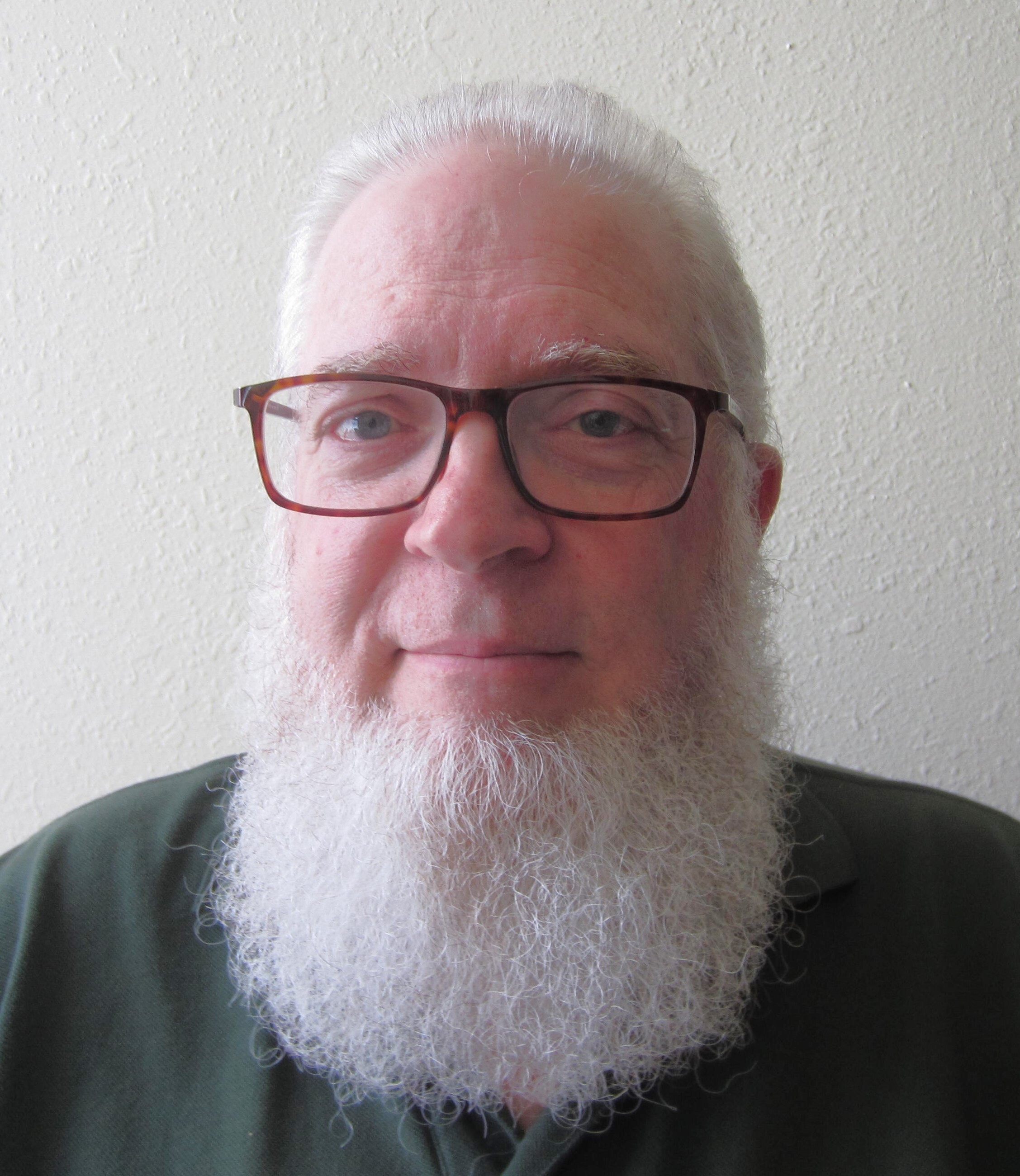
Fireworks by Sharon Goldberg

The summer I turned fourteen, after I arrived in New York City from small town Ohio for the very first time, I wrote a letter to Ron Sobieski, my very first real boyfriend, to say I couldn’t see him anymore because he wasn’t Jewish. Before that, Mom and Dad announced they would not allow me to visit New York City, where I’d planned to eat kosher corned beef sandwiches with my cousins in Brooklyn, and shop for pierced earrings in Greenwich Village, and watch “Carousel” at Lincoln Center and “Man of La Mancha” on Broadway, unless I broke up with Ron. Before that, my father snaked along 30th Street and down Falbo Avenue in our 1959 canary yellow Edsel until he spotted Ron and me and yelled, “Get in the car.” Before that, Ron and I lay on our backs on a blanket amidst the crowd at George Daniel Stadium and watched Fourth of July fireworks, the crimson chrysanthemums, the cobalt comets, the red, white, and blue crackles, Ron and I holding hands, me aglow and aglitter with a joy I’d never before known. Did we kiss? I hope we kissed. We must have kissed, our virginal lips tasting first love. Before that, Ron and I conspired to secretly meet on Oberlin Avenue outside the stadium. Before that, at a corner store downtown on East Erie, I bought Ron a present for his fourteenth birthday, a seventy-five-cent, behind-the-counter Playboy Magazine with a centerfold whose body looked nothing like my barely-needing-a-bra one, a magazine I suspected the clerk would refuse to sell to an underage kid, but he didn’t, and I thought what a daring, spicy, bold as brass girl I am. Before that Ron and I talked on the phone and met up here and there, now and then, usually with his sidekick Tim. Before that, at a junior high school dance in the living room of an old home that housed the YWCA, the same room where four years earlier Mom and I sat through a class about getting one’s menstrual period and I asked “Can you get pregnant if you’re not married?” in that room, Ron, from Irving Junior High, asked me, from Hawthorne Junior High, to dance and we did dance, over and over to Bobby Vinton’s “Blue Velvet,” Ron’s hand warm in the center of my back, my fingers hesitant resting on his shoulder, our bodies awkward then close and closer. Before that, from my gaggle of girls in knee-length pleated skirts or shirtwaist dresses, I noticed a boy among the gangly guys wearing slacks and button down plaid or checked shirts, a boy slim and loose, a boy whose dishwater blonde hair curled above steel blue eyes, a boy whose smile was framed by lips lush, plush, and yummy, a boy who I knew for sure was not Jewish.


Sharon Goldberg is a Seattle writer whose work has appeared in The Gettysburg Review, New Letters, The Louisville Review, Cold Mountain Review, River Teeth, Green Mountains Review, Chicago Quarterly Review, Southern Indiana Review, The Jellyfish Review, Gargoyle, Best Small Fictions, and elsewhere. Sharon won second place in the On the Premises 2012 Humor Contest and Fiction Attic Press’s 2013 Flash in the Attic Contest. She is an avid but cautious skier and enthusiastic world traveler.

The Town Is Not Saved by Brandon Forinash

After the hostage townsfolk are freed, the bandits run off or gunned down in the street, and a fine speech given by the rotund mayor, after one last ‘adios’ dropped to a freckled/gap-toothed adolescent before the hero rides into the sunset, the town remains. The woman waving her handkerchief turns away at last, goes back to hanging her laundry on the line or shilling slop to her hogs or takes her place again beside the stooped piano player and sings a song slightly off-key to nobody in particular. Her man feels a pang of guilt for his empty pockets or embarrassment with his back turned at the piano or cultivates a hard root vegetable of resentment in the arid earth; leans on the hoe, the piano board, leans on the bartop and asks if his tab will cover another. And the dirty/freckle-faced kid grows up hard. His father hits him and doesn’t remember hitting him, never remembers hitting him. He is sixteen and tells his mother that he is leaving for good, and his mother doesn’t stop him, packs for him some jars of preserves and pickled vegetables, or his mother doesn’t stop him but she does take from him the old revolver he had wedged down his waist front, slaps him across/kisses his cheek before she sends him off, but everywhere he goes it seems the problems are the same. They chase after him and then arrive ahead of him. There is trouble at the mine between the union and the mine-owner. There is trouble between the sharecroppers and migrant workers. When the first national bank opens in town it invents as dialogic pairs the bank robber, the pinkerton agent, the insurance adjuster, the insured. Barbed wire closes the cattle trails, the cow herds pack the earth, each on their separate acreage.

And they don’t predict that when the rain doesn’t come, and the rain doesn’t come, the land would turn to dust, immense clouds of dust that would roll through and cover everything but for that freckle-faced/gap-toothed kid, not that freckle-faced kid, but some other dirty/freckle-faced/gap-toothed kid from some other town, now grown to manhood, working for an alphabet agency laying asphalt, breathing in the tar, baking in the sun, it becomes a way home. The asphalt takes him home, brings him home, finds him at home in this new town that is altogether a different town with different people, but somehow the same. The mine is dead. His father is dead. His mother is dying. He takes a job at the Sears store, drives his mother for treatments at the hospital another county over. He marries a woman with a very young child. The Sears closes after the town is bypassed by the highway. He drives so many miles in a day, between work and home and hospice. The town hasn’t moved, hasn’t gone anywhere, but he feels out of place or maybe out of time. At night he watches science fiction on TV and tries to nurse the terrible pang in his back, feels a terrible pang at this particular road that he has paved, as if it was not his own life he had lived up to now, but someone else’s. And though he is happy, happy to be with his wife, happy to have this daughter that has chosen him as a father, some part of him aches for the time, a time, when the town could be “saved.”


Brandon Forinash is a writer living in San Antonio, Texas with his wife and one-year old daughter. His stories and flash fiction have appeared in X-R-A-Y, Wigleaf, Flash Frog, most recently in Short Story, Long, and other indie zines.

The Wins I Can Afford at 40 by Titi Kusumandari

He slapped me three plastic bullets and a gun. “Aim at the prize,” a toothpick danced between his lips as he spoke. I took the gun and aimed at the sheep doll across the counter.

Aim. Hit. Miss.

From behind, thrill-seeking children swung and screamed. Overdosed neon, red and yellow, like warning signs against the fall’s pitch-dark sky. The greasy scent of apple fries and corndogs. Parents on standby.

Bang. Another miss.

My week ahead loomed over me: divorce lawyers at 9, movers at 11, lease, biopsy, unemployment agency.

My fingers tightened on the trigger. One more bullet to go.

I need this win.

Bang.


Titi Kusumandari is an Indonesian writer navigating corporate slide decks by day and existential prose by night. Based in Brussels, Belgium, their work has appeared in InsideIndonesia.org, forthcoming in Porch lit mag. Her sheep toy still hangs in her room.

In Waiting by Catherine Buck

I left you there, in the hollow. What I mean is, the person who crawled out after me like the white rabbit from wonderland wasn’t you, though she looked like you and sounded like you and said she was you. I could tell the difference.

We took a few things with us into the hollow. I brought the picnic basket and you carried the blanket. That morning we’d smeared peanut butter over bread, picked the least bruised apples and shook out the brown fabric in the front yard, leaving the debris of every other year behind for the birds.

After we ate our fill in the hollow, you wanted to wade in the river. I told you I didn’t think that was a good idea because I’d never properly learned how to swim, and we hadn’t waited sixty minutes after finishing our sandwiches. You told me that was a silly story the grown ups only shared to get us to stay put, and I believed you even though I was nervous still.

I stayed close to the edge of river. I always had one hand within reach of the bank but you went farther, climbed up on a rock sticking out high and spun your arms around you.

“I’m Queen of the World!” you declared, and I believed it, in awe and the only smallest bit jealous that this meant I’d never become more than a princess.

I don’t know if you became the other person then, when your foot slipped, or when you were under water, or some other time between when I dragged you out by your slippery arms and when we finally exited the hollow. There was too much chaos for me to tell the exact moment it happened.

What I do know is, the person who crawled out after me was only a puddle of river water, the kind that might have dripped to the floor after we took a bath. Her eyes tremble when she looks at me. Her hugs don’t reach all the way around, and I know she would burst if poked with a stick.

Our parents know nothing. They spend all their time with that girl now, and never talk about you.

I’ve gone back to look for you plenty of times. The person that followed me out of the hollow never joins; I leave her behind.

I retrieved our blanket and basket, fully cleared of crumbs and cores by anything around alive. Sometimes I wonder if I should have left them, so you could remember which way we came in. But then I tell myself that you aren’t stupid, you know where home is.

With our things gone, I’m not always sure I’m looking in the right place. The hollow looks different in the springtime and I lost you in the fall. I wish I knew how to make a map. I wish I’d paid more attention when we were there, because everything now is fuzzy.

Mainly, I wait for you on the edge of the river, and I refuse to learn how to swim.


Catherine Buck lives in Jersey City with her partner, pets, and plants. She holds an MFA from Rutgers University Camden and was a member of the Tin House YA workshop. Her fiction has appeared in Cotton Xenomorph, Bending Genres, Vestal Review, CRAFT Literary, and elsewhere, and has been nominated for Best Microfiction.

The Ace of Teeth by Claudia Monpere

My brother and I attempt awkward conversation at a Chinese restaurant near the dive motel where he lives. I try not to stare at his teeth: gray, chipped, missing. Dark, square caves in his mouth. How to get him to a dentist? He rarely leaves his motel room. I’ve been obsessed with those teeth since I saw him last month, first time in nearly a decade. After hospitalizations for his psychosis, after failed rehab treatments, after slides back into alcohol and drugs and living on the streets, I had to let go for a long time. We speak haltingly to each other over our scallion pancakes, Lo Mein, and eggplant. My brother is polite and hard to understand. I ask him if he still has his sci fi card deck. He pulls the ace of spades from his wallet and sets it on the table. Inside the ace, there is a mechanical bird in a cage, turquoise, gold, and purple, head held up, beak open. He pushes the card toward me. “Take a gander,” he says, then leaves briefly to use the restroom. Both wallet and card are grimy, torn.  My brother’s only forty-six, but he moves like he’s eighty.

***

When my brother was seventeen, he and a security guard hired by our parents played gin rummy all night in our home; the hospital wouldn’t have a bed free until morning. They played with his deck of sci fi cards, a birthday gift from way back when our parents were so proud of his sci fi obsession, those awards he won for his stories and art. That night I alternated between tossing in bed, having fitful dreams, and spying on my brother and the security guard. My exhausted parents’ door was locked. It had been so long since they’d had a decent night’s sleep. After the ambulance took my brother away the next morning, the security guard said, “Your brother’s got a great sense of humor. He said we should be playing Crazy Eights.”

***

When my brother refuses to let the motel management clean or enter his room, when county health removes most of his belongings, including his tattered sci fi book collection, when I learn that he has disappeared, when I put out feelers to the shelters and soup kitchens and no one has seen him, there is nothing to do but file a missing person report and wait. And wait. When the phone call comes—four months later— there is nothing to do but listen. His body: found in some blankets under bushes near a homeless encampment. “He was kind,” says the woman who found him. It was a heart attack. No drugs or alcohol in his system. No wallet or I.D. His childhood dental records identified him. In his pockets: loose change, a book of matches, and the ace of spades. The card is grimier than when I saw it earlier. The mechanical bird is faded and more worn than the rest of the card, as if a thumb rubbed its turquoise, gold, and purple feathers over and over again.


Claudia Monpere’s flash appears in Split Lip, SmokeLong Quarterly, Craft, Trampset, Milk Candy Review, The Forge, and elsewhere. Her poems appear in such journals as Cutleaf, The Cincinnati Review, Plume, and Hunger Mountain. She won the 2024 New Flash Fiction Prize from New Flash Fiction Review and the 2024 Refractions: Genre Flash Fiction Prize from Uncharted Magazine. She has a story in Best Small Fictions 2024 and a micro forthcoming in Best Microfiction 2025.

The Space of Being the Bad Object by Sarah Blake

My monster fits in my pocket, but when we’re relaxing in the evening, watching TV, he sleeps on my chest. I like police procedurals where they catch murderers. (I like the American ones especially.) He likes my breathing and heart rate when I’m quietly satisfied.

At work, when I’m agitated, and largely out of place, that’s when the monster prefers my pocket, away from my heart, still near the warmth of me. I venture he is cold-blooded, but I haven’t asked him, and I’m not sure if he would say. Mostly, he quotes poetry.

His favorite poet is Alexander Pope, and often he says to me, “Oh, ever beauteous, ever friendly!” And while that is a kind thing to say, it’s from a poem about an “Unfortunate Lady,” and I don’t think she was unfortunate only for her death (in the poem, you see), so there is some insult there.

“Spare your censure,” is another one of his go-tos. But I don’t know if he has the level of intelligence required to draw out lines from the poems of Pope and connect them to my life, not in an entirely appropriate way, not for the situations I find myself in. I often wonder, Was I censuring? Though overall, again, I like the sentiment, because I should not waste my time on others, or on negativity. I should not censure, generally speaking.

I could be thinking happy thoughts, memories from my childhood perhaps. I do sometimes. I reflect. And when I do, I idly stroke my monster’s head, to which he says, “that noble seat of thought.”

From his love of Pope, and his accent, I assume my monster is British, and I wonder if he is as old as the poems. I wonder if he could be yet another thing to mock my American-ness, as I build this new life.

Though that’s a negative thought. I recognize that. If I make myself think more positively about him, I think that he’s here to help me, to help me adjust and fit in. He could do that, maybe, if he didn’t only speak lines of poetry. I often get into trouble with the different words we have for things, and there aren’t many lines of poetry about that.

I told someone, I like suspenders, and here, that’s how they refer to garter belts, as if I were talking about my negligée.

Braces, they told me. You like braces.

I do? I said, thinking about how I didn’t ever like anything I’d braced myself against in my life.

They nodded.

I wanted to laugh, but in my pocket, the monster bit my finger, and my eyes filled with tears.

They went, No, no, no, it’s not a big deal.

And I said, No, no, no, I’m okay.

But they didn’t believe me, and I wouldn’t have either, faced with a small, crying woman, whose face went red and eyes shined like they could take in all the light in the world and shove that light into stretched triangles of the brightest white, moving this way and that with the movements of my eyes.

I don’t mean to sound ungrateful. Perhaps my monster was teaching me how to accept help and show my vulnerabilities.

I can say, with certainty, that since my monster came into my life, I have not seen one spider in my house. No ants. Not even a field mouse in the yard.

I didn’t realize it was him at first. I mentioned it to a neighbor, and they said they had noticed the same thing in their yard. Eventually, I put two and two together. Now I wonder about the reach of my monster, how far he roams when I’m asleep, how many mice until he’s full.

Of course, with this new knowledge, I came to realize that he is not cold-blooded, if he can travel from me at night, if he has the energy to hunt. The first thought I had—Why have I been assuming he has blood at all? I have no idea what’s underneath his skin or running through his flesh, ever beauteous thing.

The hunger is revealing though. If he needs to eat, he needs energy, and maybe he has cells. But if he only wants to eat—that’s revealing in another way. And then consumption is merely the easiest way to clean up after himself. With everything tidied and away, he can continue with this hushed life, which he has built with me.


Sarah Blake’s debut novel Naamah is a retelling of The Great Flood from the perspective of Noah’s wife, published by Riverhead Books in 2019 and winner of the National Jewish Book Award for Debut Fiction. Her most recent novel Clean Air was published by Algonquin Books in 2022. It was selected as an Apple Books Best Book of the Month, an Editors’ Pick at Amazon, and Oprah Daily called it “a cli-fi novel for our times.” Blake is also the author of three collections of poetry, In Springtime, Let’s Not Live on Earth, and Mr. West, all published by Wesleyan University Press. She is the recipient of a Literature Fellowship from the National Endowment for the Arts and holds her MFA from The Pennsylvania State University. She currently lives in the U.K.

The Great Girl Evaporation of 2022 by Vic Nogay

In February, the creek flooded the fields forty yards on either side from the tracks to the freeway. That was the last of the rain.

The men in charge set the burn ban in June, but that didn’t stop them from striking us like matchsticks in the dry beds. Our blood, like a fresh, wet spring.

Our prayers cracked the corners of our mouths as a sheen of dust settled in September. The burn ban held even as the nights grew cold. We vaporized, hovered just above our bodies through the fall, followed our husks like swollen clouds.

For all our prayers, heaven never answered. But something did.

The night we turned back the clocks, a dark disc descended. The sky lit like a million suns. A theft, or a mercy? It culled us, body and soul, up, up with the water.


Vic Nogay is a writer from Ohio. She is the author of two poetry chapbooks, Naming a Dying Thing (Yellow Arrow 2025) and under fire under water (tiny wren 2022), and is the Micro Editor of Identity Theory. Find her at vicnogay.com or haunting rural roadsides where the wildflowers grow.

Happy Eighteenth Anniversary by Priscilla Thompson

After eighteen years, I know: what you like to eat (no heavy cream, no frozen food, at least one vegetable in every meal), what you wear (a Patagonia fleece goes with everything, including dress pants), what you’re hiding when you say I have eclectic music tastes (U2 is your favorite band), the noise you’ll make when I say the school called (that’s why I don’t bother to tell you anymore), what you really mean when you say, we should work out together again (I should lose weight).


What I know about you (next level): every New Year’s Day, you write your goals on a yellow legal pad, referring to yourself in the third person—Philip will run a marathon, Philip will increase sales by ten percent—and you tear the page out, tape it next to the bathroom mirror. I feel like there’s a page taped next to my face too, Ways for My Wife to Improve. Maybe you see it every time you look at me. Maybe that’s why you never look in my eyes.


What I know about you (back from when we used to talk): you’re embarrassed that you’re not circumcised. In high school, they made fun of you in the locker room—it was the nineties, you were small, Phil the freak—and one day they pinned you to the shower wall and wouldn’t let you go until the gym teacher walked in and said knock it off, and at twenty-seven, when we were dating, you confessed you thought about getting the surgery, but you were too shy to talk to your doctor, insurance probably won’t cover it, and I held you closer after you told me this, and assured you it didn’t matter, because it didn’t, of course, not at all. I like you just the way you are, I whispered. In fact, I loved you, but I was waiting for you to say it first.


What I know about you from your internet search history: why we haven’t had sex in three years. I’ll never look like those women. Honestly, I can’t blame you. Who would want this? When I change, I go in the bathroom and lock the door. I turn my back to the mirror.


What I know about you (as a dad): you never expected to have a son like him. He is supposed to like sports, not anime. He’s supposed to like girls, or if not girls, then boys. What the hell is ace spectrum? He’s supposed to want to get a driver’s license. He’s not supposed to put his head on his desk in English class, refuse to talk, so that he ends up spending half the day in guidance.

You say, I wish I could put my head down every time I don’t feel like doing my work.

It’s not like that.

 And I wish my boss would come along and say, hey, Philip, having a bad day? I’m so sorry to hear that. Why          don’t you leave early?

It’s not just a bad day. It’s different than that.

He’s like me. I saw it in him from the time he was little.


The memory I replay: it was early spring, after a rain, the three of us walking by a laundromat. Our son (four years old) stopped in the middle of the sidewalk, eyes wide, that’s the most beautifulest smell, there must be laundry-mats and rain in heaven. He asked if we could sit outside, and you said no, we’re late for a movie, I said, just for a minute, and you said, we’re not hanging out at a laundromat, that’s ridiculous.

You taught him how to be quiet.

And you blame me?

You baby him.

Well. Probably.

But I feel like I’m loving him for the both of us.


What I don’t understand: why last night, when I got into bed (after I did the dishes, after I helped with math homework, after I returned work emails), and I rolled over, paperback in hand (Finally! The finish line!), you touched my back (over my pajamas of course), just at the bottom of my spine, where there’s a little divot.

I like this spot, you said.

But it was Book 3 of the Outlander series.


What you couldn’t possibly know: there is a flattened part of me that (sometimes, almost) flutters toward you. And another part of me that stamps it down.

This morning, you called across the kitchen to our son, hey it’s a rest day for me (marathon training), want me to take       you to the comic store?

I know you hate the comic store.

He shrugged, eh, put in his earbuds, walked away, and for just a split second, your face looked like a gum wrapper on      the floor.

 I need to shave.

After, alone in the quiet, in the remnants of breakfast and opportunity, I chided myself: why didn’t you touch his hand just now? Why didn’t you face him last night?


What I didn’t know until just now (next level): after eighteen years, I don’t know you at all.

I opened the bathroom door. I was going to tell you, thank you for trying, I think he already has plans with friends (not exactly true). But you weren’t shaving at all, you were naked, stepping out of the shower, oh sorry! (I haven’t seen you naked in three years), and that’s when I realized: holy shit, you did it, you actually did it.

You had the surgery.

Your most tender pink skin: sliced by a blade, peeled away.

When?

Last month. I was going to tell you on our anniversary.

But why?

I thought maybe you’d want me again. I thought maybe you’re disgusted by me.


Priscilla Thompson works as a psychotherapist. She has published in South Carolina ReviewThe Write Launch, and most recently, Lunch Ticket. She lives in New Hampshire with her husband, three kids, and two Boston Terriers.

Because We Don’t Know Any Better by Nicole Desjardins Gowdy

We notice the downy hairs on our legs growing darker. We wonder what we should do. Gretchen’s mom shows her how to shave, so we all walk to the CVS one Saturday and split a package of pink Bic razors, single blade, because we don’t know any better and they’re all we can afford with our dog walking money, our allowances, the coins we scrounged from beneath our recliners.

Alone in our bathtubs, we carve holes in our shins before we learn to be gentle with ourselves, sloughing off baby hairs, leaving a prickly white soap film that lingers on the surface of the water.

When hairs begin to sprout in our armpits, we go for them, too. We lather on deodorant as though hiding a secret. We don’t talk about the changes. We steal glances at each other when we think no one is looking.

Sammy starts to wear a bra, and so we all do, too. We notice, we compare. We begin to measure – who, when, how much, how big?

At first, we compare to convince ourselves we’re normal, we’re just like everyone else.

But then, we begin to compare to convince ourselves we’re better. We’re better than Virginia, whose eyebrows meet in the middle. Better than Courtney, whose breath smells like the water in a vase of dead flowers. Better than Monica, who still plays with dolls (we hear). Better than Katie, on the day a red spot blooms on the back of her white shorts. We snicker, relieved it wasn’t us.


Originally from Minneapolis, Nicole Desjardins Gowdy now lives in the foothills outside Los Angeles. She studied creative writing at the University of Wisconsin–Madison, where she received a University Book Store Award for Academic Excellence for her senior thesis, a collection of short stories. Her writing has been shortlisted for the WestWord Micro Fiction Prize and has appeared in Black Fox Literary Magazine, West Trade Review, MoonPark Review, Literary Mama, and more. Connect with her on Instagram @nicoledesjardinsgowdy.

In The Dark, Only We Could Imagine by Tommy Dean

In the back of the car, you show me your chest, and I show you mine. We agree that they are both concave and too much alike. We are eight years old, and we are often left to our own in the stifling heat of the old Buick. We pretend to go on errands and stop at the grocery, garden, and liquor stores. We catch the seeds of popped dandelions, the heads remind us of our grandparents, and we wonder when they will pop, and if like generals and presidents, they will be paraded around town in hand-crafted caskets pulled by solemn horses. Until someone dies or calls us in for supper, we hold hands and point out the windows, calling each other darling and sugar, our feet pushing on the pedals, the other looking out the wide windshield, peeking through the dust, hoping for once the car would lurch forward and we’d be on our way, to someplace where we could do more than imagine.

I’m in the backseat, head stuck between the two front seats, watching you paint your toenails. The windows are up, the cranks barely working, so the smell of dust lies under the stiff scent of the polish. Somewhere in the air, you smell of strawberries and kiwi, and I lean closer, my chin resting on your shoulder. We only talk of possibilities now. No more imagined bank robberies or running away to the Everglades. You hide what you can from me in your clothes and talk of other boys, our classmates: their eyes, the curl of the hair on the back of their neck, or the way the sun highlights the muscles of their shoulders. Tell me about your crush, you say. Does she dance? Can she sing? Does she swim laps in the early morning while the rest of us sleep? I can’t answer. My ability to imagine anyone else is lost in the heat of the car. Your turn, you say, blowing on your toes and scrunching your nose. I hold out my hands, afraid to show you my feet. You can’t hide these, she says.

Graduation night, the hats have been thrown, the pictures were taken, and our parents have gone back to their gin and television, to ignoring each other, especially when one mother cries, and another father complains about the cost of tomorrow’s open house. Midnight, and I find you curled up in the backseat, head loose from the two beers you drank to be polite, the hiccups coming like irregular clashes of a cymbal. We hold our breath together, faces plumped like stretching balloons, until you pop, a pause, heightened until my mouth opens, and your tongue slides in, our lips meeting, teeth clashing, sparking until you pull away.

“Now that’s a way to get rid of hiccups,” you say, wiping away our spit.

I lean back in, but your hand is on my chest.

“Let’s just leave it there. Then we’ll always want more,” you say.

You give in first, leaving me in the dark, the windows fogging up, left alone with only the things I could imagine.


Tommy Dean is the author of two flash fiction chapbooks and a full flash collection, Hollows (Alternating Current Press 2022). He is the Editor of Fractured Lit and Uncharted Magazine. His writing can be found in Best Microfiction 2019, 2020, 2023, Best Small Fictions 2019 and 2022, Laurel Review, and elsewhere. Find him at tommydeanwriter.com and on Twitter @TommyDeanWriter.