wandluv.com by Aimee Parkison & Meg Pokrass

Rhiannon says she’ll find us a good deli open for breakfast, but she’s not saying when. Abracadabra, I call her privately, plunking a bagel emoticon between us. Long blue hair, ruby lips, crackery smile.

“Hiya,” she says, and my phone rings like a bell through the night. “What did you say your given name is, anyway? I’m not interested in your avatar name.”

“David… Dave.”

“David, I like it,” she says. “A trustworthy. Old-fashioned. Name.”

“What’s yours?” I say.

“Rhiannon, of course. I don’t do avatars, David.”

There are things I don’t do, too. For example, I don’t say that I’m wearing a weighted shirt, excited to know what dating a real witch is like. What been taken by the wind feels like. But I’m sure that finding the right witch can only bring me luck.

***

Tonight, my night terrors transform a wall of dark bedroom into a computer screen displaying code for wandluv.com

Lilith, the old hag, the crone, and Rhiannon flicker as wandluv.com opens onto screens with multiple matches in parallel universes. So many Davids and Daves are looking for Rhiannon.

Are she and I lovers from a past life destined to keep returning to each other?

Braided in bats, streaked with moonlit, the night sky of her long blue hair tickles my face until I hear a song-shadow avatar whisper my name. I wake again at night in the dark room to the old hag staring down at me with loving eyes. Who is she? Is she really her? I see the crone Lilith, sitting on my chest, holding me down, whispering, Rhiannon.

***

“Sorry I disappeared, just very busy. Sometimes I’m here, other times I’m not, David my friend.”

“Is that like phantom limb?” I ask. “Like having feelings in your feet when your feet are missing?”

“A bit like that,” she inserts a wide-eyed emoticon. “I’m a bit like a missing foot myself, I guess. And hey, here’s a question for you. Do you know how my Wigtown ancestors were murdered, David?”

“Nope,” I say. I’m standing at the window, watching the starless sky.

“I’ll weave it for you someday,” she texts, inserting a winky eyed face.

I lay there and listen for sounds in the universe, for texts from more cute witches. So far, no dates. Abracadabra wants me to hang around? I google “Wigtown witches”.

But it’s too late. She’s gone. Will you ever win? I think.

***

In emailed photographs, her spinal tattoo is the Tree of Life.

The trunk branches between ribs.

Birds rest in branches.

Inky birds hide in the night sky of her hair.

Tattoo birds break free of her skin.

Skin flies from bones.

Blood rains as bones become tree.

***

I’ve attempted to console myself with HeavenlyWitch.com, a randy new witchsexchat app. The world is frothing with sexy, desperate witches. Needy, disgusting, untraceable. And not a one like Rhiannon.

But then suddenly she’s back!

“Long time, no see, Davey-o,” she says, poking a sad-faced smiley into my saddened bachelor’s life.

This time, she admits she doesn’t quite understand my profile photo.

“Why is your smile triangular, David?” she asks.

“Anyway. If we meet for breakfast, David,” she says, “I’d like some basic protections.”

“Open-air delis are good,” I say.

I describe for her how I prefer my breakfasts, make myself relatable. “I’m a bit too keen on the bad stuff. For example, salt, and pork fat,” I say. I insert a smiley moon emoticon, a fat-faced friendly one. “I probably need myself a healthy witch to reform me,” I write. “Can you please just promise me a bit of your heaven?”

“I like to see a man enjoy himself,” she says, which I believe means yes.

***

Her web of illusions spiders inside me.

She shuffles tarot cards, the sun and moon kissing her palms. The chariot and star brush fingers.

I want to kiss her ruby lips and slip my tongue into her smile.  Instead, I ask what it’s like to burn at the stake as villagers stare in longing while the executioner shows the flame, holding the torch high so everyone can see your face. The fire touches straw stacked beneath you.  Your hair smokes. You feel heat rising to your toes and smell the scent of your flesh searing as the crowd cheers, Rhiannon.

“I’m burning,” I whisper as Rhiannon rises from ashes like a star exploding light.

“Burning?” she whispers.

After that much pain, terror is bliss.

“Sorry, Dave,” she whispers. “I have to ghost you, again.”

“Anything you want, anything at all.”

Back to wandluv.com. Avatars flicker in blue light. She kisses the devil and romances the hanged man before climbing the tower to make death her lover. With spells whispered like names of strangers from another land, witches enter cloud castles before spinning the wheel of time.

***

One night, right out of my turned-off phone, she sends me a few naked selfies.  The older the woman, the stronger the magic.  The naked crone ages in reverse, becoming a young woman twirling on a stage.  Swirling her body inside a black-lace shawl of dark diamonds, she becomes the night.

In my dream, I’m seeing the murders from the sky. I can’t help looking down at the Solway Firth, can’t help crying like rain. Watching the scalps of the staked witches, some old, some young. Hearing every one of their screams as the tide creeps in, each of them dangling at the lip of the Irish sea. One of them is Rhiannon. I rescue her right before the water laps over those beautiful blue lips. I unwind her easily, fly her home to my cat. Brew her up some valerian root tea to calm her down before telling her all about my unusual, very human magic. I can’t save you witches, I say. You live in the world of my imagination, like missing dreams. She kisses me then. I can taste a tidal basin, salty and deep, like a spell.
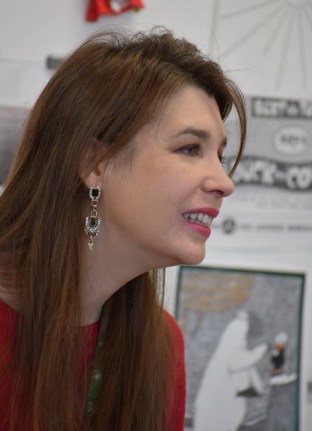

Aimee_Parkison_2019_Utah_High_School_class_visitAimee Parkison is widely published and the recipient of numerous awards and fellowships, including the Catherine Doctorow Innovative Fiction Prize, the Kurt Vonnegut Prize from North American Review, the Starcherone Prize for Innovative Fiction, a Christopher Isherwood Fellowship, a North Carolina Arts Council Fellowship, a Writers at Work Fellowship, a Puffin Foundation Fellowship, and a William Randolph Hearst Creative Artists Fellowship. She currently teaches creative writing and literature in the MFA/Ph.D. program at Oklahoma State University.
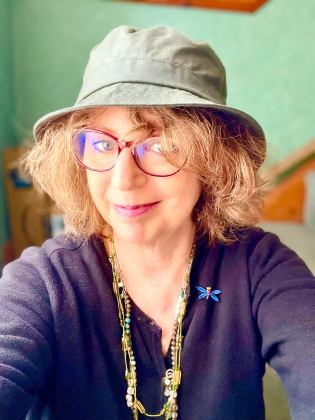
Meg_Pokrass_author_photoMeg Pokrass is the author of seven collections of flash fiction and prose poetry, and her work has appeared in hundreds of literary publications and best-of anthologies, including the Best Small Fictions and the Wigleaf Top 50, and is forthcoming in the 2023 Norton anthology Flash Fiction America, edited by Sherrie Flick, James Thomas, and John Dufresne. Meg is the Founding Editor of the Best Microfiction anthology series. She lives in Northern England and wears many hats.

Dogcalling by Sage Tyrtle

I was waiting to cross the street when I heard humans barking. I turned, and a convertible Mustang full of young men howled with laughter. One screamed, “Only a dog would look if they heard barking, you fucking ugly dog!”

I didn’t say anything.

The barking got bigger, faster, the terriers transformed into Great Danes. Two men half-stood in their seats, spit spewing with every bark. The light changed and the Mustang sped off, shrieks of “ugly dog” and “fucking dog” drifting back on the wind.

That wasn’t the first time a stranger called me ugly. It wasn’t even the hundredth time. The first time I was five. A blonde girl examined me, her impeccable nose almost touching my cheek. She said, “What’s wrong with your face? You’re so ugly.”

I was born in 1972 with a cleft palate. Put your finger right under your nose. Trace down to your lip, following the line of your philtrum. I was born without a philtrum. I was born without that connection, and the split, the cleft, ran right through the roof of my mouth.

I was born looking like a little kid drew a cat’s mouth on a human face. And the surgeons did their best, but it was still 1972. I have a scarred upper lip and a smushed-in nose. In North America, surgery’s improved so much that I never see a young person who looks like me. But every once in awhile I’ll see a stranger my age, with the same scar, the same nose. And I always feel this hot flush of joy, have to stop myself from running to them, to hugging them tight, to shouting, “Hello! We look the same! We’re from the same place!”

After the Mustang sped away I wondered why that moment, a drop in an ocean of nasty moments, was such a gut punch. Perhaps it was the calculated script. A car full of young men who had figured out the perfect way to get women to “admit” to being ugly, and when their plan worked their rapture was grotesque.

I wonder what would have happened if I’d shouted too. “Driver guy, you have brown hair!” or “Baseball hat guy, your dad was never kind!” or “Hey you in the backseat, you put sedatives in Solo cups at frat parties!”

I wonder what would have happened if I’d turned into a harpy and flown at them. Majestic wings breaking arms, razor talons drawing blood, beak pecking out eyes. Their gleeful barks turning to screams.

But instead I leaned on the telephone pole, dizzy with rage. I waited another light cycle before crossing the street.

As I got older, I discovered that being beautiful was no better. One friend told me about being the only person on the subway car when a drunk man got on. He sat next to her, he asked her out. She said no. She said no, but she was very nice, because it was a long way between stops, and it was 1 AM, and she was afraid. The man kept telling her how beautiful she was, while she weighed which would put her in more danger: staying on the empty subway car, or exiting and being followed. What saved her in the end was how drunk the guy was. She got off, was able to run up the stairs much faster than he could, and lost herself in a big crowd of people heading home from the bars. They’re angry when I’m ugly and dogcall. They’re angry when she’s beautiful and catcall. The game is rigged and all I’m trying to do is, you know, walk to the fucking library.

In 1991, I met my husband Todd on the internet. The baby internet, the internet that was just words on a screen. No images. No video. He told me he loved me before he knew what I looked like. He fell in love with my words, and I fell in love with his.

Many years later, I was walking with Todd and our son down the street in Montreal. We were laughing, all three of us, and a young man slowly passing us in a car shouted something. His Quebecois accent was thick, and I called, “Sorry, what? I couldn’t hear you,” and then kicked myself for being so foolish as to ask.

The man called again, “What a beautiful family! You are a beautiful family!” and we all laughed with delight. But that’s not the best thing a stranger ever said to me.

I’d just finished telling a story on stage in which I said everything I wish someone had said to me when I was a teenager. When I was waking up every day and chanting, “You ugly fuck, you should die,” in the mirror.

There are a lot of words in that story, but they all mean the same thing: you are worthwhile.

My husband was waiting as I packed up my props, and a seventeen-year-old girl came walking up to me. She whispered, “Hi. Um, I just wanted to say thank you. For the things that you said in your story.”

I told her how much her words meant to me. I asked if I could give her a hug, and we hugged for a long time, and I didn’t know how to say it but I hoped she understood that what I wanted to tell her was this: I was you, once. And someday, you’re going to be me.

After she left, I burst into tears. I cried on the sidewalk and on the subway and on the bus. I cried and cried. I cried so hard that two women sitting on the bus glared at my poor innocent husband, which made me giggle and then sob even harder.

I turned to the window, taking deep breaths. For a moment I saw the ghost of a Mustang convertible before it fell away into the darkness.


sage_tyrtle_author_photo

Sage Tyrtle’s work is available or upcoming in X-R-A-Y, The Offing, and Apex among others. She’s told stories on stages all over the world and her words have been featured on NPR, CBC, and PBS. She runs a free online writing group open to everyone. Twitter: @sagetyrtle

Signs of Life by Audrey Carroll

She thought of it as a kind of game: every time she thought of the dead, she needed to fill her house with something living. It started simply enough with potted basil, potted violets, potted Venus flytraps, things with roots and the safety of soil and nothing but sunshine. They need not worry about drowning because they only ever got the right amount of water; they need not worry about withering, because the house was always climate controlled. But then she moved on to fish and mollusks. It started with a small platy, then a snail, then another snail, then dalmatian mollies that gave birth and ate their babies all in the same day and she decided to count all of the babies’ deaths as one so that she did not have to buy two dozen living things as penance for thinking about the dead. Instead, she bought a small potted peace lily. But then, after she’d bought as many small things as seemed possible and her thoughts of the dead lingered for longer moments that sometimes lasted for entire afternoons, she moved up to bigger animals—dogs, cats, birds, and even a particularly friendly bearded dragon that an old co-worker was looking to rehome. She filled the place so fully that it seemed every inch of floor was coated in something or someone. It was difficult to see around the place because of the collection of Ficuses, ferns, and bamboo that made the place so lush with green, that made it so easy to breathe. She had chuckled to herself about her mother’s favorite saying with the forest and the trees, and then she’d needed to feed the dogs and immediately go to the store and pick up a catfish for one of the aquariums. She had no cause to leave the house except for supplies, no one to speak to or answer to. Her hours were monopolized by care, her hands so busy watering and cleaning and preparing that she hardly had time to think of the dead. The place looked like an island from a picture book she’d read as a child, one about wild things, one about escape. If she took off her glasses, the rooms around her blurred. Nothing had walls or boundaries. All there was was wild green and animals chattering away. The place was so full of life that thinking of the opposite was impossible. And then, one day, she smelled the faintest hint of decay. She left to bring back something living. But when she returned, the rotting stench was worse. She had surrounded herself with so much life that she could not find the source of decomposition, as though it were mocking her. And every moment of every day she thought about the dead, but now there was no escape. She could not leave to bring back more life, to cover up the worsening signs of death. She had no choice but to live among the expiration, a reminder of it dawning again and again with each stubborn breath that her own lungs demanded.


Author_PhotoAudrey T. Carroll is a Best of the Net nominee, the editor of Musing the Margins: Essays on Craft (Human/Kind Press, 2020), and the author of Queen of Pentacles (Choose the Sword Press, 2016). Her work has been published or is forthcoming in (mac)ro(mic), Miracle Monocle, The Broken Plate, Elsewhere: A Journal of Place, So to Speak, and others. She is a bi/queer and disabled/chronically ill writer who serves as a Diversity & Inclusion Editor for the Journal of Creative Writing Studies. She can be found at http://audreytcarrollwrites.weebly.com and @AudreyTCarroll on Twitter, Facebook, and Instagram.
How We Were Fiction by Sacha Bissonnette

In a way, it was my fault. We always hosted on Fridays. It became our thing. It was convenient. Our friends and their friends would come to us, and we barely had to move as we drank. If we did leave, it was down the street to the college bar that smelled of chemical cleaner and patchouli.

I asked June to stop annoying our friends with her stories. I told her to write them down and do something else with them. I told her she was just randomly spouting them, and for who?

“I do it for me. For us.”

But really, I was jealous. I could never hold court like she could; the ruby-red wine in her crystal glass would swoosh up to the brim the more animated her stories became, but would never spill. Newcomers with ironed collars, wide brimmed hats and clear glasses would corner me later. Was she single? “I need more ice,” I’d say, burying my head in the freezer, until either the trays were empty or my glass was just ice.

The way June ushered us into place reminded me of my mother. Story time carried weight in my family. Mother read us Hughes and Dumas, her tired brown hands slowly flipping through the battered pages of the stories. My brothers and I all knew how they ended, but we couldn’t get to sleep without them. I would stay up the longest, to hear them end, before I could fall asleep.

“Good night sweet princes,” she’d whispered, as we all got a kiss, from youngest to oldest, the same order every time.

I met June a week before my mother’s passing. I had difficulty with the order of things, of grief, and paperwork and finances. I attempted to write a eulogy before I spoke to any family. I couldn’t. I couldn’t figure out how to arrange my mother’s life into a single story. June helped me through the process, and I fell in love with her for it. She rewrote the eulogy and made my mother sound like the heroine of a Great American Novel. Which she was to us.

June had an order to her stories. When she had us all seated on the couch or the floor, she would shoot me a glance to make sure I was paying attention. I would stare back in mock attentiveness. I was there, wasn’t I?

The first story was always about a woman who kept a bowl of seeds under her sink. She would try and grow them when she was feeling lucky, but often she didn’t feel lucky. Once a month she would reach into the bowl and pull out three seeds. She did this for a year, exactly twelve months of growing. Okra to morning glories to fennel. One day, she came upon a seed that wouldn’t grow. This little seed got all the attention. She forgot to care for and water the other plants. Eventually they died. The seed grew into a beautiful orange flower that gave off an awful smell. The stench was so bad that the woman ripped the plant from its pot and threw it out the window.

This story always got mixed reactions. I asked June to cheer up her material when people started to drink. I said that people can’t handle these dark endings, but she refused to break her sacred order. It was always, always her opener.

The second story was about these twins in the Midwest. As June’s wine disappeared, she played up her narration. There would be accents and wild hand gestures. As people finished their drinks, I’d jump in and play second fiddle.

The twins were the sons of an infamous bank robber. They adored their Daddy and wanted to be bad just like him. Daddy taught the twins to crack safes, but they could only manage with the other’s help. Their adeptness was a blessing, but their curse was to need each other. See, the twins only rarely got along. During one fateful heist, they began to bicker. When the cops showed up, they were wrestling on the floor, but as they saw the police, they both reached for their guns. We acted out the firefight to the whoops and whistles of our audience. Some nights, the twins went down in a blaze of glory. Other nights, they snuck out the back of the bank.

Cliché, but I didn’t care. It was fun. June looked at me differently when I was up there, bank robbing and gun slinging with her.

The third and final story was never the same, except for the ending. On some nights, June danced. She looked truly beautiful as she swayed in front of those watching with bated breath or half-shut eyelids. She asked, but often begged, the crowd to join in. There was singing, too. Sometimes a beautiful rendition of St. James Infirmary, sometimes it was The Song That Never Ends, until she broke into an uncontrollable sob. Someone would signal me to peel her up off the floor and bring her to bed. She would fake sleeping until I was done tucking her in as tight as I could. Every time, as I turned, she would ask,

“Do you still love me?”

“Yes,” I always answered, unsure of whether this was part of the performance.

“Only when we’re bank robbing and gun slinging? Only in our stories?”

“No,” I answered, annoyed by the same questions I heard every Friday.

A trial separation was what she wanted and I agreed. I booked a stay at a hotel to give her space. By the second week, I ran out of boxers. I popped by and found her lying on the hardwood floor, surrounded by papers, writing with intent. Seeing her there, it became clear that it was my fault. She had been carrying the burden of our story all by herself. I reached into my pocket and pulled out a pen.


pic_author_-_e_2

Sacha Bissonnette is a short story writer from Ottawa, Canada. He is reader for the Wigleaf top 50 series. His work has appeared in Wigleaf, Lunch Ticket, SmokeLong, and Cease, Cows, among other places. He has upcoming short fiction in Ellery Queen Mystery Magazine, Ruminate, BULL, and Terrain.org. He is currently working on a short fiction anthology with the help of a National Canada Council for the Arts grant, an Ontario Arts Grant, and a Youth In Culture Ottawa Grant, and was recently selected for the Writer’s Union of Canada – BIPOC Writer’s Connect mentorship. He loves film and comfort food and tweets @sjohnb9

The Middle Ages by Alyson Mosquera Dutemple

Their tour would start any moment now, and though Randi wanted to get in line in the church courtyard, Gwen stood her ground, insisting that they wait for the homo sapien to arrive.

“I’m sure there’s another later,” Gwen lied vaguely, scanning the street even as the guide started collecting tickets, even as he announced that this was, indeed, his last group of the day. When Randi, who had arranged their schedule so carefully, checking and rechecking the reservations, confirmations, reminded her that this was their last chance to go inside, Gwen was flippant.  “Aren’t we a little old for skeletons anyway?” she asked, ignoring the fact that she herself was the one to show Randi the skulls in the tour book in the first place, to propose they go see them on the one free afternoon of their 9th grade trip to Dublin. But this was back when Gwen still cared about doing things with Randi, back before discovering the homo sapien and his lurid, sucking mouth on the back of a bus to the Cliffs of Moher they shared with their brother school.

When all the stubs were collected, the guide turned to Randi and Gwen, asked if they were joining, and though Randi wanted more than anything to queue up, to see those human remains (some of which, she remembered with a pang, dated back to the Middle Ages!), out of loyalty to Gwen, she demurred, No, thank you.

The crypt creaked open, and Randi watched the tourists file down, two by two, the whole world, it seemed, determined to couple up around her. Even in the still of night, pairs of quiet footfalls while Randi pretended to sleep. The flash of hall light as Gwen unlocked the door, and one shadow on the wall became two, as the homo sapien crept into their room, into Gwen’s bed. Though each morning she made herself promise to ask Gwen what she and the homo sapien did in the quiet, in the dark, Randi kept curiously losing her nerve, as if she were afraid of what she might learn. When the last visitor disappeared into the recesses of the crypt, Randi found herself a little relieved. She both did and did not want to get a glimpse of those bodies stripped of life down below. She dared herself to stand on tiptoe, to crane her neck. She couldn’t see any bones from up here, but she imagined she could smell them, the must of accumulated years, the tang of skin bitten away, the tiny microbes that had nibbled it still present in the air now wafting towards her. It galvanized her, she imagined, the essence of old souls. She would do it, she decided. She would ask Gwen for the truth. But when she turned to do so, the homo sapien was bounding through the gates in long strides, and Gwen was stepping forward to greet him, to pull him close, too close, in the shadows of the courtyard. As their lips opened, as the flesh of their faces rubbed and touched, the guide shut the crypt behind him, and Randi sealed her own mouth, trapping in there the last little dregs of the dead.


DutempleauthorpicAlyson Mosquera Dutemple’s work has appeared or is forthcoming in Colorado Review, Passages North, DIAGRAM, Wigleaf, and Pithead Chapel, among others, and recently received an Honorable Mention for Cincinnati Review‘s 2021 Robert and Adele Schiff Award. She works as an editorial consultant and creative writing instructor in New Jersey and holds an MFA in fiction from The Program for Writers at Warren Wilson College. Find her on Twitter @swellspoken and at www.alysondutemple.com.
EUPHORIA=WHEN I HELP THE BODY REMEMBER IT COULD BE MINE by Bojana Stojcic

Every morning I have my usual crise de panique on the way to work—my regular I want
something, and then I don’t, there’s no time (when is the right time), I have nothing to lose, I
have nothing to gain, what if I fail, or even worse, what if I don’t—only this time the fatigue and anxiety drug on well into the day, and it wasn’t until I released that I finally found some relief, which was pretty wow, the way the new mother feels energized by a few hours of sleep, the way she forgets the moist sickness rising up in her throat when the baby pulls on her nipple and her heart beats faster, before hormonal shifts, before exhaustion, before guilt, before the blinds drawn shut, the house forgotten, before pressing her face into her arms, hands digging deep into her flesh like it’s a peach, before pulling the skirt over her head as if to disappear, as if to dissolve into the air and be gone gone gone, before I woke up tired as fuck again the following day, before I was there but elsewhere. In the shower I stayed worried, though I knew if I panicked, I’d feel way better, more myself, so after cell-scrubbing cleansers, after toners, after serums, I put my head between my knees and let it bang in.


pic
Bojana Stojcic, a native of Serbia living in Germany, has work featured in Barren Magazine, Spelk, Okay Donkey, MockingHeart Review, and Versification, amongst other publications. She wishes she could just put her feet up and heave a euphoric sigh of relief.

Mother’s Obake Shivers Under Your Bed by Melissa Llanes Brownlee

It’s waiting to reach its impossibly long arms for the shirt you ripped at recess, the one you
weren’t supposed to wear to school. It wants to trace its knife sharp fingers through
notebooks filled with the hundreds of I won’t draw in my notebooks during class lines you
had to write because you were caught drawing in your math, English, social studies, science
notebooks again and again. It’s ready to drool over the jeans you bled through, nestling its
heart shaped head, veined and bumpy like the red anthuriums in your mother’s garden, in the rusty bloom. It craves the tears you’ll shed when your mother finds these things under your bed. Its spindly arms and legs ready to grab you and hold you safe among your hidden things.

mlb bio pic Spring 2022
Melissa Llanes Brownlee (she/her), a native Hawaiian writer living in Japan, has work published or forthcoming in SmokeLong Quarterly, Reckon Review, The Hennepin Review, Cheap Pop, The Razor, Milk Candy Review, Cotton Xenomorph, and Atlas + Alice. She is in Best Small Fictions 2021, Best Microfiction 2022, and the Wigleaf Top 50 of 2022. Read Hard Skin, her short story collection, from Juventud Press. She tweets @lumchanmfa and talks story at www.melissallanesbrownlee.com.

The Foundation for the Foreseeable Future by Jeffrey Hermann

I was an orphan once. Lucky me it can’t happen twice. The story was my parents were a dime and a penny. She wore a long, elegant coat with a belt. He was a gun misfiring, or an empty suitcase. I can’t remember.

We played baseball in the yard behind the building. I remember. There was a runner at first, two outs. The batter was behind on the count. Our team felt lifted into the summer air. The pitcher looked into the clouds. He dropped the ball in the dirt, walked to the fence, opened the gate and disappeared. I lived in left field.

One morning I thought I saw them passing by in a car. They looked like two competing geometric shapes. Two hotel guest keys. Two identical planks of wood. She wore the sky as a hat. He held a bird in his mouth. A little struggle still in the wings.


Jeffrey Hermann’s poetry and prose has appeared in Rejection Lit, Variant,
UCity Reivew, trampset, JMWW, The Shore, and other publications. Though
less publicized, he finds his work as a father and husband to be rewarding
beyond measure.

Departures by Annie Frazier

The TSA line in Orlando snakes through mazed partitions, people tacking onto the back of the line in droves. That’s where we need to be, but Aubrey won’t abandon her Mickey Mouse balloon. On a bench in the atrium I suggest, ask, beg. But: No, Mama! Cheeks scarlet despite sunscreen globbed on hourly all three days we tromped around the most magical place on earth, Florida sun searing the near translucence she inherited from her father. Father I brought us here to learn how to live without after he made it clear he’s gone gone.

We’re dangerously close to missing our flight. I ask her for the balloon again, but she crosses her arms. I say, I’m gonna have to count to three. Her lip quivers. I don’t want to take anything from her, not right now. So I breathe and say, One more minute baby but then we gotta get on this plane and go home. She looks up at me, brown eyes wide and dark lashes slick with early tears, then pats my thigh three times slow. So she won’t see my face crumple, I hook my arm around her tiny shoulders and slide her across the bench, hold her against me. Her body feels so fragile, such a breakable little thing. I don’t want to go home either. Empty house, new life stretching unknown before us.

An older boy wails sharp and high into the huge bright space. Aubrey stares at him, then at the yellow smiley-face balloon above him drifting up up up until it bumps to a halt against the glass of the ceiling. She looks back at her own balloon, breathes slow three times like I’ve been teaching her. Between thumb and forefinger she pinches the silver ribbon looped loose around her wrist, slides it over her fist. She releases and watches Mickey float float float. Says: Byebye, Mickeyboy. Then, like nothing: Come on, Mama. Hurryhurry. Chin up, she marches forward. Does not wait for Mickey to nestle into an elbow of steel beams, third side of a grinning triangular huddle with Ariel and Elsa.

It’s becoming a pattern, apparently—my baby girl refusing to watch a man go. Angling away instead. Just like when he walked out, Aubrey slipping from the room before he could get out the front door. A coolness to her I’d not seen before. This time, again: Mama hurry. I follow her lead, fumbling our bags and boarding passes, daunted by my mystery child but not slipping into praise, not saying: So brave, babygirl.


image_6487327

Annie Frazier lives in North Carolina and works as a freelance editor and Fiction faculty member for Great Smokies Writing Program at UNC Asheville. Her fiction and poetry can be found in Appalachian Review, Paper Darts, Hypertrophic Literary, Longleaf Review, CHEAP POP, and elsewhere. Find her at anniefrazier.com and say hey on Twitter @anniefrazzr.

Breaths and Beats by Sara Chansarkar

Yes, I went there—to her house. Couldn’t stop myself, having returned to the country, my country, after a decade.

She introduced me as an old family friend to her husband—a clean-shaven man in the traditional kurta-salwar, his sandaled feet flat on the floor as he sat back in the couch that looked too high for me. So, I chose a low, upholstered chair across the coffee table. She went inside, anklets ringing, bangles clinking, the pink dupatta trailing behind her. The husband and I talked.

He loved to hunt, he said, pointed to a reindeer head mounted on the wall behind him. Brown eyes gleaming, antlers and hair a little dusty. I told him about my poetry, the collection that came out last month. The reason I was here, after all these years—on a book tour.

“Poet?” he unbuttoned and rolled up the sleeve of his kurta. “Soft man, soft emotion…”

She returned with a wooden tray holding a flower-patterned teapot, matching cups and saucers, a plate of cream-filled biscuits, some fried bread. A little thick in the middle now, but her face was as innocent, as radiant, as in my mind and eyes, my days and dreams, my breaths and beats.

“Begum, have you read any of the man’s poems?” the husband asked her.

“Umm, yes…no,” she stuttered. “Did you start writing after…” she looked at me and in her eyes I saw them bobbing up and down, emerging and submerging—the lines, the pages of verses I wrote for her, for us.

A boy, about five or six, darted in from outside, bringing with him a whiff of roasted meat, probably from the kebab-shop I noticed across the street. He scooped up a biscuit from the china plate. Beautiful boy, just like her: same heart-shaped face, mocha-brown eyes, a straight-arrow nose.

“Ahmed, where are your manners?” she scolded the boy. He grinned and licked the orange-white cream in the biscuit with his tongue.

The husband said, “Son, come here, did you greet your uncle?”

“Uncle, who?” the boy asked.

“Mamu.”

A cough shot up my throat but I managed to gulp it down. He called me Mamu—mother’s brother. Never had I imagined being called that. Her eyes remained glued to the floor as if she were a shy new bride, her fingers pleating an unpleating the laced edge of her dupatta.

“Salaam, Mamu!” the boy snatched another biscuit from the tray and ran past the paisley-printed curtains covering the doorway.

“The thing about hunting is,” the husband sipped his chai noisily, “you’re not afraid of blood on your clothes, your hands.” He held his large hand in front of his face, examining it. “Once, I extracted a living heart from an animal’s chest. It throbbed in my palm for half a second before the dog pounced on it.”

A dog barked from somewhere deep inside the house which I assumed had many rooms opening up into a courtyard where the animal was tethered. The deep, threatening bark, echoed in the air until the man shouted, “Bahadur!” The dog stopped after a reluctant yelp, an acknowledgement of its master’s order.

“Something about freeing a heart…banished into a cage, pushing, beating restlessly against the ribs. Maybe, you can write a poem about it. Poets know hearts better than anyone else.”

“Uh, huh.”

“It was this one’s heart, Begum,” he addressed her and pointed to the deer-head on the wall. “The animal you said was the most beautiful creation of nature.”

He roared with laughter, “If my wife likes a face, I’d pin it here for her, forever. Pretty woman that she is. Don’t you agree, Poet Sahib?”

I fixed my gaze on the curtains and took quick sips of the tea to mask any expression my face may betray. My toe itched inside the Italian leather shoe.

He continued, “You married, Poet Sahib?”

“No.”

The word hung there, oscillating like a pendulum between the man and me, creating an impassable stupor. He pressed the cup and saucer into his lap, her hands clutched them so tight her knuckles turned white. The air grew unbreathable, thick, as if ready to precipitate. I reached over and placed my cup back in the tray to create some movement.

Thankfully, a savior arrived—the boy, rushing in through doorway, holding a cricket bat and a ball. “Abba, let’s play,” he said to his father.

“Yes, let me wear my shoes,” the husband rose, his head reaching the same height as the deer-head on the wall.

“I should leave,” I stood up, embarrassed for my small stature, and extended a hand towards him. He squeezed it hard in his bear-like paw and turned to her, “Begum, remind me to grease my guns. Sometimes, even when a man’s not hunting, the game is on.”


Sara_ChansarkarSara Siddiqui Chansarkar is an Indian American writer. Born to a middle-class family in India, she later migrated to the United States. Her work has appeared in Reflex Press, Flash Fiction Online, Kahini, and elsewhere. She has been highly commended in National Flash Microfiction Competition, shortlisted in SmokeLong Quarterly Micro Contest, shortlisted in Bath Flash Fiction Festival. She is currently an editor at Janus Literary and a Submissions Editor at SmokeLong Quarterly. Her debut flash fiction collection Morsels of Purple is available for purchase on Amazon and in local bookstores. More at https://saraspunyfingers.com. Reach her @PunyFingers.