
With the kids out of the house Stacy took up pottery while Rick took out his skis to mix business and pleasure on trips to the Rockies. “Can you believe it,” he said, “they use dynamite to start avalanches, to control the inevitable.” She made plates that came out long and wobbly. “They look like someone played Frisbee with them,” she told her teacher. “At least they’re playing,” he said. Everyone laughed.
In Utah, all the roads through the passes were closed the next year and Rick was stuck at the lodge. “This is the dream,” he said. “I’m happiest out here on the slopes in all this white.” She imagined it like a kind of heaven. Where was she happiest? The earth seemed to close in around her, encase her in glass, blue marble that it was. She made bowls and bowls and bowls, imagined filling each one up. They escaped the cabinets, lined the shelves and windowsills, cradled the nothing that was always there.
The next year she couldn’t have had a thirst big enough for all the cups that lined up on every nightstand and countertop and end table. The year after that she had exhausted dishware, so she planted brightly glazed decorative mushrooms that grew on metal stakes in her garden. They would never fade. This was when Rick disappeared. Buried in white. “The inflatable saved me,” he said after the rescue a day later. “I floated right up to the surface.”
The following year she started on the totems, nothing religious, just shapes: a red ball, stacked on a blue ring, on top of flaming wings. Rick made the poles. The totems filled the rooms with undefined ritual. He broke his left leg on a tree trunk going off-trail and lay around the house amid the towers of her clay cosmos, the pinwheels and flowers and four-pointed crowns. The grotesque smiles of the planet’s faces. He was her only congregant. “Church,” he said. “I’m at church.” She flicked him lightly on the shoulder. “Don’t be silly,” she said. “You go off into the snow for that.”
The next year his tracker sent out another signal. Ski patrol went out to find him under the white. They just kept digging and digging while she waited for the call, for the inflatable to engage and raise him up again. Days passed and still they could not find him. In the empty silence she imagined him in the white, searched for him through it as though it were the emptiness on her wobbly plates, the emptiness in the bowls she’d thrown, the cups that lined her shelves. She imagined him growing right out of the ground like the mushrooms in her garden, saw him twisting through the cosmos somewhere out there among her totems, and the more she looked for him, the more she realized he could be anywhere in it, anywhere at all. Even everywhere.
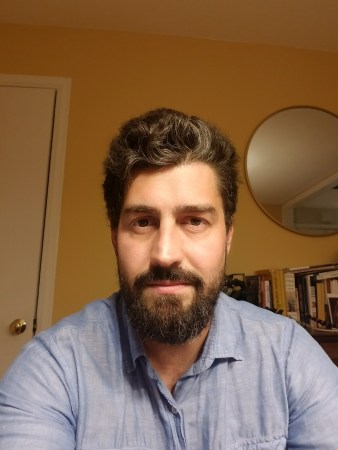
Matthew Zanoni Müller is a writer of fiction and creative nonfiction and a community college professor. His work has appeared or is forthcoming in numerous journals including BULL, Southeast Review, The Boiler Journal, Hippocampus, and others. He lives in Western Massachusetts. To learn more about his writing, please visit: www.matthewzanonimuller.com




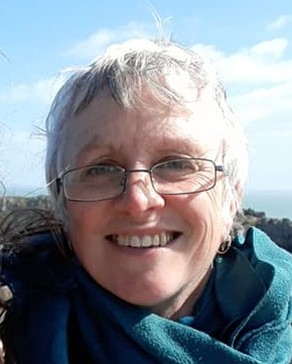


 Kristine Langley Mahler is a memoirist experimenting with the truth on the suburban prairie outside Omaha, Nebraska. Author of Curing Season: Artifacts (WVU Press, 2022) and recipient of a 2021 Individual Artist Fellowship from the Nebraska Arts Council, Kristine’s work was named Notable in Best American Essays 2021 and 2019 and is published in DIAGRAM, Ninth Letter, Brevity, and Speculative Nonfiction, among others. She is the director of Split/Lip Press. Find more about her projects at kristinelangleymahler.com or @suburbanprairie.
 Lost Balloon