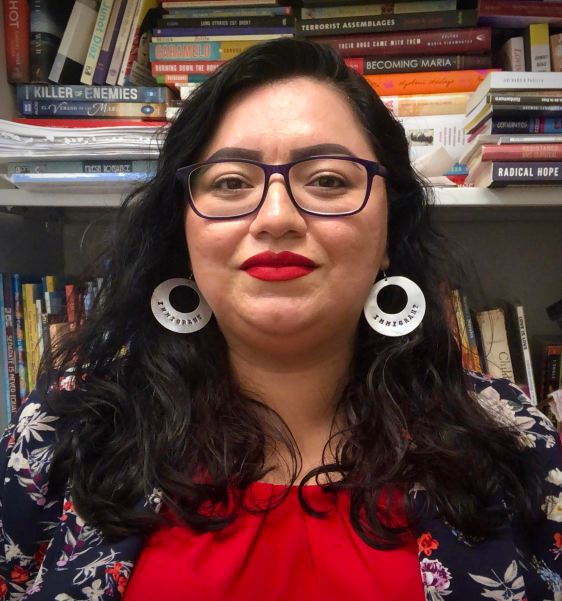
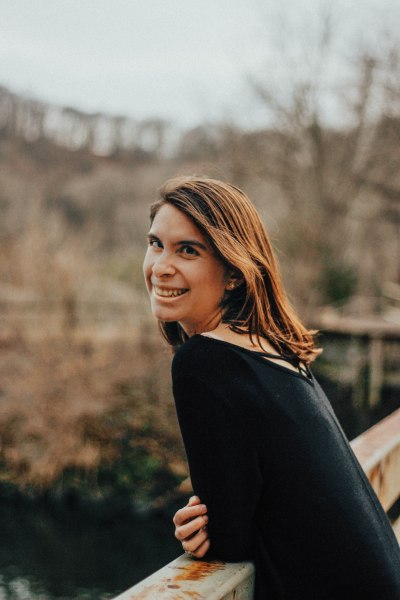
The Field of Dead Girls by Cassandra de Alba

A potter’s field held unwanted bodies. Some Puritans did not mark their graves, viewing their dead as blessed to have transcended their sinful husks, to have achieved perfection without the weight of flesh holding them to earth.

The dead girls can float, but they still sin.

Where are the bodies of the dead girls? In the basements of houses and trunks of abandoned cars. In the woods, mostly, covered over with leaves or under a few flimsy inches of earth. In pieces in an oil drum, cinderblocked to a riverbed, dumped off embankments on nights with no moon. The dead girls don’t see this as transcendence. The dead girls want their bodies back.

What do the dead girls see? Milk-film over their blinking eyes. A world gone on without them, a thousand petty dramas playing to an audience of the not-bereft. A wave endlessly arguing with the shoreline, stealing a few grains of sand every time.

The living dare each other to walk through the field of dead girls, though of course they can’t see anything but air. Only the sense that something is wrong, air charged with grief like a storm is always coming. The field where no grass grows, only patches of low bramble with fat, untouched berries. The kind of quiet that hums danger into your ears, fills them with a warning you can’t parse. At night it’s never quite dark, even when the Pizza Hut’s lights shut off and the nail techs are counting their tips in their cars. Anyone alive who walks through that place feels claustrophobic even out in the open, their skin seeming to tighten over their bones. And anyone who isn’t would see how the dead girls follow them in a glowing swarm, pressing from all sides, desperate for warmth.

Most of the dead girls are cold. They can feel the rush of the polluted river, the snow promising itself to the mountainside, the wet of the pine needles’ slow, sympathetic rot. The chill of their urgent loneliness even surrounded by the only others who understand their not-life. It’s no wonder the grass refuses to grow.

The dead girls whose bones are buried unmarked claim to be colder than the rest of them. They have new names in the living world, called for the landscape their body was plucked from – Juniper Mountain Doe, Horseshoe Creek – or the human trappings that still clung to it – Cerulean Jacket, Twin Rose Tattoo. These girls make incantations of their true names, pace the perimeter whispering: Lucinda. Lucinda. Lucinda. Maria. Maria. Maria. I was. I was. I am. Some of them are afraid they’ll forget. Others are imagining their voices as radio waves, arcing over the miles until they reach what remains of their source.

Some of the dead girls know they’ll never be found. There will be no cemetery plot, no epitaph – no one who would think to compose one, no human alive up late agonizing over a lost friend. The way the found blink out of the field, some of the forever-missing blinked out of life. No one mourns.

The lucky girls only stay a few days. Barely have time to turn around, see the spot that could be eternity, make a few friends and they’re gone. A car pulled from the quarry like a bad tooth. A door broken open into a bloody room. No one knows where they go next, only that it must be better than here. There is no sense in missing them, now that they’ve been found.

The oldest dead girls remember when the building’s foundation was dug, watching the men lift their dirty shirts to wipe sweat from their foreheads. And before that, when the road was paved in stinking asphalt, and before that, when the cart-tamped dirt was covered in broken stone. And before that, when it was only a few of them and sky and pine in every direction, when they still could have thought this might be paradise.
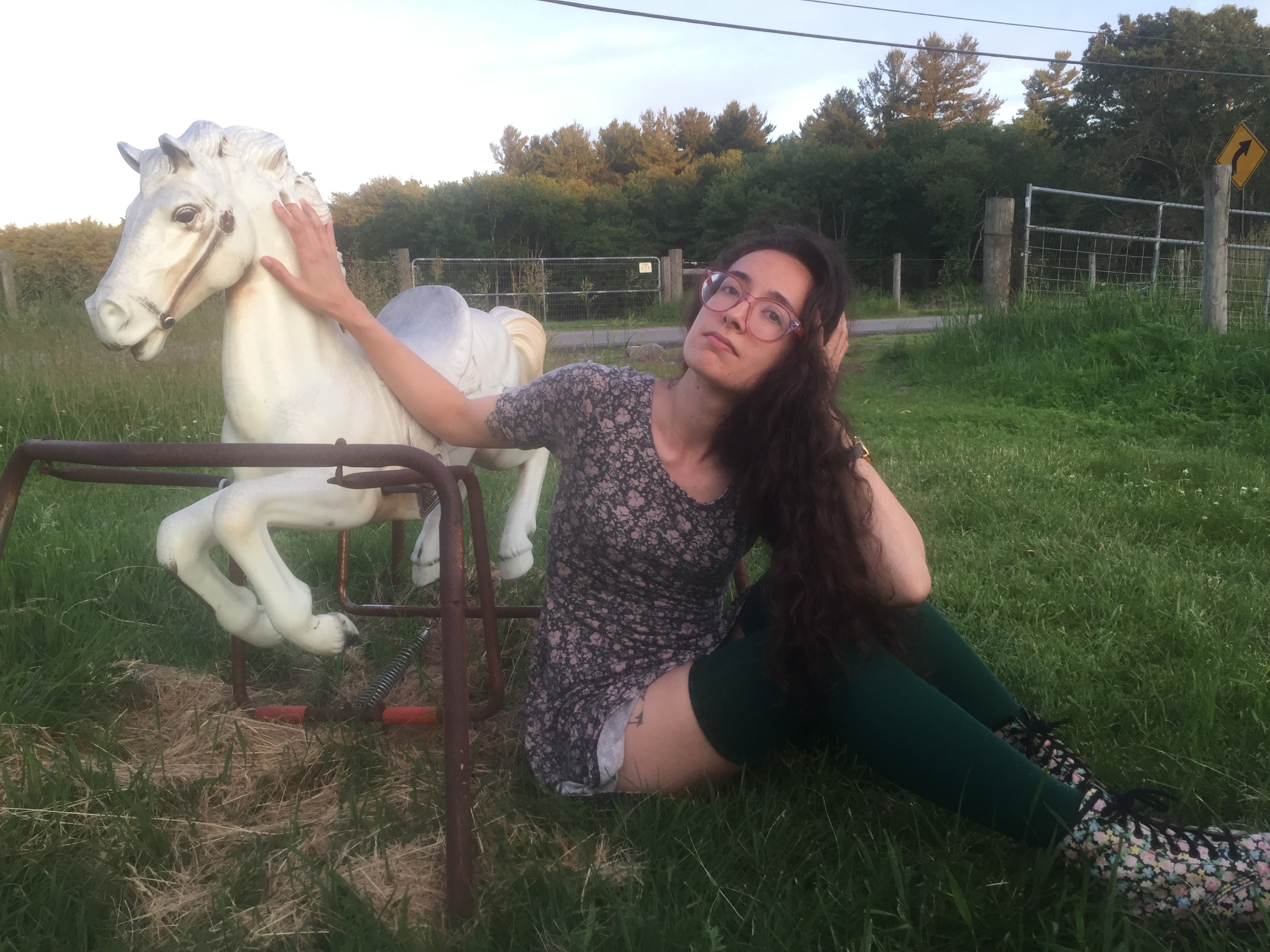

AuthorPhoto_credit_GennaRose_NethercottCassandra de Alba is a poet living in Massachusetts. Her work has appeared in The Shallow Ends, Big Lucks, smoking glue gun, and Spy Kids Review, among other publications. Her chapbooks habitats (Horse Less Press, 2016) and ORB (Reality Hands, 2018) are about deer and the moon, respectively, and Ugly/Sad was released by Glass Poetry Press in 2020. She is a co-host at the Boston Poetry Slam at the Cantab Lounge and an associate editor at Pizza Pi Press.
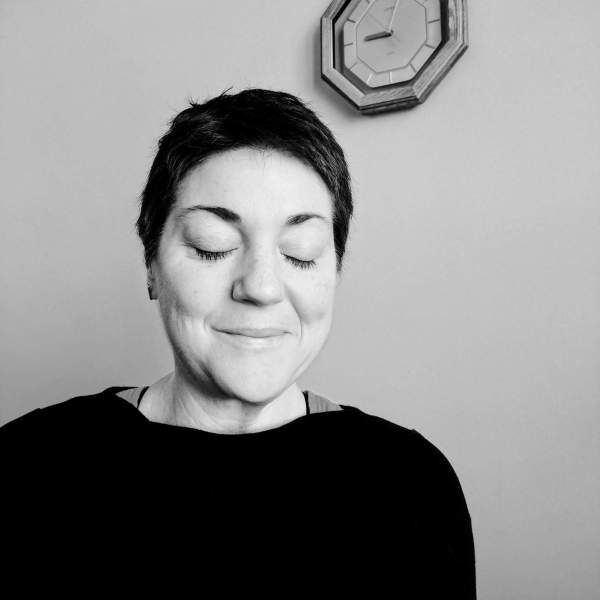
Ex-Lover Speaks of Appalachia by Barbara Costas-Biggs

My second year in Tucson, the town next to my hometown flooded, made CNN, people canoeing down 52, standing on top of their cars. I showed my roommates, telling them I knew that carry-out, knew that intersection.  When I met the boy I was sleeping with, he laughed when I said the word “duvet.” I said it right, I used it correctly.  He thought it was funny that an Appalachian girl knew what a duvet was, maybe even had the audacity to own a duvet.  He told me a story about his mother, a nurse who grew into a politician’s wife, learning about hill people being tended to by doctors on horseback.  He told me like it was yesterday.  Like it was my story.  Like I got my meningitis vaccine from a man sitting in a saddle, savior to us all.


biggs

Barbara Costas-Biggs lives and works in Appalachian southern Ohio. Her work has been published by Glass, Mothers Always Write, Literary Mama, Ghost City Press, 8Poems, and others. She has an MFA from Queens University of Charlotte.


The Way Ash Clumps in Bales by Jennifer Todhunter

The spring we divorce it won’t stop frosting, and I watch Shameless like an addict on Netflix. I trim my hair with scissors I find in the drawer beside the oven in my rental, the ends so split they fray towards each other. It’s these days I miss the arc of our ashtray, the bump of our butts against its glass rim, the way ash clumps in bales. It’s your breath on my back, I think, the feeling of knowing you’re there without seeing you, like shards of a life in my eye. It’s the grasp of the unknown around my neck that has me running down these backroads in the night, half-drunk and half-wanting to forget, the kilometres ticking by like farm fields.

I miss the feeling of a cigarette, of someone’s fingers between my fingers.

I miss Fiona telling Jimmy to fuck off.

I miss the scratch of your beard on my cheek when you roll into my space, while you sleep barefoot and broken toe.


Todhunter_-_author_pic

Jennifer Todhunter’s stories have appeared in SmokeLong Quarterly, Necessary Fiction, CHEAP POP, and elsewhere. Her work has been selected for Best Small Fictions, Best Microfictions, and Wigleaf’s Top 50 Very Short Fictions. She is the Editor-in-Chief of Pidgeonholes. Find her at www.foxbane.ca or @JenTod_.

Reimagining: In Which I’m Not a Picky Eater & I Eat by Moisés Delgado

I top my tacos de asada / al pastor / lengua / cachete / adobada / carnitas with sal & limón, cilantro, cebolla, aguacates, salsa verde & salsa roja, eat both tortillas, half a rábano, the entire serrano, & when I ask for another three tacos mamá doesn’t wait for the sound of an empty stomach, doesn’t ask ¿Will you ever love yourself?


Moisés R. Delgado is a queer Latinx writer from the Midwest. His prose appears in or is forthcoming from The Pinch, Puerto del Sol, Passages North, Pidgeonholes, Homology Lit, and elsewhere. Moisés can often be found dancing on the moon.

Velcro Shoes by Sonia Alejandra Rodriguez

At nine—I can’t stop the trips and falls, the scrapes of my knees against concrete. I like the burn and the drum of my blood gushing out of me. I am split skin. My father teaches me to tie my shoes. Because he’s tired of watching me fall. Or, because he’s tired of picking me up. Hands me the left shoe: “Do as I do?” he says, using the right shoe as an example. And I do what he does—until my mid-twenties, when I’ve pushed everyone I love away, too. He forms two loops with each of the laces, crosses them, pushes one through the opening, pulls tight. “Only one can go through. The other can’t. Entiendes?” And I didn’t know then it was our farewell. I get good at making it seem like my shoes are tied—I tuck the laces into the bottom of my shoes, into my socks, press on the aglets with my heels. I fall and I am split skin and gushing blood. My mother gets me a new pair of Velcro shoes “para que no batalles,” she says. That’s what my mother does best—use bandaids when I need stitches. She wipes my knees to keep me from spilling out. When all I want is to make the gash bigger and bigger and bigger and watch all of me spill over my mother, over my father, until I am everything and nothing. She slaps my hand away because “that’s how you get scars”—picking at scabs growing over wounds. She never tells me all the other ways I’ll scar. And she’ll never slap my hand again, busy with her own scabs. The loops and hooks of my Velcro shoes keep me from falling but at school I’m the wetback, spic baby who can’t tie her shoes. And there aren’t any ways to explain that my parents did what they could. And we’ll never ever feel like enough. And there aren’t enough knots, or hooks, or loops to hold me together. I trip, and fall, and gush. I am split skin. Until I learn I am the one who can go through.


SARodriguez_HeadshotSonia Alejandra Rodriguez is a Professor of English at LaGuardia Community College in New York City. She is an immigrant of Juarez, Mexico and raised in Cicero, IL. Her work has been published in Huizache: The Magazine of Latino Literature, Hispanecdotes, Everyday Fiction, Acentos Review, Newtown Literary, So to Speak: A Feminist Journal of Language and Art, No Tender Fences: Anthology of Immigrant and First-Generation American Poetry, and Longreads.
Context! by Jose Hernandez Diaz

A man in a Mars Volta shirt skated in the city. He was going to the flea market. He was going to buy a pair of gloves. It wasn’t that cold in Los Angeles, but he rode his skateboard late at night, so he needed the gloves. He arrived at the Swapmeet and bought a churro. He ate it. Then he found the vendor with the gloves. He paid $2 for the gloves. He wore them at night when he went out to paint the city with a neon green can of spray paint. He wrote the word:

Context!

On a wall. In the middle of the city. He took a photo. Then he wrote Southeast Los Angeles beneath the tag. When he finished, he skated back home beneath the moonlight. Spring was on the way; he was looking forward to that.


Hernandez_Diaz_TRP_Headshot_1
Jose Hernandez Diaz is a 2017 National Endowment for the Arts Poetry Fellow. He is from Southern California. He is the author of a collection of prose poems: The Fire Eater (Texas Review Press, 2020). His work appears in The American Poetry Review, Boulevard, Cincinnati Review, Georgia Review, Huizache, Iowa Review, The Missouri Review, The Nation, Poetry, Southeast Review, among others. He has served as poetry editor for Lunch Ticket and editorial intern for Floricanto Press.

December by Evan Nicholls

In \  my dream \

He rented a double-windowed farmhouse on the other side of Rokeby–– a flat road between two fields, our road–– and one time I saw him go out and walk his cat after a rainstorm, when the gravel was chalky and white. The cat was on a leash. December was a silent old man. I only learned about him through reading his lips, and reading lips makes understanding a person tedious, though you could say all understanding is tedium.

I watched him \  from the seat of my grandmother’s window  \ flannel curtain \ pulled up to my chest \

This was when I was a child. I was waiting for December to open the front of the farmhouse–– he would walk his cat up the road because he would always have it shit on up the road at the cul-de-sac. And then I was there behind his clapboard legs. I watched while the black cat put its bum in the sky and lowered its mouth to some chalk white water in a pothole puddle, lapping, lap, lap. Then December lowered his catmouth to the water, too. Lapping.

I have told you \ something special here \

For my life, I will never know what the old man got out of the road. But these are facts. December lost his wife young in some violence, before he had lived across from us on Rokeby. He died nine years ago–– I remembered after waking up. The black cat was named Jet Lee. And I am twenty one years old. December’s house caught fire during another rainstorm, when he had an episode of the heart loading the wood stove. Our house got torn down for rot. My grandmother is dead.

I do not know \ what it means \


Evan w_ Farm Hat, LibraryEvan Nicholls is from the peach, fox, horse and wine country of Fauquier County, Virginia. He has work appearing or forthcoming in DIAGRAM, Third Coast, Passages North, Mud Season Review, and The Shallow Ends, among others. He tweets at @nicholls_evan. Find more of his work at evannichollswrites.wordpress.com.
She Says by M.J. Iuppa

The recipe for lime Jello with canned peaches and shredded carrots is a family secret. She says this with a slight smile on her face as her pin-straight, mousy brown hair falls over her eyes. No one knows if it’s side salad or dessert, so it stays on the kitchen table weeping a bit in its green Pyrex bowl. She says this recipe is her growing up in the heartland. Still, she just couldn’t wait to leave her family; and now, they have left her, one by one, without a proper so long. This too is hard to swallow.


MJM.J. Iuppa’s fourth poetry collection is This Thirst (Kelsay Books, 2017). For the past thirty years, she has lived on a small farm near the shores of Lake Ontario. Check out her blog: mjiuppa.blogspot.com for her musings on writing, sustainability & life’s stew.

When Someone Cuts the Tulips from My Front Yard in the Middle of the Night by Christine Taylor

I wonder if they think the world already has too many flowers. Five tulip stems, the heads severed clean by an apparently sharp blade, are left to quiver in the breeze. These five tulips burst from the ground outside the stone-walled flower bed, bulbs gone stray after decades of confinement. I planted those flowers when I was six-years-old, removed the bulbs from the mesh-net bag my father handed to me as gingerly as a six-year-old can. While I watched holding a small spade, my mother dug the first hole, planted the first bulb. Her thin fingers patted the dirt firm. Then I dug and planted. Dug. Planted. After bearing the heavy winter, those bulbs pushed into spring red, glorious. Decades later, I’ve moved on to dahlias, dusty miller, marigolds. Yet the tulips persist.


_MG_0051_copy

Christine Taylor identifies as multiracial and is an English teacher and librarian residing in her hometown Plainfield, New Jersey. She is the EIC of Kissing Dynamite: A Journal of Poetry and the author of The Queen City (Broken Sleep Books, 2019). Christine has been nominated for the Pushcart Prize, and her work appears in Glass, Turtle Island Responds, Haibun Today, and The Rumpus among others. Right now, she’s probably covered in cat hair and drinking a martini. Visit her at www.christinetayloronline.com.


Sunday Morning Girl by Gabriela Gonzales

i am his Sunday morning girl. he picks me up in his ugly blue car, water cup in hand, hangover dripping off his wet hair—he took a cold shower this morning.

a Sunday morning girl wears dresses, floral perfume, and nice shoes. she is not pretty, maybe, but she tries to look pretty. a Sunday morning girl carries her bible in her purse. a bible all marked up and crumpled—if you ask, she could recite verses for you. you don’t try to kiss a Sunday morning girl. you don’t try to touch a Sunday morning girl. you don’t drink wine out of bags or do shots off the fire escape with a Sunday morning girl. you tell her all of the stories, or most of them—enough that she can set you at ease, but you cannot taint a Sunday morning girl. Sunday morning girls are always snow and pure and clean.

i look at him like galaxies and he looks at me like the church doors he opens once a week. he runs the red light while i cover my eyes and laugh and it just makes him feel so exciting.

you show a Sunday morning girl the aftermath of the party, but you do not invite her. a Sunday morning girl helps you clean your fish tank. you open the liquor cabinet in front of her and you serve her black tea. this is how you drink wine out of bags you say, this is how you do shots off the fire escape, you say, here is your shot glass, you say. it’s in the shape of a tiny brown coffee cup. here is black tea and black tea and black tea. ask a Sunday morning girl to sit on the porch with you and watch the flowers fall off the trees like glitter on the blank canvas sidewalk in front of your house—she makes this place look so quaint and pretty, doesn’t she?

he says, “it’s fucking stupid, right?” and then he looks in my eyes and he say “hecking, i meant hecking,” i mean, i didn’t think less of him when he cursed. i didn’t notice until he corrected himself. i’m 21 and have heard worse.

a Sunday morning girl remembers. sometimes she remembers things that you have long since forgotten. a Sunday morning girl puts her hand on your arm when you become bright red. she puts her hand on your arm when you become a pastel shade of yourself. a Sunday morning girl breathes like she has been practicing. a Sunday morning girl always orders tea. never caffeinated. but you make her black tea while you laugh in the kitchen and her hands shake. here is black tea and black tea and black tea and even her excitement is like dust off an attic-ed trunk, like your nose pressed against the pages of an old leather-bound book. a Sunday morning girl watches you while you speak, memorizes the shapes your mouth makes, smiles she smiles she smiles at the way you move. a Sunday morning girl is learning to love you and learning that you are human and understanding and not understanding them at the same time. mouth on the rim of your old mug, sipping black tea, no honey, tastes sweet.

there are stories of the people who fill his house on late nights. i am aware that there is a difference between the people he asks for on a friday night and the people he asks for on a sunday morning. there are midnights, sometimes, when i want to know what would happen if our minds were gone together, what his body would be like on mine, what one am tastes like on his lips and they ring cognitively dissonant with walking down 8th after church, with braiding dandelions into my hair while he watches, with recounting childhood stories, an open envelope for his secrets, his secrets, his secrets, black tea, so sober, in his kitchen, in his ugly blue car, on his front porch, i can’t stop laughing when he talks, i laugh so hard i cry alone in my room when he drops me off because i am not laughing anymore when i am alone in my room, laughing when he talks because those eyes glow, laughing when he talks because sunday mornings make me happy, because i am happy in dresses, watching flowers fall, drinking black tea, i am happy i am happy with my hand on his arm, i am happy with me like this with him, i am happy with you.

you can break the heart of a Sunday morning girl because she won’t leave. a Sunday morning girl cannot touch your face and then pretend she doesn’t remember the feeling of your skin against her hands. a Sunday morning girl remembers your fingers interlocked in hers. a Sunday morning girl misses you when the sun rises and at midday. a Sunday morning girl has no replacements in her back pocket. a Sunday morning girl waits for you to come back. even if you don’t come back. even if you take so long to come back. a Sunday morning girl prays with her eyes closed. it’s always for you.


GGonzales

Gabriela Gonzales is a Creative Writing major at Belmont University in Nashville, Tennessee who writes about the beautiful tragedy of human communication. Her work has been featured in the Live Poet’s Society of New Jersey, the Belmont Literary Journal, Awakened Voices Literary Magazine, and formercactus. She really appreciates giraffes, the oxford comma, and babies dressed like hipsters.