He Relaxes When I’m Gone by Garima Chhikara

I’ve always wondered, Papa—would you be this father if your mother had loved you?

*

I was visiting home after a year. This is how my father and I met, for days or a few weeks at a stretch since I left home for college, which was precisely seven days after my mother’s passing.

Every time we meet, it feels like we are starting over. We talk in pauses, short responses, and fillers, carefully treading around topics like Ma, my career plans, his post-retirement plans, and whether I’m seeing someone.

The silence had grown heavier in our small, overstuffed flat.

My father’s mother (an evil witch, as my mother called her) was coming to stay over.

She had to get some tests done for her ear in the city, my father told me from the kitchen, unwilling to meet my gaze or see my reaction.

It wasn’t difficult to imagine why. My father’s siblings couldn’t be bothered to make these efforts, even though she lived with them and gave them all her love—and everything else she had, including my mother’s gold jewelry, which she took soon after my parents got married.

The next day, I found him obsessively dusting the house.

He didn’t ask me about my investments, but instead asked what snacks I liked to take back with me. He acted like the boys I’d been on dates with, consulting invisible mental index cards.

He has been a good father—he sent me to an expensive school he barely could afford, never commented on my short clothes, bought me a computer in fifth grade before anyone else had one, proudly displayed my silly awards around the house, and occasionally shared stories from his village childhood—stories I wished were more about him than others, but I still cherished them.

He then began wiping the curtain rods in the drawing room. When he asked me about lunch, I lied about meeting a friend.

He didn’t pester me, no follow-up questions either. He wasn’t expecting me to greet his mother, for all I knew, he wouldn’t mind if I abruptly went back on the next flight.

I didn’t know whether to feel grateful for his understanding or betrayed that he sought no support from me.

I wondered if I was wrong in not opposing this. I couldn’t. I didn’t have that power over him anymore. I wasn’t a child who could throw fits. He wanted this familial duty so he could feel like a son. He lacked the lens to see it any other way.

I despised him for having no self-respect. For giving away his hard-earned money after a single phone call from her. For weeping and calling “Ma, Ma…” over and over when he was drunk. All this for a mother who didn’t care enough to visit him after his heart surgery. Who sat laughing over snacks at his wife’s funeral, and said nothing to her grieving granddaughter.

I had not seen him cry once for my mother.

Even when he reached for my phone to explain directions to the cab driver, he didn’t meet my gaze. When I stepped out, he didn’t say bye—just that the cab would be parked outside the block.

When I returned in seconds for my earphones, I saw him lying back on the sofa chair, the wet cloth dropped on his side, staring outside the balcony, as if he had let himself fall back and relax with me gone. He looked like he could finally think. For a moment, I had the urge to shake him out of it, but instead, I turned away and left.
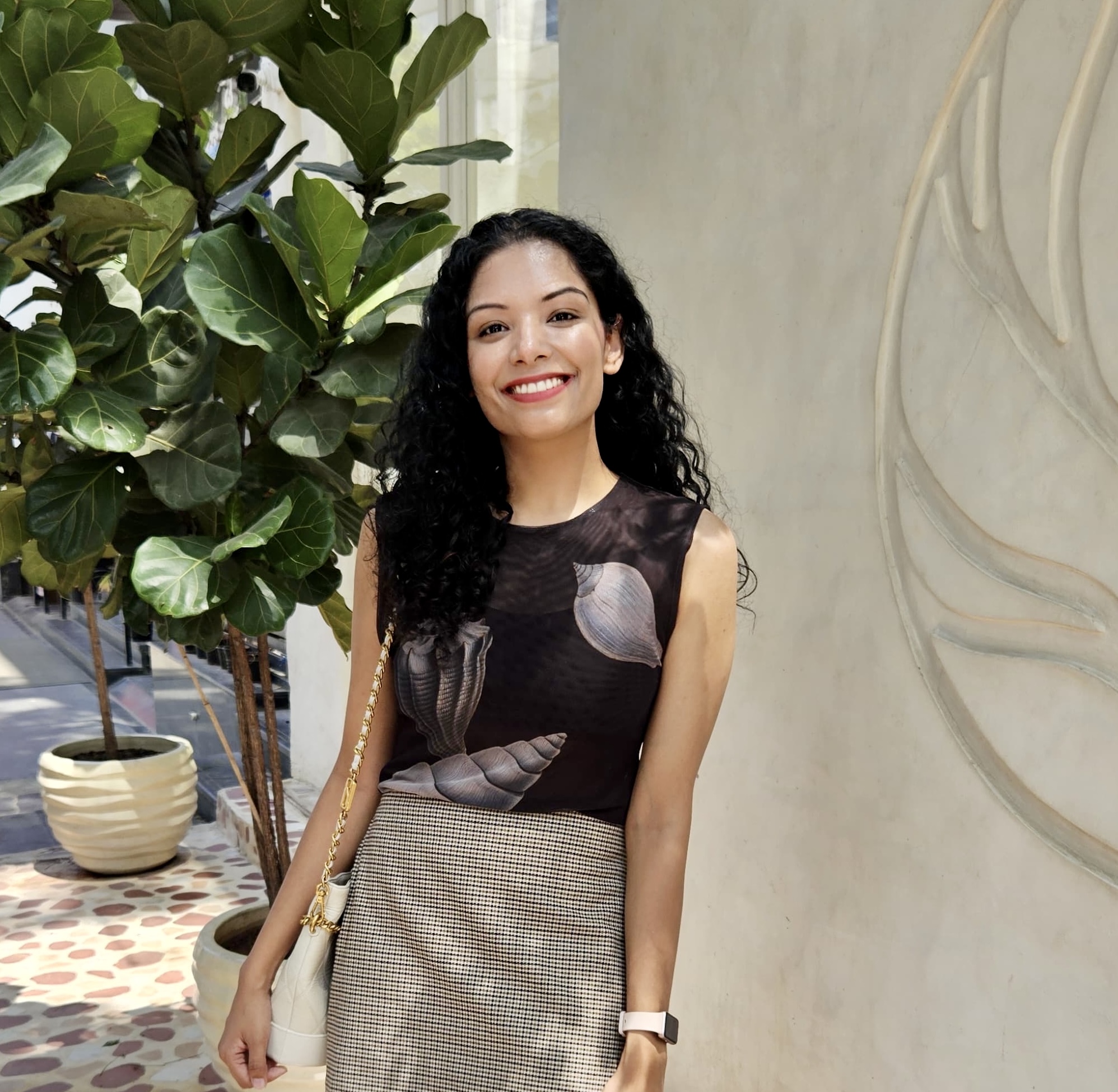

Garima Chhikara is a fiction writer from Bangalore, India. Her stories explore themes of emotional depth and personal transformation. Her work appears or is upcoming in Forge Literary, Hobart, La Piccioletta Barca, and Halfway Down the Stairs. Find her at garimachhikara.com.

Delta Approximately Delta by Vincent James Perrone

Each day, six classes: Numbers, Classifications, Letters, Names, Functions, and Deep Listening. All our parents wanted a nontraditional education or were otherwise indifferent and let us fall into the strange pedagogy, the same way they let their cigarettes burn out in stolen hotel ashtrays.

But we learned.

Numbers taught us how to steal. How to make things add up even when they didn’t. Eve pawned calculators from the storage closet. Nelly bashed the vending machine until it spit out enough quarters to buy us all lipstick—we wore Neon Orchid. Jessie coaxed a few sympathy dollars out of her father when she saw him on weekends. I took the remainders and invested, my mind toward the future.

We were made to understand the classifications into which we might fit. Keynesian. Figment. Daemon. Gas station attendant.

Jessie loved Letters. Calligraphy in bathroom stalls, on fogged windows, or traced out on my bare shoulders. Once, she set fire to the school’s front lawn—a series of scorched symbols only Nelly could decipher. It’s a curse, she said. Eve and I called it a love letter. It looked like this: ∆≈∆.

Eve was nameless until her fifth year. Her parents disagreed on a name until their disagreement segued into a kind of patience. They opted to wait for the right name to arrive. Nominal determinism was in vogue, and no parents, even ours—lazy, abstracted, churlish—could risk the wrong name. Eventually, Eve’s great aunt died and her name became available and irrefutable. But more than ten years later, she’d still refer to herself as namelessness. When Eve and I first kissed, she said I kissed the nameless part of her. When Nelly gashed a spiral into Eve’s knee with a fountain pen, Eve said it was the nameless part of her that bled. Jessie wrote letters addressed to no one, and Eve read them all. The class though, it didn’t teach us anything we didn’t already know.

Here’s an example of a function: Me⇒  Eve⇒  Nelly⇒  Jessie⇒  Eve⇒  Jessie⇒   f(X). And another function might be: Our parents⇒  the school⇒  my memory⇒  bruises⇒  f(neon orchid). I barely passed.

Imagine us on the carpeted floor of the auditorium, arranged in the shape of a plus-sign, our four faces glinting with sweat, our half-tamed acne, fingernails ragged and trembling. To listen deeply—we were instructed—was to hear from outside of yourself. Like the sea in a conch shell or a dopplering siren ricocheting through subsidized apartments. I wanted to hear through Nelly, because she’d disappeared during our last semester, and we heard from our parents that she’d married a cowboy in Montana. We knew it wasn’t true. She’d taken the remainder and ran. What could she hear, out there in the future?

When they called her name at graduation, Nelly did not appear. Eve cried on my shoulder; Jessie flicked a match. I only remember the applause, not the faces of our parents or what happened after.


Vincent James Perrone is a writer from Detroit. He’s the author of the poetry collection Starving Romantic and a contributor to the experimental fiction anthology Collected Voices in the Expanded Field. His recent and forthcoming work can be found in Split Lip, The Los Angeles Review, Action Spectacle, and Pithead Chapel. Vincent is currently based in Charlottesville, VA, where he is pursuing an MFA at the University of Virginia.

Butter by Annabelle Taghinia

The platter with the tea trembled in my hands. The teaware was glass, our finest, translucent rosebuds rising out of the sloping sides, rounded and gentle under cupped hands. If I dropped it, my skin would bear the cuts. Aromatic chaii kissed the rims of the delicate glass as I breathed in deeply. The heat rising from the burning liquid stroked over my knuckles and caressed the backs of my hands. I had carried the platter before. The weight of it held me down. I was holding my future in my hands.

I walked in. I didn’t look at him. I set the tea down. My mother beckoned me to sit beside her. We lived in the city, so it was common for suitors to visit themselves instead of sending their mothers. I learned his name, and that he was twenty-one. I was fifteen. I learned that his smile was attractive. I learned that the shape his mouth made when he placed a sugar cube between his teeth and poured chaii down his throat was not. I learned that his voice was soft, and he had a habit of anxiously fluffing the frizzy curls of his hair as he spoke. He told my mother he liked the way I walked.

“Do you have any questions for me?” he said.

He hadn’t spoken to me since I entered the room, which I took to mean we weren’t allowed to address each other at all. My mother shot me a look. Answer the man.

“I’m sorry?”

He smiled again. I nervously rubbed the fabric of my chador between my finger and thumb. He had a nice smile. “Is there anything you’d like to ask me before we get married?”

Every morning for as long as I could remember, I would walk into the kitchen sleepy-eyed and frizzy-haired, and have the same breakfast my family always had. Nan-e barbari, flatbread, fresh and warm from the market or hardened and day-old from the cupboards, with butter. My father took half of the morning’s share of butter. My mother, my two brothers and I shared the rest. I swallowed injustice with my breakfast.

My mouth felt ashy, like the floury underbelly of unbuttered bread, as I began to speak.

“In the morning, we will eat bread and butter,” I started. He nodded. I glanced at my mother. Her mouth was pinched and white like undercooked tah deeg, like she’d give, not crunch, if someone bit into her one more time. Her gaze was fixed at the wall.

“Some butter will be for you,” I continued. He nodded again, eyebrows slowly coming together. His eyes were brown and sincere, gold settling into the crevices of his irises, clarity in the blackness of his pupil. “How much butter will be for me?”

His were the kind of eyes you can always forgive. I would come to learn that. He told me, “You can have as much butter as you’d like. I’ll take whatever you leave behind.”


Annabelle Taghinia is an Iranian-American writer from New England. She is a junior in high school and spends her free time writing fiction, including a collection of stories about Persian women. Her work has been recognized by Scholastic Art and Writing, and has appeared or is forthcoming in Pithead Chapel, South Florida Poetry Journal, BULL, Yellow Arrow Journal and others.

Bridal Wear by Brunda Moka-Dias

Nigel’s mother wants you to wear the lily-white wedding gown with a tiara headpiece and a thin gauzy veil. She is a Catholic Brahmin matriarch. Your mother, a Hindu Brahmin matriarch, wants you to wear a red and yellow Kanjeevaram silk saree with a shiny zari border in paisley design.

You wear a cream raw silk saree with a golden border. With risqué flair, you tie it below your navel.

Nigel’s mother wants you to wear her own mother’s short 24-carat gold chain with a simple gold cross. The cross is the size of a little finger that would rest comfortably in the dip between your collarbone. Your mother wants you to wear a lengthy 22-carat double strand wedding necklace made of gold, and black onyx beads. She wants the groom to clasp it around the bride’s neck in front of the altar.

You wear a pearl necklace, costume jewelry, from the Met Museum shop.

Nigel’s mother wants you to wear plain gold stud earrings, two gold bangles on the right wrist and a jeweled watch on the left. Your mother wants you to wear jhumkas made of gold and rubies to dangle from your earlobes like mini chandeliers. She wants your forearms to be filled with the happy bangling of green glass and gold bracelets engraved with images of Goddess Lakshmi.

You wear pearl ear drops, a graduation gift from your college roommate’s mother, and a rice pearl bracelet given to you by Nigel for Valentine’s Day.

Nigel’s mother wants you to wear your long hair shorter and straightened; your mother wants you to wear a braid or a voluminous bun woven with fresh jasmine.

You wear your curly hair half up-half down held together with a pearly rainbow hair comb.

Nigel’s mother doesn’t want you to wear the traditional symbol of Hindu marriage on your forehead. Your mother, of course, wants your forehead adorned with a traditional circle of bright red kumkum powder.

You wear a dainty stick-on bindi-flame hoping it would ignite the energy of your third eye and cause you to levitate beyond the chaos of a Catholic groom-Hindu bride wedding, and strong mothers who hail from India.

You and Nigel stood in front of an altar with a towering crucifix at Immaculate Conception Church. It was a block and a half away from the exit ramp off of the roaring turnpike. Twenty-two wedding guests were in attendance. Twenty-one were from Nigel’s family and one was from yours: your brother-in-law who walked you down the aisle.


Brunda Moka-Dias works as an educator and has studied writing in a few workshops including at the Iowa Summer Writing Festival. She is an emerging writer and her first story will be published in Image journal.

What We Left You by Alex Juffer

An accounting, since you tend to divide the world into what’s yours and what can never be.

The silver sleeve of a Frosted Blueberry Pop-Tart packet on the kitchen counter, one left. Your daughter needed breakfast. Two peaches rotting into each other, half a tray of Oreos, three frozen meals crusted in ice. The smell of cigarettes and seasonal candles and sweet toddler shit that I could never scrub out of the walls.

That electric blanket with the chewed-through cord, a space heater, one fan with a tilted neck that spews dust. Four vacation photos set in the backyard of your parent’s place down in Sarasota tacked to the fridge. Our one vacation. You hated your father, a north star for righteous fury, but you were so afraid of becoming him that you forgot yourself. (In a letter, I know! Hold your complaints, I can hear them already. Just read.)

The plastic arm of a doll under the couch, miniature sunglasses clutched by the arm, a red convertible responsible for the crash. Quinn never took to the doll. She’d rather throw rocks or cast spells in her own babble, stubborn as she is. You’d say she got that from you, but her will is stronger than either of us and I pray that it holds.

A string of Christmas lights, one imitation Christmas tree, and seventeen ornaments, including an angel for the top of the tree with its wing snapped off—Quinn cried when it fell but you said it couldn’t fly away on us now. Remember?

We left you Kenny the Cat. He’s an asshole but you’re a better man when you have something to take care of. I cleaned the litter box.

Eight karate trophies won in the late 90’s crowded on the dresser (an observation, so don’t get mad at an observation, or ask yourself why that’s your reaction). A large wooden crucifix that always creeped me out, a crib with the rails sawed off, twenty-five glow-in-the-dark stars on the ceiling, a coin dish holding four sticky pennies, three open mints, and a Camel Crush with eight puffs left for when you get home. I don’t usually smoke, but.

Two Bibles, one with a bookmark, the other hollowed out, but I took the pocketknife from inside. I’ll need it on the road and anyways you’re one of those boys who thinks violence never ends in blood. Your uncle claims it was well-used in Vietnam, but I think he got it at Joe’s Army Navy Surplus. It’s OK: Every family needs stories to pass down, but I don’t want her carrying those stories, and if you’re honest with yourself you don’t want that either. If they’re true, that’s worse, and some stories should die with the people who hold them.

When you find this, you’ll be angry and chew on ice until your jaw goes numb. I’d be worried if you felt nothing but think of all the adventures for Quinn out here. I’ll write, let you know some of them. There’s nothing left in our home—we’ve lived through all the days there.

I’d tell you about the things we took, but you already know what you’ve lost.


Alex Juffer lives in a small town in Minnesota with his wife, two dogs, and a family of attic squirrels. He’s won competitions, been a Wigleaf Top 50, and has publications in Epoch, Passages North, Monkey Bicycle, Vestal Review, X-R-A-Y, The Los Angeles Review, and more.

Why I Stopped Tying My Shoes by Mitch James

I saw my first picture of spontaneous human combustion in fourth grade. A black and white photo of shoe and ash. Laces in bunny ears. Mom taught me the bunny ear song to help me learn to tie my shoes. She’d sing Blues Traveler in the shower too. The bunny ear song was the last she sang to me.

My father is an accountant. He wears dress shoes, sometimes with buckles but never laces. I wonder if his mother never taught him the bunny ear song. On my last visit, he flew me to Napa Valley to spend a weekend with him and his wife. There was so much to catch up on. Yet, after a bottle of wine split three ways, we found silence.

There were new creases on his face from smiling often.

I see him now, crossing one leg over the other, his lace-less shoe bouncing slightly to a rhythm I’ve never heard.


Mitch James is a Professor of Composition and Literature at Lakeland Community College in Kirtland, Ohio, the Editor-at-Large at Great Lakes Review, and the owner of The Write Methods (LLC), where he teaches therapeutic and creative writing modalities to guide others in experiencing the transformative power of the written word. Mitch is the author of the novel Seldom Seen: A Miner’s Tale (Sunbury Press) and was a finalist for the 2024 SmokeLong Quarterly Grand Micro and 2025 Blue Frog Flash Fiction Contests. He’s published works across the genres of short/flash/micro fiction, poetry, and academic scholarship. You can find his latest fiction in Bending Genres and SmokeLong Quarterly, his poetry at Shelia-Na-Gig, and his scholarship at the Journal of Creative Writing Studies and New Writing: The International Journal for the Practice and Theory of Creative Writing. Keep up with Mitch at mitchjamesauthor.com and @mitchjamesauthor.bsky.social.

The Town Is Not Saved by Brandon Forinash

After the hostage townsfolk are freed, the bandits run off or gunned down in the street, and a fine speech given by the rotund mayor, after one last ‘adios’ dropped to a freckled/gap-toothed adolescent before the hero rides into the sunset, the town remains. The woman waving her handkerchief turns away at last, goes back to hanging her laundry on the line or shilling slop to her hogs or takes her place again beside the stooped piano player and sings a song slightly off-key to nobody in particular. Her man feels a pang of guilt for his empty pockets or embarrassment with his back turned at the piano or cultivates a hard root vegetable of resentment in the arid earth; leans on the hoe, the piano board, leans on the bartop and asks if his tab will cover another. And the dirty/freckle-faced kid grows up hard. His father hits him and doesn’t remember hitting him, never remembers hitting him. He is sixteen and tells his mother that he is leaving for good, and his mother doesn’t stop him, packs for him some jars of preserves and pickled vegetables, or his mother doesn’t stop him but she does take from him the old revolver he had wedged down his waist front, slaps him across/kisses his cheek before she sends him off, but everywhere he goes it seems the problems are the same. They chase after him and then arrive ahead of him. There is trouble at the mine between the union and the mine-owner. There is trouble between the sharecroppers and migrant workers. When the first national bank opens in town it invents as dialogic pairs the bank robber, the pinkerton agent, the insurance adjuster, the insured. Barbed wire closes the cattle trails, the cow herds pack the earth, each on their separate acreage.

And they don’t predict that when the rain doesn’t come, and the rain doesn’t come, the land would turn to dust, immense clouds of dust that would roll through and cover everything but for that freckle-faced/gap-toothed kid, not that freckle-faced kid, but some other dirty/freckle-faced/gap-toothed kid from some other town, now grown to manhood, working for an alphabet agency laying asphalt, breathing in the tar, baking in the sun, it becomes a way home. The asphalt takes him home, brings him home, finds him at home in this new town that is altogether a different town with different people, but somehow the same. The mine is dead. His father is dead. His mother is dying. He takes a job at the Sears store, drives his mother for treatments at the hospital another county over. He marries a woman with a very young child. The Sears closes after the town is bypassed by the highway. He drives so many miles in a day, between work and home and hospice. The town hasn’t moved, hasn’t gone anywhere, but he feels out of place or maybe out of time. At night he watches science fiction on TV and tries to nurse the terrible pang in his back, feels a terrible pang at this particular road that he has paved, as if it was not his own life he had lived up to now, but someone else’s. And though he is happy, happy to be with his wife, happy to have this daughter that has chosen him as a father, some part of him aches for the time, a time, when the town could be “saved.”


Brandon Forinash is a writer living in San Antonio, Texas with his wife and one-year old daughter. His stories and flash fiction have appeared in X-R-A-Y, Wigleaf, Flash Frog, most recently in Short Story, Long, and other indie zines.

The Wins I Can Afford at 40 by Titi Kusumandari

He slapped me three plastic bullets and a gun. “Aim at the prize,” a toothpick danced between his lips as he spoke. I took the gun and aimed at the sheep doll across the counter.

Aim. Hit. Miss.

From behind, thrill-seeking children swung and screamed. Overdosed neon, red and yellow, like warning signs against the fall’s pitch-dark sky. The greasy scent of apple fries and corndogs. Parents on standby.

Bang. Another miss.

My week ahead loomed over me: divorce lawyers at 9, movers at 11, lease, biopsy, unemployment agency.

My fingers tightened on the trigger. One more bullet to go.

I need this win.

Bang.


Titi Kusumandari is an Indonesian writer navigating corporate slide decks by day and existential prose by night. Based in Brussels, Belgium, their work has appeared in InsideIndonesia.org, forthcoming in Porch lit mag. Her sheep toy still hangs in her room.

In Waiting by Catherine Buck

I left you there, in the hollow. What I mean is, the person who crawled out after me like the white rabbit from wonderland wasn’t you, though she looked like you and sounded like you and said she was you. I could tell the difference.

We took a few things with us into the hollow. I brought the picnic basket and you carried the blanket. That morning we’d smeared peanut butter over bread, picked the least bruised apples and shook out the brown fabric in the front yard, leaving the debris of every other year behind for the birds.

After we ate our fill in the hollow, you wanted to wade in the river. I told you I didn’t think that was a good idea because I’d never properly learned how to swim, and we hadn’t waited sixty minutes after finishing our sandwiches. You told me that was a silly story the grown ups only shared to get us to stay put, and I believed you even though I was nervous still.

I stayed close to the edge of river. I always had one hand within reach of the bank but you went farther, climbed up on a rock sticking out high and spun your arms around you.

“I’m Queen of the World!” you declared, and I believed it, in awe and the only smallest bit jealous that this meant I’d never become more than a princess.

I don’t know if you became the other person then, when your foot slipped, or when you were under water, or some other time between when I dragged you out by your slippery arms and when we finally exited the hollow. There was too much chaos for me to tell the exact moment it happened.

What I do know is, the person who crawled out after me was only a puddle of river water, the kind that might have dripped to the floor after we took a bath. Her eyes tremble when she looks at me. Her hugs don’t reach all the way around, and I know she would burst if poked with a stick.

Our parents know nothing. They spend all their time with that girl now, and never talk about you.

I’ve gone back to look for you plenty of times. The person that followed me out of the hollow never joins; I leave her behind.

I retrieved our blanket and basket, fully cleared of crumbs and cores by anything around alive. Sometimes I wonder if I should have left them, so you could remember which way we came in. But then I tell myself that you aren’t stupid, you know where home is.

With our things gone, I’m not always sure I’m looking in the right place. The hollow looks different in the springtime and I lost you in the fall. I wish I knew how to make a map. I wish I’d paid more attention when we were there, because everything now is fuzzy.

Mainly, I wait for you on the edge of the river, and I refuse to learn how to swim.


Catherine Buck lives in Jersey City with her partner, pets, and plants. She holds an MFA from Rutgers University Camden and was a member of the Tin House YA workshop. Her fiction has appeared in Cotton Xenomorph, Bending Genres, Vestal Review, CRAFT Literary, and elsewhere, and has been nominated for Best Microfiction.

The Ace of Teeth by Claudia Monpere

My brother and I attempt awkward conversation at a Chinese restaurant near the dive motel where he lives. I try not to stare at his teeth: gray, chipped, missing. Dark, square caves in his mouth. How to get him to a dentist? He rarely leaves his motel room. I’ve been obsessed with those teeth since I saw him last month, first time in nearly a decade. After hospitalizations for his psychosis, after failed rehab treatments, after slides back into alcohol and drugs and living on the streets, I had to let go for a long time. We speak haltingly to each other over our scallion pancakes, Lo Mein, and eggplant. My brother is polite and hard to understand. I ask him if he still has his sci fi card deck. He pulls the ace of spades from his wallet and sets it on the table. Inside the ace, there is a mechanical bird in a cage, turquoise, gold, and purple, head held up, beak open. He pushes the card toward me. “Take a gander,” he says, then leaves briefly to use the restroom. Both wallet and card are grimy, torn.  My brother’s only forty-six, but he moves like he’s eighty.

***

When my brother was seventeen, he and a security guard hired by our parents played gin rummy all night in our home; the hospital wouldn’t have a bed free until morning. They played with his deck of sci fi cards, a birthday gift from way back when our parents were so proud of his sci fi obsession, those awards he won for his stories and art. That night I alternated between tossing in bed, having fitful dreams, and spying on my brother and the security guard. My exhausted parents’ door was locked. It had been so long since they’d had a decent night’s sleep. After the ambulance took my brother away the next morning, the security guard said, “Your brother’s got a great sense of humor. He said we should be playing Crazy Eights.”

***

When my brother refuses to let the motel management clean or enter his room, when county health removes most of his belongings, including his tattered sci fi book collection, when I learn that he has disappeared, when I put out feelers to the shelters and soup kitchens and no one has seen him, there is nothing to do but file a missing person report and wait. And wait. When the phone call comes—four months later— there is nothing to do but listen. His body: found in some blankets under bushes near a homeless encampment. “He was kind,” says the woman who found him. It was a heart attack. No drugs or alcohol in his system. No wallet or I.D. His childhood dental records identified him. In his pockets: loose change, a book of matches, and the ace of spades. The card is grimier than when I saw it earlier. The mechanical bird is faded and more worn than the rest of the card, as if a thumb rubbed its turquoise, gold, and purple feathers over and over again.


Claudia Monpere’s flash appears in Split Lip, SmokeLong Quarterly, Craft, Trampset, Milk Candy Review, The Forge, and elsewhere. Her poems appear in such journals as Cutleaf, The Cincinnati Review, Plume, and Hunger Mountain. She won the 2024 New Flash Fiction Prize from New Flash Fiction Review and the 2024 Refractions: Genre Flash Fiction Prize from Uncharted Magazine. She has a story in Best Small Fictions 2024 and a micro forthcoming in Best Microfiction 2025.