When a riptide comes, mother says to swim crosswise against it. But I am already thinking of the whales. Of all the heavy millennia before they went back to the sea—a dwindle of limb, a lengthening of spine and fingerbone steering them out, deeper and deeper, into such softness and hush, it would carry their voices for miles.
(I never heard your voice, only heartbeat, twinned with mine. The sound of you lost now, save for the lullaby mother sang beside the crib, how she tucked my name against yours, certain I would forget).
I cannot sing like a whale, but I spout like one now, salt and spume whooshing from my lungs as mother lifts me up, up, up. She knows what any whale mother knows, to nudge her young towards air. But whales breathe twice the oxygen any land mammal ever could, store it deep down in the muscle, like growing a third lung.
(I want to know which world would you have chosen, if you could. Which one would have let you breathe).
Mother puts me on her back and arcs above the waves, breaching. Once, I thought the same word meant three things: to rise, to rupture, to be born the way a whale is born in water, tail first so as not to drown. But on land, the opposite. The way some words change the moment they touch water:
Pod.
Sounding.
Stranding.
Fluke.
(If the world were only liquid, would you feel any weight at all? Or would the sea carry what you couldn’t, would it swell to fill any lack?)
My first home was water, long before I can remember, the way whales must forget what it once felt like to walk. Still, mother knows the feel of my floating. She rocks us in the surf, limbs slick and glittered with sand, shaking from the water’s pull. Heart to heart on the tideline, we breathe, till within and without there is only the sound of currents, of rush and break, rush and break. Till neither of us knows which parts of us are earth, and which ocean. Till all of it becomes a kind of singing.
Erin Calabria grew up on the edge of a field in rural Western Massachusetts and currently lives in Magdeburg, Germany. She is a co-founding editor at Empty House Press, which publishes writing about home, place, and memory. You can read more of her work in Little Fiction, Milk Candy Review, Longleaf Review, Pithead Chapel, and other places.
It’s not a crime to be boring, Stephanie reminds herself. Underneath the van, the house, the job, the three kids, the two dogs, the cat, the hamster, the goldfish, the golf, and the penchant for buying rare Star Wars Lego kits off of eBay, Joe must be a vibrant and interesting man. She wouldn’t have married him otherwise.
But Stephanie is so bored and irritated she’s considering opening the door of the van and just leaping onto the highway. Shoving Joe out would work, too.
The anniversary trip out east is supposed to be a pilgrimage back to where they met. Stephanie had wanted to spend a night or two in a hotel, just the two of them. “But the kids!” Joe had protested. They can’t afford plane tickets for all five of them, so they are driving and camping and miserable.
It’s supposed to rain for the whole ten days of the trip. Stephanie follows a fat drop of water down the van window with her fingertip. “I need to pee,” she says.
The kids are asking for snacks and candy before they’ve pulled off the highway.
“We have a cooler full of food,” Stephanie tells them, but of course they respond with “We want good food.”
Stephanie runs towards the rest stop so she won’t end up stuffing the snacks she’d carefully prepared at 4am down the throats of her ungrateful children.
In the bathroom, she remembers (as she often does in the moments when she resents her children most) how it felt to want a baby. Once, her eyes had snagged on a tiny pair of socks in the infant section at Walmart, and she’d stood with them in her hand, tears streaming down her face. When she got home, she found them in her pocket, with no memory of how they got there.
Stephanie washes her hands. She’d straightened her hair that morning, but it is frizzing from the rain.
Why does she bother straightening her hair? Why had she gotten up so early to pack snacks no one wanted to eat? Why had she insisted the kids would not have tablets in the car, so she is now forced to entertain them constantly or listen to them bicker and moan? Why is she on a vacation that is not going to be a vacation at all, it is just going to be her regular life without her Vitamix or Posturepedic mattress or the internet? Why had she had a third baby she wasn’t even sure she wanted?
The worst part of aching to be a mother is missing someone you haven’t even met yet. It’s knowing that you’re going to have to suck them from the marrow of your bones. She’d been so sick her first pregnancy, had hated every second of it, but forgot how awful it had been the instant she held her baby in her arms. Each subsequent pregnancy had been easier, but she’d wanted each baby less. Questioning why she does the things she does feels like fiddling with a loose thread. Pull too hard and her whole life will unravel. Best just to leave things alone.
In the store she finds her children with arms full of chips, Joe arguing with the youngest over a package of black licorice she’s insisting she wants but they both know she won’t eat.
He looks up at her. “Are you ok?”
She can see her wavy, distorted reflection in the mirrored wall of the shop behind him. Her hair is huge and puffy. Her mascara has run.
“This is my real hair, Joe. This is my actual face.”
She asks him for the keys, but he’s taken off across the store, repelled by her sudden outburst.
“No gum in the car,” he calls to the children.
Stephanie’s family doesn’t notice when she leaves. Outside, she puts her hand in her pocket and pulls out the key fob she’d slid from Joe’s cargo shorts while he put packages of gum back on the shelf. It felt good to wrap her hands around the keys and take what she wanted.
She climbs behind the wheel of the van and turns the heat on.
She slides the seat forward. Puts her feet on the pedals.
She intends to pull up and wait for her family at the rest stop exit so they don’t have to get wet in the rain, but instead she drives out of the parking lot and onto the highway.
In the hotel room she books with the credit card she and Joe have for emergencies, she takes a long, hot shower. She uses all of the tiny, fancy toiletries. When she gets out, she stares at herself in the mirror. The lines beside her mouth. The crow’s feet. The chin starting to double. Her eye lashes are almost invisible without mascara. Her hair is enormous. She smiles, but it makes her look unhinged so she stops.
Stephanie orders room service. Steak. A salad. A molten chocolate cake. A half liter of wine. It gets wheeled into the room on a trolley covered with a white table cloth, a red rose in a bud vase on top. She stands in the white hotel robe, barefoot and big haired, and tips the bellhop too much money for not flinching at the sight of her.
Her steak is rare, just how she likes it and can never have it, because it makes her middle child gag to see the blood on the plate.
She knows she should miss them. Soon, she’ll feel the same horror about this that she did when she first found those tiny socks, that same feeling of being uncertain about the lengths she’ll go to get what she wants. At some point, Stephanie will pull this memory out of her pocket and will barely recognize herself at all.
MegMax is a writer and mother living in Ottawa, Ontario, Canada. She is the founder of Writers in Bloom. Her work has been published in The Feathertale. You can read more of her first draft work at www.megmaxwriter.com.
A year in and we were still feeling our way, marriage a loose string around our fingers, the tugs no harder than making the bed first thing and wiping toast crumbs off the sticky Orange Blossom jar and not going on too much about our day at work. We’d end the week roaming a mall with bad heating and reclusive clerks, touching the power drills at Sears and valances at Ames, the broken coin-op horses and C-battery puppies, the closeout pianos by the dry fountain. You’d laugh at shoppes on the directory, the ye olde spelling, pronouncing it shoppies the way you called lollipops taffies and tomato sauce gravy and said I’m wishing for instead of I want, a South Jersey thing you said you never minded me teasing you for, though I was doubtful.
It was a Friday night in December when I said it to you, not long after Black Monday, after Baby Jessica trapped in a well for fifty-six hours, after little Lisa Steinberg lay battered on the bathroom floor of a Greenwich Village apartment while her fake adoptive father took off to smoke crack with other lawyers, after a local bank teller my age was snatched during her lunch break and found stabbed to death near the water treatment plant we could see from our duplex. We ordered limp pretzels and egg drop soup from the only food court shingle still hanging, racing nobody to the one table not covered with upturned chairs, and it slid out of me—So I’ve been thinking I might not want to have kids—while you bent deeper, meeting your plastic spoon like how a boy eats cereal or how I pictured you in fifty years, little grip left to steady the teeter of cutlery, the heavy lifting of everything. It’s not so much the money, I said when you reminded me that you’d moved expired cans of Manwich with you so many times they had pet names, that for two years I’d eaten ToastChee packages and green peppers for dinner, no problem, so we could be frugal, right? We were simple people, agreed, so then what was it? Why? I looked around the field of chair legs for an answer, the soup gone cold, the pretzels hard, my heart squeezing like Baby Jessica’s in the well, Baby Jessica with her cheek against the weeping walls, singing “Winnie-the-Pooh” to make eternity go faster, that silly Pooh Bear with his head in the hunny pot. Stuck like little Lisa, waiting for someone to lift her from the cracked honeycomb tiles. Blinded like the teller bleeding out alone in the plant’s shadow, her last awareness of taste the diamond of baklava she’d had with lunch. Confused like I was by what I’d said, trying to forget the tumble and the hand strike and the knife, but knowing I never would, and so I said what I always did near closing, but this time in your way: I’m wishing for treats. And you nodded like always but without looking at me.
We got to the bulk barrel place with fifteen minutes left, following our 1:1 healthy-to-junk rule, me filling baggies with yogurt-covered raisins and animal crackers, you with sesame snacks and Bit-o-Honeys, and damn, was the register lady pissed at you for putting the scoopers back in the wrong cradles, making a mess of the cords. We left at the third Please make your final choices, as the gate was half-drawn, and when they turned off the overheads I thought of your way of saying the same thing, passed down and for passing down still—Shut the lights—like the sound of a world that’s safe, a darkening and a quieting both, a child’s last want and wish before sleep, all echo, taffy still on her breath.
Eileen Frankel Tomarchio works as a librarian in a small NJ suburb. Her writing appears in Longleaf Review,Pigeon Pages, Barrelhouse Online, X-R-A-Y, and Pithead Chapel. She holds an MFA from NYU Film. She’s on Twitter at @eileentomarchio.
A Prologue to Firefighters Find Curling Thank You Note in the Rubble of Burnt Bungalow
There once was a woman who traveled 10,409 kilometers only to land in the U.S. and be told in the long customs line that she should contour herself into a Thank You note. Later, when she had washed her clothes in the hotel sink and dried them across the curtain rod, she found the business center where she stripped and squeezed into a laser printer, and once she was perfectly flat, she folded herself into a white 4×6 envelope and hoped no one would hear how she essed the th in thank you.
She waited patiently in a dusty drawer until someone used her, scribbled all over her & licked the envelope, spittle dripping on the word You—she thought this was enough. When she was mailed and read and recycled, she shapeshifted into her dream trailer: A Keystone Cougar Half-Ton RV with her windshield sloped at just the right angle (or so she thought).
Visible even though she had not yet earned visibility, stark against gray highways & washed-out strip malls, cars honked their frustration at how much space she took up and how slow she moved. She instinctively knew that the airplane passengers had been wrong. This country wanted pain, a currency she was familiar with since she had been born.
Shrunk again, she drifted into a tiny bungalow in need of smaller objects & every year she transformed in search for the perfect fit—
(x) toddler rocking chair
(x) hairdryer
(x) hammer
When she voiced her slightest discomfort, the landlords scolded her & threatened to banish her to the Salvation Army where items squished on shelves waiting to be bought. She had never seen a Salvation Army, but she knew that any place that claimed to save you was a place to avoid. Upon seeing her distress, an ice cube who had been safe while frozen made a simple suggestion before he dissolved: “Think of your deepest fear. That might be enough.”
She fought a memory from back home but within a day she lay diligently on the stove, stared hard at the ceiling & let them cook on her. The hiss of scalding oil drowned out her cries until she had finally endured enough grease that invisibility was no longer an option.
Sally Badawi is an Egyptian-American writer and teacher. Her most recent poems are published or forthcoming in Neologism Poetry Journal, Pink Panther Magazine, Orange Blossom Review, Second Chance Lit, among others. She is currently an associate poetry editor at Typehouse Literary Magazine.
After Sally left work at Spearwood Dental she took the chicken dinners from IGA’s deli counter across town to the sheet metal plant where her boyfriend worked swing shift. Unlike Sally, her boyfriend grew up in Spearwood—so did his wife—so we’ll call him Lucky. Lucky smoked by the fence while he waited, rocking from his heels and catching himself on his toes. Sally parked in the stall farthest from the plant door and let him in the passenger side. She always gave him her chicken skins and a blow job. Some of us changed dentists because of Sally: she would not be sliding strands of floss between our husbands’ teeth, thank you very much. Others made unnecessary appointments, waiting for the chance to spit in front of her, to laugh, laugh on the inside at least. Once, at The Shay Bar and Restaurant, Sally told the hostess someone else would be coming and the hostess laughed out loud. After someone left a bottle of mouthwash in her glovebox Sally started locking her blue Elantra, something Spearwood prides itself on making unnecessary. We noticed the color had left her complexion. She put on more makeup to cover herself, but that made us look closer, close enough to count the grooves in her lips. Sally gained weight—we wonder if she’s been eating her own chicken skins. She hasn’t been back to the parking lot in weeks. Lucky still smokes during his break, rocking back and forth in that boyish way of his, probably waiting for the next stranger. Sally goes straight home from the dentist’s office. She lives in Pine Manor, Unit C, Apartment 220. Her bedroom window’s on the corner, farthest from the orange streetlight, the one with the new blackout curtains.
John Carr Walker’s story collection Repairable Men was published by Sunnyoutside in 2014. Lately, his work has appeared or is forthcoming in Gimmick Press, Shantih, Hippocampus, Gravel, Five:2: One, The Toasted Cheese, Inlandia, Split Lip, The Collagist, and Pithead Chapel. A native of California’s San Joaquin Valley , he now lives in northwest Oregon.
Richard comes over after my sister’s bedtime, and the first thing he says when he walks into our apartment is “What a lovely home.” I snort, because we’re slobs. What does he like more, the dirty plates on the floor or the toast crumbs all over the counter? I didn’t clean because when my mom got home from work she’d know I’d been up to something. If she thought I had a boy over, she’d kill me.
“Sit down,” I say. I mean to sound like a gracious host, but it comes out like a demand.
Richard sits on the couch and I join him. He looks like his mom combed his hair in a side part for picture day. I follow the advice I read on a stupid website about being a good date and say, “So, tell me about you.”
“I live on Maple Avenue.”
“And?”
“My dad owns the carpet store.”
“I don’t care about that stuff!” I say. I can’t help myself. He’s wearing a blazer. I’m wearing the same sweater I had on all day.
“I’m sorry,” he says, so nice it cracks my heart. “You like books, right? What’s your favorite?”
“A Feast of Snakes,” I tell him. After my dad moved out, I snatched it from the shelf so my mom couldn’t give it away. I knew how much my dad loved Harry Crews and figured he was trying to tell me something by leaving the book behind. My mom would never let me read it. So far, I’ve read it twice.
“I don’t know it,” says Richard. I sneak past my sleeping sister and grab the book, with Crews’ perfect messed-up face on the front, from its hiding place in our room.
“Here,” I say to Richard. “Read it to me.”
After a big Adam’s-apple-bobbing gulp, he says, “She felt the snake between her breasts, felt him there, and loved him there, the deep tumescent S held rigid, ready to strike.” He’s blushing but the words lull him and soon the blushing fades. When he gets to the part where Hard Candy arches her back and thrusts her pelvis while winking at Joe Lon, he slows down, his head nodding like each word’s a drug. Then he stops reading. His eyes are the lightest blue: I can see them so much better when he’s not smiling them thin. Their beauty makes me shy and I turn away, until a wind blasts my face.
“What was that?”
“I was blowing in your ear.”
“You missed. Want to try again?” I tilt my neck and pull back my hair. He bends close and blows, his breath now soft and arrowed just right.
“Should I do it to you?” I ask.
He jams his mouth against mine. His lips are chompy stones. I push him away.
“You kiss wrong,” I say. I mean, how would I know? Except, I know. I’ve read about it and thought about it and seen it on TV. I imagined a deep, sweet ache, but not upper gum pain.
“I’m sorry,” he says. “I’ll do better next time.”
He comes in for me gently. Our mouths move slow and fast at the same time, and I feel the sweet ache.
Then I feel an unsweet ache of Richard’s hand tangled in my bra strap.
“What are you doing?”
He turns redder than his hair. “I was just admiring your sweater,” he says. “It’s very nice.”
“That’s not what you were doing!” If he says what he’s doing, I’ll take off my sweater. I’ll take off my bra and let him lick me.
“You like chess?” he says.
I used to play chess with my dad, even though I don’t like it: too many rules. But I liked the careful way he spoke when he taught me, like he wasn’t just talking about chess but about life.
He left without saying. He’d put on his coat that morning like it was just another day.
“I love chess,” I say. I find our crappy plastic chess set tucked high in our closet and we spend the rest of the night with a table between us.
***
The next day, when school gets out, my friend Sharla grabs my arm. “Did you have sex with Richard Carrigan?” she asks. “Everyone’s saying shit.”
I start to say “No,” but something stops me, a feeling wiggling through my chest. I hold the feeling there. I shrug and make my eyes look like they hold a sexy secret.
“Really?” she says. “No way!” She’s smiling like I gave her the best gift, exactly what she wanted but not what she expected.
I nod, matching her grin to the millimeter. I let her think what she wants. And I let myself think what I want and what I think is that sometimes lying’s the truest thing you can do.
I wonder if I’ll ever find true love, which Harry Crews defines in A Feast of Snakes as “putting it in your ass then putting it in your mouth.” Could I love the worst parts of Richard, swallow them? If my mom had loved the worst parts of my dad, maybe he wouldn’t have left.
I head for the bus. Along comes Richard, panting to catch up. “I’m so sorry,”
he says. “The guys, they made assumptions, and I let them. I’ll make it right.” I don’t know how a tall blue-eyed redhead can look like a puppy, but that’s what he looks like now.
“Don’t bother. What do I care what people think?” I feel it then, how I might live without caring. Maybe my dad left because he knew I could take it; he was training me to be fierce, like Big Joe trained his dogs in Feast of Snakes.
I press my lips to Richard’s, plunge my tongue in, make it slither. “See you later,” I say. And just like my daddy, I walk away.
Image by Amanda Tipton Photography
Jennifer Wortman is a National Endowment for the Arts fellow and the author of the story collection This. This. This. Is. Love. Love. Love (Split/Lip Press, 2019). She lives with her family in Colorado, where she serves as associate fiction editor for Colorado Review and teaches at Lighthouse Writers Workshop. Find more at jenniferwortman.com.
There are two bald eagles, sitting on a log. One is looking over his shoulder; the other has completely lost his head. I’m eight months pregnant. I want to stick my fingers through the chain-link, soothe down the feathers of the headless bird, “it’s ok sweetheart,” I’ll sing, “Do you remember where you last saw your head?” Tony is clicking behind me, “Is that how they sleep?” he asks out loud to himself, snapping photo after photo of all the raptors in the center. He’s not talking to me, he’s pondering, and he’s practicing with his new camera, practicing taking pictures of wildlife because there’s no telling what kind of creature I’m carrying. Tony’s thinking she’ll be hairy and bouncing, just like him. “Fly birds. Fly!” he calls out, because he needs to be versed in capturing motion. What can I say? There was a limited choice in mates that season. Of course I hope she’ll be more like me. I turn around. I want to see the vultures. I step down hard on a branch crack, crack, cracking it. The headless eagle’s neck feathers ruffle, “It’s ok sweetheart,” I say, “Just the sound of the house settling.”
Two year later a red-tailed hawk hops around the clinic parking lot. Cocks its head in my direction. It’s a beautiful bird. I’m safe. I’m in a car. I’m ok right now. I’m ok enough right now to be handling heavy machinery. But the bird, the hawk, is so big, is so heavy. It should be in the sky. I can’t handle it hopping on the top of a bench, and eyeing the opening of a trash can, like how can it get inside? The doctor said…and later, after dinner, when I’m giving Dani a bath, piling bubbles on her head, she farts into the water and cries. “It’s ok sweetheart,” I say, “Better out than in.” She’ll talk when she’s ready, when she has something to say. “Hey baby, I want to show you something,” but as I’m taking off my sweater, a rubber ducky unicorn catches me in the jaw. Dani laughs, loses her grip, hits her head on the back of the tub and slips into the water. I pick her up, towel her off tuck her in, tuck in her father on the couch again, snoring, remote in his hand, and I pick up all the half naked dolls, all the ground up Cheerios, fix the toilet that keeps running, and then in the kitchen, scrubbing off the dishes, night air swirls over my hands. In between mice, the barred owl asks, “Who cooks for you? Who cooks for you all?” so loud I have to slam the window shut, my wings itching and itching beneath my bra strap.
Caroljean Gavin’s work is forthcoming in Best Small Fictions 2021 and Milk Candy Review, and has appeared in places such as Barrelhouse, Bending Genres, and Pithead Chapel. She’s the editor of What I Thought of Ain’t Funny, an anthology of short fiction based on the jokes of Mitch Hedberg, published by Malarkey Books. She’s on Twitter @caroljeangavin.
We’re in a meeting, a long, tedious, thorough meeting, the sort with breakout groups that never break out, and whoever isn’t paying attention gets the look. You text me a note, “We should be in a band,” and while making it look like I’m paying so much attention I’m actually taking notes, what I’m really doing is typing furiously, over and over, “Oh yeah oh hell yeah!”
I tell you about this guy I know who was terrified of success. Every time one of his bands started to click, he’d panic. The practices would get longer, and then he’d bring in more musicians, singers, dancers, light show dudes, etc. We eventually broke up when he tried to add this fifteen-year-old he met at some rave to play tambourine. “I’m not like that guy,” I say. “What sort of instrument do you play and please let it be drums.”
We practice and practice, recording everything and jamming until we’re able to do the same thing at the same time and then repeat that over and over. We take turns singing. We don’t give our band a name, we’re not ready for that part yet, and our songs aren’t really songs, just repeatable jams, half-spoken ideas, the musical equivalent of first dates that happen to go really well but nobody is saying love just yet.
You say, “There’s something I want to show you, I think you’re going to really like this,” and you take me to the arroyo. The riverbed is still damp, with a solid wet clay smell, and we fill several buckets full of earth, lugging them back to your truck one at a time. In your garage you turn on the heat lamps, but it’s still freezing.
“You still want to do this?” you ask.
When we’re done, after we’re both covered in mud and done shivering by the heat lamps just to dry, and we’re no longer ourselves, we come up with a song, about some dogs jumping through the fog, and how beautiful it is to watch the fog dancing around the dogs, and how the dogs can smell all of this, and their owners can’t, the dogs yipping in the fog, which is so much more than fog, that’s the bridge of our song, we’re still figuring it out. It might take a long time to figure it out, but we’re figuring it out.
The dirt smell underneath us, all around us; it’s durational, it’s so incredibly real, it’s a single note I’m hoping never stops, that it will keep going for days, slowly getting quieter, feeling that way. But when you make the song turn I’m there with you, I have ideas of my own, and somehow it brightens, forming chords. We disappear, our owners left wondering where we are.
This is a song about happiness.
Hugh Behm-Steinberg’s prose can be found in Tiny Molecules, X-R-A-Y, Joyland,Jellyfish Review, Atticus Review, and PANK. His short story “Taylor Swift” won the 2015 Barthelme Prize from Gulf Coast, and his story “Goodwill” was picked as one of the Wigleaf Top Fifty Very Short Fictions of 2018. A collection of prose poems and microfiction, Animal Children, was published by Nomadic Press in January, 2020. He teaches writing and literature at California College of the Arts.
It was all over so quickly. The mumbled vows, the best man’s drunken toast, the broken glass, her princess dress tight around her ribs, her maid-of-honor caught in a bathroom stall with the Rabbi’s son. Her husband smooshed a slice of wedding cake into her mouth, the cake tasting of cloying buttercream. Husband, both a noun and a verb, to use sparingly. He shed his shiny rented tux jacket and danced, arms flung over the shoulders of his groomsmen, sweat stains under his arms and in a semi-circle on his back. Her mother told her friends, He’s a great catch, while the women danced circles around each other. When the groomsmen lifted her up on a straightback chair, she was scared she’d fall, gripped one corner of a yellow-stained handkerchief (the something old) while he held the other. At the Seaside Motel, the clerk leered, This way to paradise. The pushing and pulling, the absurdity of her legs in the air, her something blue painted toenails caught in the strafing headlights of passing cars, his moaning. A rectangle of sunlight from the gap between the heavy curtains creeping over him, clad in only a white shirt and socks, the skin on the back of his thighs goose-pimpling. The mauve polyester bedspread spilled onto the carpet. In middle school, she’d written in sparkling purple pen a new signature on the paper bag cover of her American history book: Mrs. Harry Styles. The hot shameful joy when Mr. Mori saw it and crooned “You Don’t Know You’re Beautiful.” Now, her eyes sticky from sleeping in the mascara she’d applied so carefully the day before.
Lori Sambol Brody lives in the mountains of Southern California. Her short fiction has been published in Smokelong Quarterly, Tin House Flash Fridays, New Orleans Review, The Rumpus, and elsewhere. Her stories have been chosen for the Wigleaf Top 50, the Best Small Fictions 2018 and 2019 anthologies, and Best Microfiction 2021.
4:34 A.M. Feinberg Hospital. Room 2524. The room is too hot to sleep. The ice has melted in the cup the nurse brought in a few hours before. I unwrap one of the sponge lollipops they gave me and dip it in the lukewarm cup. I pick up the TV remote with my free hand and flip through channels while I swab the inside of my mouth. I search for something to distract me, so I don’t just down the cup of water, disregarding the doctor’s orders and losing even the small relief the sponge lollipop brings me.
I land on Animal Planet. There’s a show about an aquarium. I’ve been there once. Years ago. I remember standing in a glass cave and watching whale sharks swim above me. I felt so small. My best friend stood next to me. Pregnant with her first. Glowing. Two more babies and some years later, I haven’t been back.
I watch the aquarium staff herd two female stingrays into an elevator tank so they can be taken up for their monthly exam. Wild stingrays mate constantly, holding their eggs inside their mermaid’s purse until the young hatch and burst out into the world to try out the tricky business of survival. As soon as they are gone, mother stingray begins again. Captive stingrays develop ovarian cysts without their constant stream of progeny.
I press my hand to my abdomen, oh so gently. Feel the staples beneath my fingers. Underneath the staples and the skin and the fat rolls is a distinct absence, pulsing, reminding me that my last ovary is gone. There will be no more eggs for me. Nothing to hatch in my mermaid’s purse. I’ll never stand under a whale shark and glow with a new life blooming within me. My cyst was the size of a mango. If it had been a baby, it would have been about 16 weeks along. But it wasn’t.
My mango cyst didn’t want to go. My body, so desperate to keep my reproductive tools, allowed it to reach out with long seaweed fronds, reaching and wrapping, grabbing whatever it could reach. My uterus. My intestines. My abdominal wall. It spent a year tying and knotting itself firmly inside of me. They cut it out of me and then cut me open again to take more. “Whoo, boy, that was a tricky one,” the surgeon told me when the anesthesia faded and the pain crescendoed.
A bloodsucker comes in to stick me for my morning draw. Her name tag says Tisa. I ask her if she knew about the stingrays, about how the lack of babies causes them a life of pain. Tisa says she didn’t. I close my eyes, wait for the pinch. I imagine myself gliding free and cool through the ocean.
Diane D. Gillette’s work has appeared in many literary venues including the Saturday Evening Post, Blackbird, and Middle House Review. Her work is a Best Small Fictions nominee. She lives in Chicago and is a founding member of the Chicago Literary Writers. You can find more of her work at http://www.digillette.com.
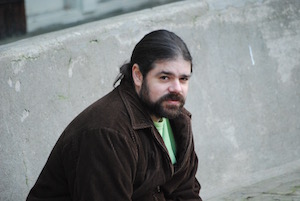 John Carr Walker’s story collection Repairable Men was published by Sunnyoutside in 2014. Lately, his work has appeared or is forthcoming in Gimmick Press, Shantih, Hippocampus, Gravel, Five:2: One, The Toasted Cheese, Inlandia, Split Lip, The Collagist, and Pithead Chapel. A native of California’s San Joaquin Valley , he now lives in northwest Oregon.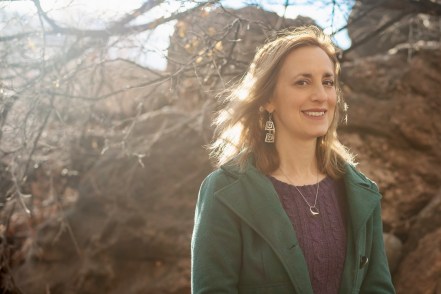
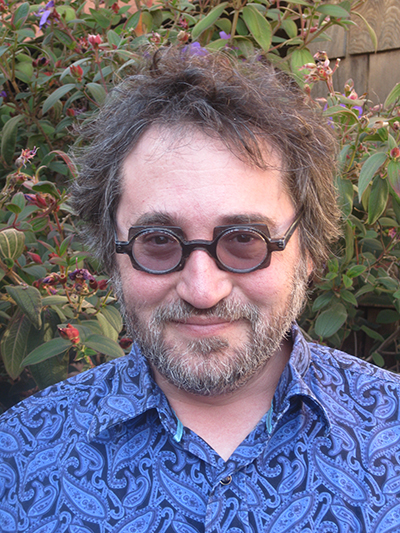 Hugh Behm-Steinberg’s prose can be found in Tiny Molecules, X-R-A-Y, Joyland, Jellyfish Review, Atticus Review, and PANK. His short story “Taylor Swift” won the 2015 Barthelme Prize from Gulf Coast, and his story “Goodwill” was picked as one of the Wigleaf Top Fifty Very Short Fictions of 2018. A collection of prose poems and microfiction, Animal Children, was published by Nomadic Press in January, 2020. He teaches writing and literature at California College of the Arts.
 Lori Sambol Brody lives in the mountains of Southern California. Her short fiction has been published in Smokelong Quarterly, Tin House Flash Fridays, New Orleans Review, The Rumpus, and elsewhere. Her stories have been chosen for the Wigleaf Top 50, the Best Small Fictions 2018 and 2019 anthologies, and Best Microfiction 2021.
 Lost Balloon