Gentle by Lauren Kardos

Three decades on, and we had graduated to a bed. My childhood twin bed in my time capsule bedroom. No twigs snagging our shoulder blades under the barely-there lean-to as we waited out the storm that caught us by surprise by the abandoned coal mine. No gangly limbs and errant kneecaps, but now bodies puffy and scarred, eyes circled and hair betraying gray strands.

When Billy and I first made love, I took comfort in it being the last time. A Greyhound bus ticket ready for the following day, I was onto bigger and better things, skyscrapers breaking up the hazy pink sunsets and an agent who promised I’d knock Broadway’s socks off. I could get on the bus and never again think about each kiss Billy trailed up my neck, seal away with the coach door closing his checking and rechecking that I was okay. Billy had folded my clothes and laid them atop my hiking boots to avoid the mud. He handled me like fine crystal. So gentle I could’ve cried, and that, I remember, put it firmly in my mind that I was leaving. In the city, I would find adventure, ravishing love, fame, fortune. Everything Billy did felt good, amazing even, but I saw the life I would’ve had, had I risked staying in town, flashing before my eyes with each lightning strike, vanilla day after vanilla day lining up one after the other until I died.

Someone once told me that perimenopause is like a train crashing over an already seeping oil spill. Insomnia and hot flashes and mine and Craig’s divorce and zero call-backs and the cherry on top was Mom’s diagnosis. I had to drop everything, move home, sell my condo for Mom’s care. After the nurses rolled the hospice bed into the living room, over the spot where I once sat watching Evita and Cry-Baby until each VHS gave out, the professionals took over. I could escape my childhood house for a few hours, so I walked over to Philadelphia Avenue. In Shop-N-Save, I stood in the popsicle aisle with my head stuck into the Ben & Jerry’s section, holding the door open.

I knew it was Billy’s hand the moment his thumb grazed my knuckles over the freezer door handle. What have you been up to all these years, he asked. Running away, but I don’t have the energy anymore, I wanted to answer, but instead I hugged him like old times. His arms a stabilizing vice, his gentle gaze as he pulled away. I asked Billy to tea or something stronger back home, and it was like past me ripped that bus ticket up and tossed it into the river.

He now clutches me less like bone porcelain and more like a winning lottery ticket, like deep-rooted sage grass at the edge of a cliff. Billy’s slowly catching me up these weeks. His own loves and losses and our years apart he whispers into my hair when Mom’s asleep and the nurses head home. He stays for breakfast, helps Mom sip orange juice and always recaps the Tennis Channel happenings muted in the background when she’s feeling up to it. He interlaces his fingers with mine, and I don’t pull away. I’m learning to like the sweet, subtle hints of vanilla, the surety of knowing what’s coming.
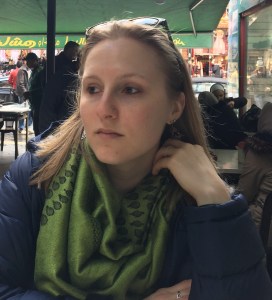

Lauren Kardos (she/her) writes from Washington, DC, but she’s still breaking up with her hometown in Western Pennsylvania. The Molotov Cocktail, Spry Literary Journal, hex, Bending Genres, Best Microfiction 2022, and The Lumiere Review are just a few of the fine publications that feature her stories and poems. You can find more of her work at www.laurenkardos.co.
The Golden Field Guide to Rocks and Minerals by Elizabeth Torres

It’s true, I stole it, from the rock display in the children’s museum. I was picturing my breasts turning blue. I thought they’d inject me with something like food dye or ink, but gadolinium dye is invisible, and wouldn’t pool in my breasts either way. So I’m at the beginning, a ‘73 field guide, waiting in my gown with an IV in my arm. Almost all solids are crystalline, even organic materials form crystals when in pure state. Which is to say, I’m rock and they’re going to inject me with rock. All rocks disintegrate slowly due to weathering. I’m out of time. I tuck the field guide in my purse to return later. Sister. It’s my first time. Day six. There is comfort in patterns, until it runs out. They put me and Sufjan Stevens in a tube that bangs like the bowels of an excavator, but there’s a warm blanket across my back, and lavender oil and sometimes I hear that “terms and conditions may apply” because even in an MRI machine, there’s ads. A man designed it, one of the technicians says when I emerge with my ribs aching. I rip out the first page of the field guide, but can’t find the line I’m looking for and wonder if I imagined it—it made everything feel all right, the way when I was twelve and bleeding I remembered the patriarch’s daughter hiding her idols. It would be white in dark field. The end, that is, were it there. Turns out I’m blue. I hold the moon and an occasional unblinking fish. I am the mother everyone talks about, blue breasts dipping like bells. They make a mess of my sweater so I go naked to guard the field where my son is driving a wooden tractor through a cornfield made of wire and fabric. I help him harvest wild rice and sugar beets which is all he’ll ever have to track time. We go to the quarry and practice lifting rocks with tongs. We set them on a scale—taconite and petrified wood and honey agate. Honey, we say together. Honey, I say until he swallows me.


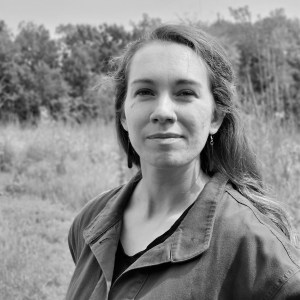
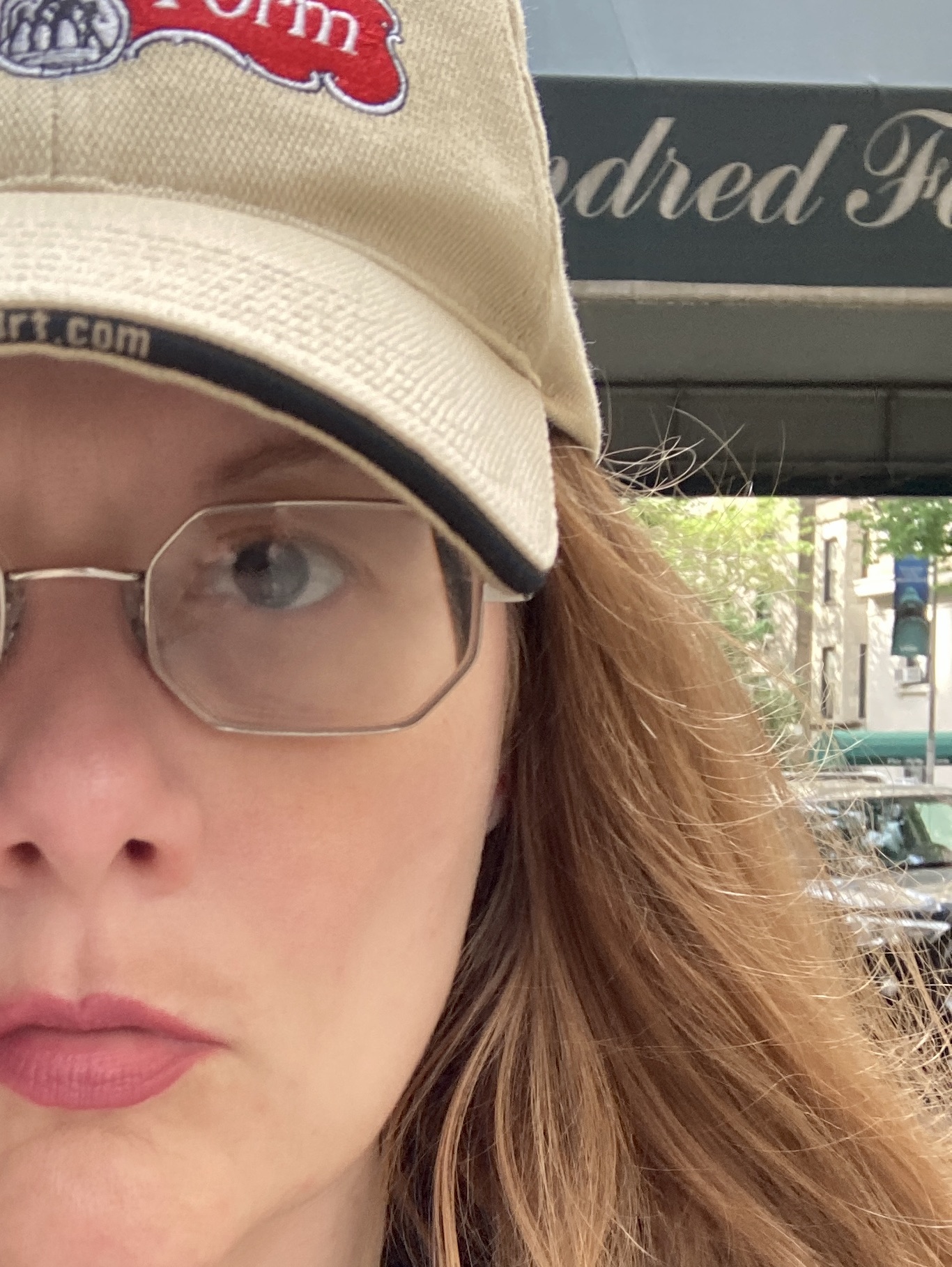
Elizabeth Torres is a writer in southern Minnesota. Her work has appeared in Ecotone, Pleiades, AGNI, and elsewhere. Visit her at elizabethtorreswriter.com.

Hit and Run by Terena Elizabeth Bell

Pete didn’t live, but that didn’t mean Holly had killed him. The car that struck him was a completely different color—some intern from Elizabeth Warren’s office had seen the whole thing. They hadn’t caught the driver, but after the young man came forward, gave Capitol Police his smattering of details, Holly was even more certain she did not do this. In fact, she’d really been sure all along, had never thought hitting Pete was something she could have done. If it had been her, her behind the wheel—surely—she would remember.

“You’d think the intern would have gave a better description,” she told George, “at least gotten a plate number,” the guy coming out of Rayburn House when he saw George’s campaign manager hit on Independence, dialing 911 as he ran toward the body in the middle of the road, shouting, “Sir? Sir?” like he was flagging Pete down in chambers.

“Maybe he was a little busy,” George said, “trying to help Pete survive? Still, the less they look into this, the better.”

Holly had been fighting with George when it happened—well, not when it happened, but when they found out—attempting to talk through her distress, Holly having read in Psychology Today that communication was the route to a healthier self.

“You’ve got to perk up a little,” George had been saying. “People only ask questions when you act that way.”

They’d spent the afternoon at a luncheon where Holly had played the college-sweetheart wife, cropped blazer over navy shell dress, and nodded. This particular event had been quite de trop, a private fundraiser for Vanderbilt alums.

“Pete buttered them up, I’ll give you that,” George recapping the afternoon (salads had stretched into entrees, entrees became dessert). “Are you even paying attention to me?”

After leaving the Rayburn Reception Room, Holly had spent the rest of the day alone. She couldn’t remember exactly what she had done, but she did remember what she had not. She had not walked through the members’ parking lot, feet pounding on the pavement. She had not sat in the car, feeling the wheel, its leather smooth beneath her fingers. And she most certainly had not killed Pete.

This wasn’t the first time she’d blacked out like this; she’d actually lost count, initially marking the days in her August to August calendar with one or two question marks, depending on how much time she was missing.

Once, her husband had seen the marks and asked, “Is your period off?” thinking they were feminine calculations, which made her realize yes, it was.

There were also the headaches; the anger; the lack of deep sleep — something that had not been present when she was younger, that started right before graduation, that got worse after George decided to run, its pinnacle the night he won: Holly lying in bed with her eyes closed, connecting to the fact that while the campaign was through, that didn’t mean much. For the past two years, election day had been a promise, one that the scrutiny would be done (appearances, investigations) and all her fake smiling could be over. But the minute those cameras turned off, acceptance speech complete, Pete had walked right up to George and said, “Now it begins.” And that’s when Holly knew this would never stop.

They were the same, campaigns and marriage. Politicians got elected through courtship, they stayed in office through attrition, every day making its mark.

It was exhausting. Holly hadn’t even realized how tired it made her until she read a Tennessean article that said women were 92 percent more likely to store guilt in their bodies: headaches and backaches, inner fatigue, spanning across cartilage, bone, and spine; and she’d reached around her torso as she read, feeling.

“I thought you were doing better,” George said, “I really did, but if today’s event was any indication, maybe stay away from my work?”

“You asked me to come,” Holly told him—or maybe that had been Pete—“I’m doing the best that I can,” and sighing, George mumbled, “It gets old.”

Holly rested her hand on the granite kitchen counter, feeling the weight of her skin on the stone.

“Look,” George said, “it’s been a tough term. I’ve done a good job—we both know I have—but I can’t assume come November I’ll be reelected.” (Dessert had stretched into coffee, coffee became cocktails.) “I know your life isn’t easy. But you’re not the only one with needs. Do you know how much I needed you to just be polite? You can’t go around in this daze all the time. Maybe if you tried—I don’t know—engaging?”

The night George proposed, they had been in his car, West End Avenue right off of campus. They’d been out to dinner on Music Row and she was the one who was driving (cocktails had stretched into more drinks, after those drinks a ring). They were talking dates, sometime after graduation — when it happened. A young man ran out and Holly didn’t see him. She knew she had not seen him. She just heard the clump and they both felt the jolt, everything in this haze: the touch of the wheel, asphalt under her feet; then George said, “Give me the keys.”


Terena_Elizabeth_Bell_author_headshot

Terena Elizabeth Bell is a fiction writer. Her debut short story collection, Tell Me What You See (Whiskey Tit), was published December 2022. Her work has appeared in more than 100 publications, including The Atlantic, Playboy, Salamander, and Ellery Queen Mystery Magazine. A Sinking Fork, Kentucky native, she lives in New York. Get one story delivered to your inbox every month by subscribing here: patreon.com/terenaelizabethbell.

The Pool Boy at Dracula’s Castle by Seth Wade

Scooping out dead leaves and red solo cups from the pool at Dracula’s castle, he swings his hips knowing they’re thirsty, watching the sunlight making him sweat. Chunky headphones paired to the phone strapped to his speedo, he bops to hip hop and tries to pretend he’s alone.

Alone, he thinks about everything: unpaid student loans, all his unfinished paintings piled in the closet, stumbling into bed with his ex, the sting of hot pavement on his feet, spending a nice day at the beach and what that must feel like, that he needs to pick up cat litter from the store tonight, all those sweet and funny messages from that guy who ghosted him, what true love must feel like, if he’ll ever afford a home or grow a garden, so many nights binging Netflix while slurping reheated noodles.

He knows he’s only here because he’s young, lean, and blood type O-negative.

But still he wonders if he was always going to end up here. Or was it out of his own stubborn choices?

He smacks his net against the cement, crunching a plastic cup in half.

The squashed white rim inside the cup reminds him of Dracula’s lips.

On his first day on the job, Dracula had suddenly manifested out from the shadows in the corner of the pool shed.

You are a virgin? Dracula asked.

After thinking for a moment, he then tried to widen his eyes and pretend to be embarrassed. He put his hand to his mouth to cover a gasp, then stammered in reply, Y-yes.

That was the night he would later drunk text his ex who came over reeking of cologne, and they were too drunk for anything other than stale pizza and sloppy foreplay. They both fell asleep in front of the TV and later woke to the tinkle of canned sitcom laughter, feeling nauseous and ashamed.

Dracula had leaned further out of the shadows. Eyes like throbbing cinders, liver-spotted jowls jiggling closer.

He kept still and didn’t gag at the stench of Dracula’s breath, which smelled like rotten bananas souring in the sun.

Thought you were, Dracula said, too close. You’re ripe.

He backed away just a bit and squeezed every muscle on his face into what he hoped came across as a smile, coy and devilish.

That was also the first day Dracula tipped him hundreds of dollars, the first of many days Dracula name dropped celebrities and people with ancient and obscure titles, or slipped in suggestions of how much money he could make with Dracula, if he really wanted to.

After bagging the debris he shook out of the net, he kneels and swabs one last pH test strip across the water. He shakes it in the air to dry, then waits. As the white pads slowly bleed into different colors, he considers how far he’s willing to go.

The pool boy looks up to the stained-glass windows of the castle—

Too many eyes twinkling above broken smiles.


Seth_Wade

Seth Wade is a tech ethicist studying and teaching philosophy at Bowling Green State University. You can read his fiction and poetry in publications like Strange Horizons, McSweeney’s Internet Tendency, Lady Churchill’s Rosebud Wristlet, Hunger Mountain Review, Apparition Literary Magazine, HAD, hex, The Cafe Irreal, X-R-A-Y Literary Magazine, BAM Quarterly, Journal of Compressed Creative Arts, The Gateway Review, and now Lost Balloon. He is also a Pushcart Prize nominee. You can follow him on X: @SethWade4Real or Instagram: @chompchomp4u or Bluesky: @sethwade.bsky.social