On the morning the sea decides it’s time to come home, Anna wakes up in her bedroom, where the windows stand open to the four blowing winds. Summer air brims with the scent of seaweed and iodine.
She slips on the dressing gown and makes her way down to the living room. At the bottom of the stairs, suitcases stand packed and ready for the move. Anna sidesteps them, giving their rectangular bodies a wide berth.
In the kitchen, she sets on the stove her favorite kettle, the one with a small dent in its shiny copper, a vestige of the time her youngest son had childhood tantrums. Once the water begins to bubble, she throws into the tea infuser a spoonful of mint, a pinch of bitter flowers. A measure of valerian root gets added into the mix. Staring at the steaming cup, Anna contemplates the limited benefits of self-medication in a world about to drown.
Outside, car horns begin to blare. Evacuation buses calling for passengers.
Anna ignores them. She steps out of the back door and takes a walk in the garden, where grandmother taught her how to walk, traces the lines in the bark of her grandfather’s oak with her fingertips. Under the old tree, a porcelain bowl with a thin crack running down one side sits abandoned in the grass. She squats down beside it to watch the bright green froglets splash in the shallow rain water and contemplates the meaning of the word “amphibian”.
Anna remembers rumors of the coming flood sparking panic, the townsfolk leaving one by one. First, the people she occasionally met at the market. Then the ones who raced their bicycles to school with her. Family and friends were the last to go. “Aren’t you scared to stay in the lowlands?” they kept asking.
She comes back inside and takes a long look at the suitcases. Outside, the wheels of departing buses start to roll, scraping the gravel. Somebody rings her doorbell.
Anna sighs and clicks the latches of the suitcases open, one after another, carefully hangs up the blouses and dresses in the closet, sets her favorite books back on their shelves. By the time she is done, the doorbell ceases to ring.
She steps out into the now deserted street, letting the gate fall shut behind her, and walks towards the sea. In the distance, gulls soar in the pale sky. Dandelions and weeds bloom in the ditches. When she reaches the abandoned watchtower of limestone and rusted nails, Anna contemplates the lives of those who built it so many centuries ago, how no one remembers who they were. She shakes her head and keeps going.
Outside the town limits, Anna scrambles up the hill on all fours, tufts of bright green grass sliding through her fingers. She stands on the wind-swept top, where flat rocks are imprinted with antennas and segmented tails of the long-gone trilobites. This place was once the home of the sea. Now it wants to come back. Anna can certainly understand this particular kind of longing.
The sea swells and expands, breaching the dam. From her place up on the hill, Anna sees the cars and buses scuttling down the winding road below—tiny toys made of red and yellow tin can metal, unable to outrun the waves.
The sea stands tall. It is a swirling, moving wall of blue, indigo, and azure. Anna leans forward, hands thrown wide in a welcoming embrace. She calls to the sea, and the sea listens. It rolls into her open arms.
Blue, it crushes into her chest.
Green, it pours down her throat.
Teal, it cuts open the gills in her neck with shards of bottle glass.
Shatters her into a myriad tiny specks of sea foam and puts her back together.
*
Anna walks down the hill, her steps slow and measured. There is a new sway to her hips, a reassuring heaviness resting in her body. She flows along the familiar road, past dandelions and weeds, the nameless watchtower, and the neat white fences.
Back at the house, Anna opens the gate with a gentle caress. In the kitchen, she makes herself a new cup of tea, curls up in her favorite armchair with a half-finished book. Outside, the sky goes dark, and the pale pink flowers open on the low-hanging branches of magnolia trees.
Anna and the sea are home, and everything is at peace.
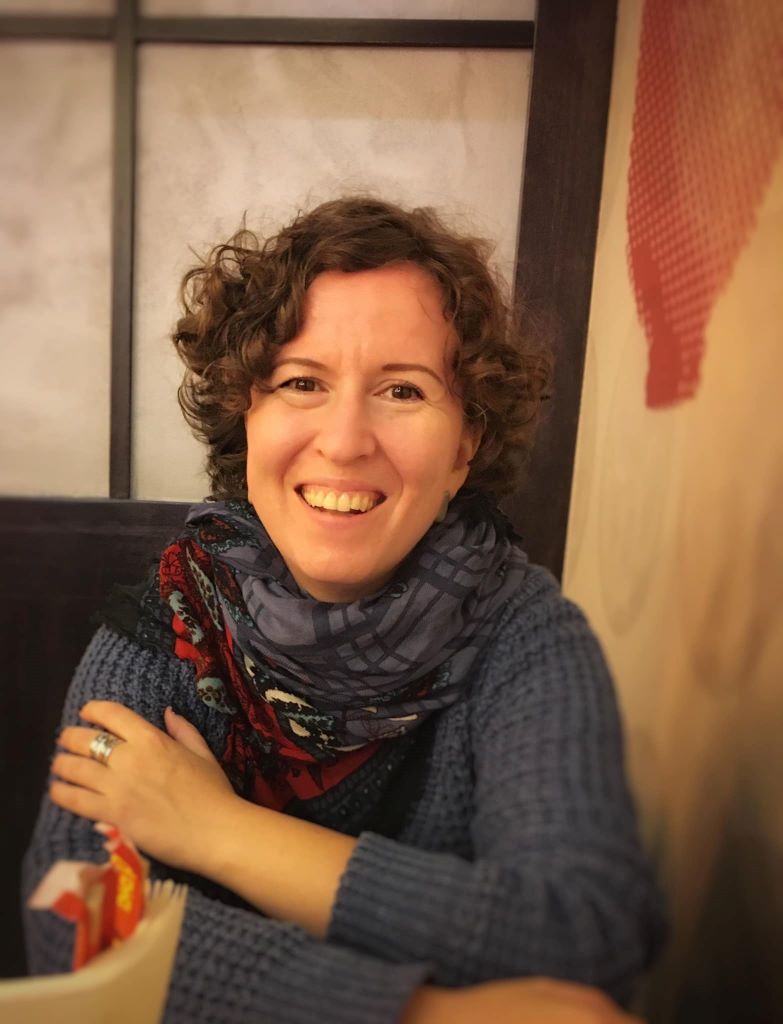
Laila Amado is a migrating writer of speculative and literary fiction. She writes in her second language, has recently exchanged her fourth country of residence for the fifth, and can now be found staring at the North Sea, instead of the Mediterranean. The sea, occasionally, stares back. Her stories have been published or are forthcoming in Best Small Fictions 2022, Cheap Pop, Milk Candy Review, Cotton Xenomorph, Flash Frog, Best Microfiction 2024, and other publications.
 Lost Balloon