Freckle by Jacqueline Goyette

freck.le (frek.e) n. 1. The spots that appear on my cheekbones and shoulders when we play at the swimming pool in August, down the road from my house (turn right at the Kroger’s, keep going past the post office. Take a sharp left.), splashing in the water, swimming laps of it. Laughing and diving and my long legs kicking. I am just a child. 2. They are dark brown, sometimes on my nose, rust colored. My dark skin when the summer comes, the whole length of my arm dappled in sunburnt light. 3. I never asked my mother about the sun, about the way our Filipino skin could still flake off, turn dark, how the sun could crinkle it and leave its own leftover light all over my body. She never worried about it. Her skin was always perfect. (v) 4. This October afternoon, the windows open, the kitten climbing onto the couch to curl her body around, to press her claws into the blanket, to show the dips and dots and flecks of light inside her moonstone eyes. 5. The apartment, the tiled floor, the thousands of miles from me to you. What the sun does, in one long strip of yellow light, through the slats of shutters, the blinds, the softness of the room when you are gone. How lonely it is without you. 6. In moonlight, phosphenes bubble up in bright auras when I rub my eyes. They skip and jump, they fill in the empty space of all these missing years, like I can see you if I shut my eyes tighter, all one blurry mess, pooling up, spilling haphazardly into the depths of November. We are almost there. We can count each freckle if you want. One at a time. Pick them up off the ground like seeds to be planted. Fill jars with them, all together, take them outside. 7. Light up the night like fireflies blinking.


Screenshot_20240218-1508262

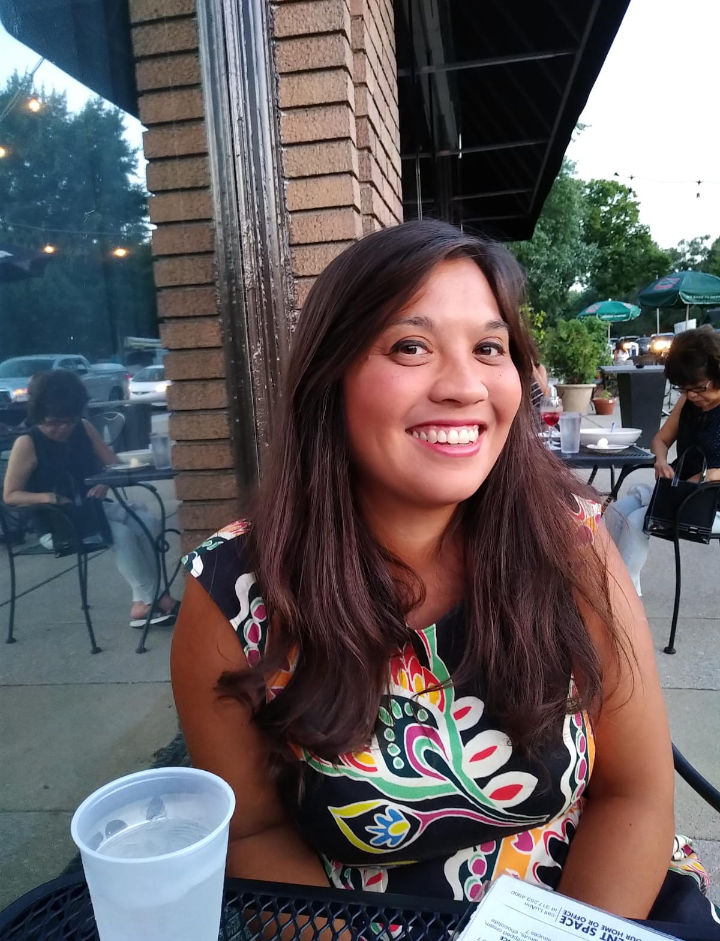
Jacqueline Goyette is a writer from Indianapolis, Indiana. Her work has been nominated for Best of the Net and has appeared in both print and online journals, including trampset, JMWW, Heimat Review, The Citron Review, Eunoia Review, and Cutbow Quarterly. She currently lives in the town of Macerata, Italy with her husband Antonello and her cat Cardamom.

Year of the Rabbit by Eliot S. Ku

I have a shiny red envelope filled with a small wad of cash, glittering notions of all the things I can use it to buy—a Super Nintendo game or a rare postage stamp from the former Zaire for my collection—and my parents aren’t screaming at each other for a change. I am dining on lobster at the Grand Mandarin tonight. There’s a karaoke bar downstairs that’s always closed like a darkened motel and next to it is a koi pond with a small waterfall and a miniature mountain landscape that evokes dreams of old China. After dinner I sit on the footbridge that crosses the little pond pretending to be a giant who lives a peaceful life in that mountain valley, content to quietly listen and observe everything around me. The red envelope glows through my pocket, a reminder of the material comforts to come. The disposable placemats printed with the Chinese zodiac all say that the rabbit is the luckiest of the signs. I don’t know if that describes me, but I’m certainly the happiest, if not the loneliest a child can be.


KU_ELIOTT

Eliot S. Ku is a physician who lives in New Mexico with his wife and two children. His writing has appeared in a handful of online literary journals, including Maudlin House, Carmen et Error, Roi Faineant Press, Whiskey Tit, HAD, and Call Me Brackets.

Moringa Witch by Ani Banerjee

The Moringa witch sits on her porch and calls to five-year-old Mira. Mira knows the woman is a witch because she is greenish, has no teeth and her tongue is red with paan. Her fingers, curled from arthritis, looked like pods from the moringa tree, long knobby pointy green things like string beans with big seeds inside them. Like they are green fingers only ten times larger. Drumsticks, they are called,  hard like sticks for playing the drum in a school band. Mira is scared, but she is with her aunt, who says, “She is just a bit mad.  She is lonely, let’s go talk to her. ”

The old woman gives Mira a chocolate and laughs. She brushes her drumstick finger on Mira’s soft cheeks. It leaves a red mark, but no one notices.

Mira moves to America. Drumsticks in America only grow on chickens, delicious with BBQ sauce or tandoori masala. Drumsticks to nurture and grow the children until they leave. Drumsticks to spice up a dying marriage.  And then one day, America discovers Indian drumsticks. And when America discovers something that is a miracle cure, think kale or turmeric, Americans are ashamed not to try it, so Mira gets a packet of seeds from Amazon.

The seeds grow drumsticks relentlessly. Mira picks them and cooks them and gives them to all her Indian friends. One of them pierces the bedroom window.  Luckily the insurance fixes it, but another one pierces the window within days. The insurance says to cut down the tree, and she does, but it grows back the next year and makes so many holes in their house that Mira goes around with duct tape as her husband points out new holes.

She calls Texas A and M, and those experts come to inspect, take some pods, and produce a research paper that touts moringa goodness but does not mention how to get rid of them.

Their house, her house, looks like a target for gun practice. Mira places her ears on the walls and can hear cannons and horses. Sometimes she thinks the war is inside her. Her husband, now retired, wants some time alone, takes their Winnebago, and leaves.

Mira is sixty-six when she wakes up one day to find a drumstick piercing her waist. She pulls it out and it creates a bruise. Mira wants to go to a doctor, but her husband says who goes to the doctor for a bruise? Her husband does not want to be blamed for the bruise, and Mira agrees even though he hardly lives with her. But drumsticks keep piercing her body, her sides, her arms, and even her cheeks. They are easy to pull out but create bruises that heal with a greenish shade. Her husband jokes about planting a turmeric tree beside the moringa and having a color fight.  Mira goes grocery shopping and to Walmart, no one comments about her greenness. When her children call, which they rarely do, she is cheerful. They don’t ask and she does not tell them that inside she is hollow and dry.

Mira sits alone on her porch during Halloween, calls to kids passing by, and dangles her drumstick fingers in front of them. The children ask if she is a real witch. Their parents comment on how inventive Mira’s costume is. Mira gives the children chocolate. And waits, and waits on her porch, for another Halloween, for the grim reaper, or whoever will give her any attention, until she becomes immobile, she becomes the tree and moringa drumsticks grow on her and everyone talks about the woman who became a tree.


me

Ani Banerjee is a retiring lawyer and an emerging writer from Houston, Texas, who was born and brought up in Kolkata, India. Her flash fiction has been published in Janus Literary, McQueen’s Quinterly, Grim and Griswold, Flash Flood, and other places.

Second Skin by Sarah Fawn Montgomery

I was delighted when the skin fit. It was cold when I found the roadside carcass on my
evening run, and after determining the blood had dried well enough, the guts dragged off by
some hungry beast eager to feast, I slipped the body over my own, punching my hands and feet
through the fur and into winter air.

I did not know what the creature was—coyote, raccoon, some swollen possum—just as I
no longer knew myself. I’d grown feral from years trying to survive as a woman, a wild
existence full of wound and want, body alert to predators, yet turning against itself as prey. I was
constantly hungry, hurting from the deprivation girls learn early on earns beauty, but when I
placed the new skin over my own, felt the warmth of fragrant fur, I stood straight for the first
time in years. I marched home with purpose, turning around to see my strong tracks etched in
ice.

Home was a compromise. An acquiescence. My boyfriend was the kind of mediocre man
so convinced of his greatness the world simply went along with him, never questioning his
likability or looks, which were unimpressive but the best I thought I deserved. The house was
always freezing, because I disappeared to please his need to feel virile despite the fact that most
days he waged imaginary wars on screen, bragging about virtual victories in real life.
That night I wore my new skin to bed. It rested between us like a shroud, but for the first
time in a long time I was warm enough to sleep.

The next morning he complained. This was not unusual—he did not like the groceries I
bought or how often I exercised to keep weight off, did not like if I neglected to shave or lotion
my skin until it shone like some strange taxidermy. Most days he forgot to wear deodorant or brush his teeth, smelled of onion and Mountain Dew, but he liked me doused in perfume that
smelled simultaneously of innocent baby powder and a desperate woman’s floral.

“What is that thing?” he asked when I returned from a morning run, though he did not
take his eyes from the computer screen. “It’s disgusting.”

“It’s new,” I offered, though the skin seemed ancient and wild.

“Well don’t wear it when we go out together,” he said before turning his attention to
strangers on the Internet. I promised, because we rarely went out, except for greasy pizza that I
never ate or when he played frisbee golf in the woods and I followed, looking deep into the trees
for paths to escape.

I loved my second skin, even if I did not love myself. Supple and thick, I could smooth it
until glossy. At night I rubbed my body, caressing myself with pleasure. When I was scared,
which was often, whenever my boyfriend raised his voice or his fist because his game did not
turn out the way he had hoped, or I did not put enough mayonnaise on his burger, or I forgot to
remind him to wash his own laundry, I hid inside my skin. It smelled of blood and musk, shit and
sweat, a pungent ferocity.

Soon I preferred this scent, preferred the feel of my growing body hair tangling with fur.
Each night I curled into the den of my skin, wildness cradling me all around, and dreamed of
meat and heat, the feel of my feet running through moss and mud, running as far away as I
wanted.

I began to crave what was rare. I ate large flanks, licked salted flesh from my fingertips,
sopped blood with bread to leave plates shining pure. Though I had lived a quiet life, now I
relished the sound of my stomach gurgling with the satisfaction of digestion.

“Will you be quiet?” asked my boyfriend over the sound of my stomach, of me flexing
my strengthening body, of me cracking bones to slurp out the sweet marrow. “I can’t concentrate
when you’re like this.”

I focused instead on feeding. I grew big and heavy, full of pleasure and prey, satisfied by
the skill with which I could identify a particular piece of meat in the butcher’s window or the
way I crept out of bed at night to howl at the moon while my boyfriend snored, the sheets sweaty
against his pale body.

“What is that smell?” he asked in the morning, pointing to the melting snow and mud,
viscera and bone in our bed. “What the hell is that?”

“I think a possum snuck in last night,” I said, wiping the blood around my mouth. “You
should be careful. I hear those things have rabies.”

It was snowing when he left. His technology cords coiled like serpents in his car’s
backseat. He left me the pots and pans because he did not cook. He left me the old couch,
sagging on one side from hours he sat pretending to hunt imaginary creatures.

He said he was afraid, which made me laugh and bare my teeth and claws full of flesh
and feces. He backed away slowly, shivering on the front porch.

I reminded him to take his coat, hurling it through the evening air like some dark bird of
prey. It landed like a body between us and he stared at me wide-eyed as I howled goodbye.
Inside I stripped my skin. Underneath my body hair was thick and coarse. I smelled of
sweat and blood. My feet were caked with mud from the many paths I’d forged. Muscle rippled
hard and capable.

I rested on the floor because he had taken the bed. It did not matter, I slept better on the
ground, curled around myself for protection. I lay there a long time, stroking my animal body,
smoothing myself until glossy, caressing myself with pleasure.

When I had my fill and the moon was high, I walked naked out the door to hunt.

AIREVITAL_V1

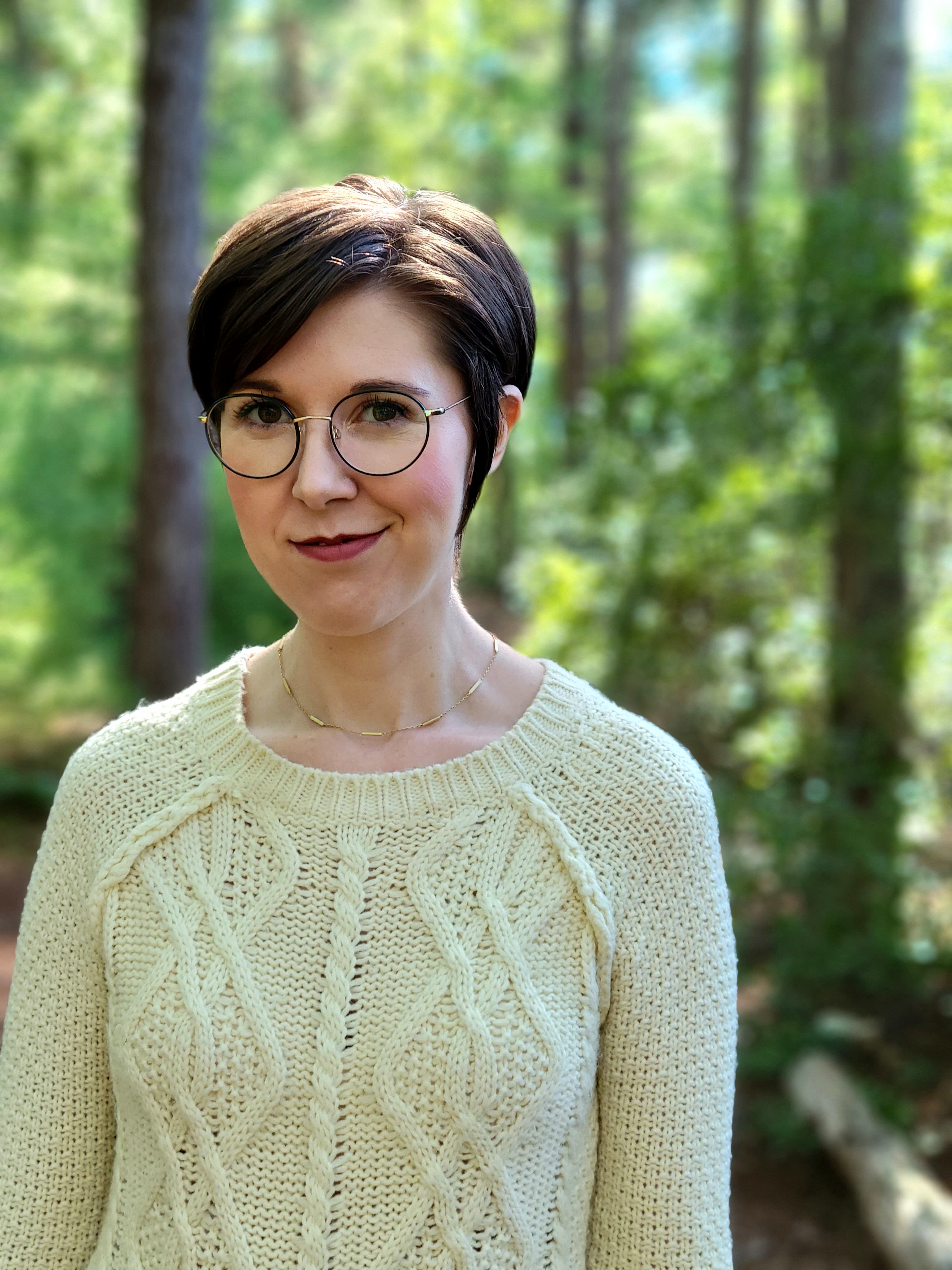
Sarah Fawn Montgomery is the author of Halfway from Home (Split/Lip Press), Quite Mad: An American Pharma Memoir (The Ohio State University Press), and three poetry chapbooks. She has a craft book on unlearning the ableist writing workshop and developing a disabled writing practice forthcoming with Sundress Publications, as well as a collection of flash nonfiction forthcoming with Harbor Editions. She is an associate professor at Bridgewater State University.