Three Words by Claire Sicherman

1. Late Bloomers

They spend a few years in high school together before they notice each other. In their final year, she hears from gossip-Lucy that he likes her. “Do you like him?” Lucy asks, her voice, syrupy-smooth. She stands in the kitchen, staccato breath, the phone cord wrapped around her fingers, tips turning red.

He composes a piano piece and names if after her, performs it when they finish eating the chicken he roasts, Greek lemon potatoes, honey-sweet baclava for dessert. They lose their virginity in a suburb of Vancouver the night of the piano performance, after he woos her with his music and poetry. She doesn’t remember much about the act itself, only that they keep the lights off. They are still in bed when his parents show up early, high beams spilling through the slats in his basement room blinds. He rushes her out the front door, just as his parents enter through the back. A slight cramping in her low belly, she listens to the swooshing of her heartbeat meeting her eardrums, until she is home. Only then does she discover the small dot of blood in her underwear. Her body is hollow, as if she lost something.

After time spent apart traveling, writing fat tear-stained letters, they meet up in his grandfather’s village on Naxos. Slow days are spent swimming in the Aegean, sipping ouzo, snuggling on a moped through windy, sleepy streets. She leans against a short rock wall, the expanse of the blue-green sea behind her, posing in her white t-shirt and purple paisley shorts, her brown curls piled high in a messy bun. It’s here he tells her he loves her over and over again until her insides kink and coil and she asks him to stop. Years later, when she thinks back to the gradual demise of the relationship, she returns to this point, presses play and rewind like a mixtape.

2. Fake

I’m at my mother’s house sitting on the couch, book in hand, sipping strong coffee and breaking off squares of dark chocolate while my six-year-old watches Laurel and Hardy in the next room. I read parenting books, ones that tell me not to let the baby cry it out or punish with time outs. I’m guilty of doing both these things plus so many more procreator faux pas that I’ve lost count, and I wonder which of my wrongdoings my son will choose to talk about with his future therapist. “This book says you can’t show a child too much love,” I say. My mother glances up from her newspaper, reading glasses balanced on the tip of her nose. “What a load of shit,” she says, waving her hand across her face.

When I ask my mother about the three words, her face puckers, like she’s eaten something sour, and she tells me she doesn’t like the expression. “It’s so overused and sounds fake. If you say it too much, it loses its meaning. Besides my parents never told me. We didn’t say that in Czech. I just knew.”

The next day I speak to my mother on the phone. “I love you,” she says as we say goodbye. I wait a beat, maybe two. Then we both erupt into laughter. “I thought I’d try it out,” she says, catching her breath.

3. Hard to Get

Six months into the relationship with your future husband you accidentally blurt it out during sex. A long pause fills the room before he says it back. Instead of believing his words you feel anxious that you have become one of those women who traps men into saying things they don’t mean. And you flash back to your childhood room lying on your bed with your piano phone, about to dial a number, when your mother barges in and tells you not to chase boys. “Let them come to you,” she says. “Don’t be so easy. Guys like it better when you play hard to get.”

You don’t talk about it for a couple of days but when you can’t stand it anymore, you ask him if he really loves you and he grins, teases you about the way it slipped out, and all you can feel is relief.

4. Foghorn

You play a game with your son where you hold him on your lap and press your mouth to his ear and say I love you and hold the ou sound like a song or a foghorn and he laughs and squirms and pushes your face away, but really he wants you to say it again and again, so you do.
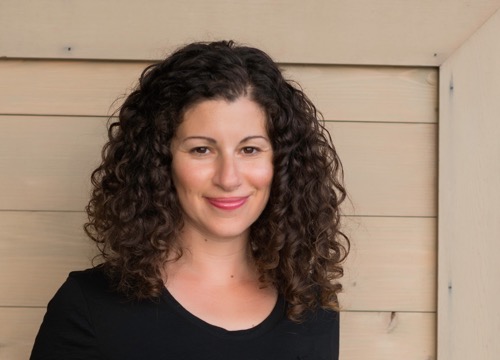

Claire+Sicherman3Claire Sicherman is the author of “Imprint: A Memoir of Trauma in the Third Generation” (Caitlin Press, 2017). Her work is featured in the anthology Don’t Ask: What Families Hide (Demeter Press, 2023), Grain Magazine, Isele Magazine, Hippocampus, The Rumpus, the anthology Sustenance: Writers from BC and Beyond on the Subject of Food (Anvil Press, 2017), and elsewhere. Claire is a teacher, speaker, and mentor, supporting writers in bringing the stories they hold in their bodies out onto the page. Find her at https://www.clairesicherman.com/

Breaker by Aaron Sandberg

The answer of course is to run fewer appliances at the same time, but she doesn’t discount a supernatural cause. She runs them all to hear the hum—the low background buzz that makes her feel much less alone. But now half the house is out, the half she finds herself in, and she thinks of what she needs to do next. Her own thoughts keep bad company now that he’s gone.

She thinks of all the different ways to be haunted while her sight adjusts, thinks of the believer’s argument that the eye is too complex to not just be designed. But what a simple body needs is a single cell to sense the shadows—to know what to move toward or from. That’s all the edge it needs.

She moves to the basement, hand tracing the wall, phone-glow guiding her steps down the stairs. She kneels in front of the panel like some sort of shrine, the switch box labeled with faded pencil from former inhabitants. And that’s as ghostly as it truly gets. The reset waits. She thinks it’s a form of prayer to type into the phone how to stop a circuit breaker from breaking. And maybe she’s right. What else is prayer but bringing back the light or asking not to let it fade in the first place?

Some hours she believes he’ll just come back. Some hours she thinks to just let go. She waits for the answers though there’s no signal down here. It’s a form of prayer to just be still. It’s a form of prayer to be silent, asking not to be broken but whole in the dark.


Processed with VSCO with b3 preset Processed with VSCO with e5 preset

Aaron Sandberg has appeared or is forthcoming in Flash FrogPhantom Kangaroo, QuAsimov’s, No ContactAlien Magazine, The ShoreThe OffingSporkletCrow & Cross KeysWhale Road Review, and elsewhere. A multiple Pushcart and Best of the Net nominee, you can see him—and his writing—on Instagram @aarondsandberg.

Roadkill by Marty Keller

The highway was slick and iridescent, bleeding red from brake lights scattered on either side of our car. Mac had hit something small, a raccoon or maybe a possum. I squeezed my eyes shut and turned my head. But when a voice shot out of our radio—a voice that sounded like a jumble of sentient vibrations—I winked one eye open in case a claw pushed through our janky AM radio and grabbed Mac by the throat.

“Hello? Anybody there?” Mac asked.

A muffled echo on the other side of the air waves mumbled a reply, which Mac treated like a friendly greeting.

“Could be some trucker on a CB radio,” I suggested.

“Going north?” Mac asked.

The response was a staccato of static and dead space before one of our fan belts drowned out all other sound with whirs and thudding.

Mac balled up his right fist and pounded the dashboard.

“Goddamn’t I told you to get that fixed, didn’t I?”

I stared out the window and drew imaginary lines between droplets and runnels. Mac’s question was for me.

The last twenty miles had felt like a painful endurance test: the murderous thump, the squeak of the wipers, scattered riffs of dance music by artists we were too old to recognize. Flood season had come early. Rain beat against the windshield, leaving a wet curtain the wipers try in vain to beat away.

By the time Mac killed something small and nocturnal, we were two hours away from his parents’ house and his brother’s house and a river that left most of the backyards and driveways ankle-deep in water. Mac wanted to move back home.  He spent our first hour on the road telling me why we needed to live near family—which meant his family. I spent the last forty minutes telling him why I didn’t want to buy a two-flat with his fifty-something uncle who smelled like weed but knew how to “fix things.” After our last stop for gas about twenty miles ago, we’d settled into stubborn silence. Then a stranger crackled through the air waves.

Hello? Hello?”  The voice on the other side of the radio was clear, curious, feminine.

“Holy crap!  You can hear me?” Mac slapped the steering wheel and scooted higher in his seat the way he did whenever he got to the good part in a story.

Yes,” she answered. She sounded impatient.

Mac wiggled his eyebrows and grinned at me like we were in cahoots, like hearing some stranger acknowledge us over a car radio on a rainy stretch of highway was some big victory. I uncrossed my arms.

“What’s your name?” he asked.

The reply was a distorted collection of syllables.

Mac shouted the question a second time. I fiddled with the radio, but he pushed my hand away and adjusted the knobs himself.

Help…Help.”

“Help? Do you need help?” Mac shouted.

“Maybe she thinks we need help,” I offered. Mac shushed me and fiddled with the knobs again.

“How can we help?” By then Mac had resorted to a kind of slow yelling like he was translating his thoughts for someone who was hard of hearing.

The response was a crackle that could’ve been sailboat or salesman. Mac persisted, determined to let this faceless, disembodied stranger know we were there to provide whatever assistance she required. I pressed my eyes closed. The darkness only magnified the hiss of the radio static and the sound of the rain pounding the windshield and the roof.

My eyes opened in time to see a vanload of college kids speed past us fast enough to hydroplane. Their tires spit an angry torrent of water across the driver’s side of the Camry. Mac swore at them before apologizing to the voice from the radio. She repeated a word that sounded like a question—who? through?—while I watched the van fishtail across the road, narrowly missing a Cadillac and a truck hauling gasoline. I mourned all the creatures they must’ve crushed beneath their wheels that night. Mac wouldn’t stop talking. He clutched the steering wheel with both hands and went on about the rain and the flood and the long drive home from St. Charles. His cheeks were frozen in the perma-grin he plastered across his face for family get-togethers and work events. He complained about gas prices and loneliness and settling.

“I think we missed our last turn,” he said.

Yes,” she answered.

Mac told her about the car he wanted and the house he planned to buy two hundred miles away from the house we already owned. I wanted to talk to the voice too, but there was no room. I wanted to tell her that Mac is the kind of man who eats out of boxes and cans instead of dinner plates and serving bowls. That Mac sits in the same chair every Sunday; that he doesn’t look at me when I walk in a room. That he only says my name when he needs something, and he drags out the second syllable for too long. 

Help is on the way,” the voice said, only this time she spoke with robotic clarity.

The steering locked. Mac was hairy elbows, clawing fingers, a string of strangled profanities. Our car skidded off the road, and we flipped over into a sloppy ravine. The chassis cracked with painful violence.

“Hello?” I ask. Between the angry hum of the busted windshield wipers, the car draws in tiny, ragged breaths. A fresh pressure throbs through the narrow folds in my brain. I want to reach over and feel his face with my fingers, but I can’t move. My chest and neck are a shimmering mosaic of shattered glass.

“Mac?” I whisper. His reply is a garbled groan, and I know it’s too late. I know that whichever way we turn, we won’t see what’s headed our direction until it runs us over and leaves us both broken and grieving.


IMG_20200102_090441

Martha (Marty) Keller’s short stories have appeared in Cagibi, Midway Journal, Roanoke Review, Bridge Eight Literary Magazine, Brilliant Flash Fiction, and elsewhere. She is also a reader for Flash Fiction Magazine. Her work has been nominated for the Pushcart and Best Short Fiction anthologies. Over the years, she’s worked in strip malls, skyscrapers, and high school classrooms. She lives with her family at the end of a long trail somewhere outside of Chicago.